ITDP India

Promoting sustainable and equitable transportation worldwide

  • Contact
  • ITDP India’s 2025
  • Who We Are
    • Our Approach
    • Contact Us
    • Career Opportunities
  • What We Do
    • Healthy Streets
    • Public Transport
    • Electric Mobility
    • Transit Oriented Development
    • Low Emission Zones
    • Inclusive Mobility
    • Traffic Reduction
  • Where We Work
    • NATIONAL
    • MAHARASHTRA
      • Pune
      • Pimpri Chinchwad
      • Nashik
    • TAMIL NADU
      • Chennai
      • Coimbatore
    • JHARKHAND
      • Ranchi
    • Agra
    • Ahmedabad
  • Blogs
  • Resources
    • Press
  • National Challenges
    • India Cycles4Change Challenge
    • Streets for People Challenge
    • Transport4All Challenge
  • Urbanlogue
    • Urbanlogue Webinars – Series One
    • Urbanlogue Webinars – Series Two
    • Urbanlogue Webinars – Series Three
    • Urbanlogue Webinars – Series Four

ITDP India Workshops in Pune and Chennai Focus on Transport Planning through Capacity Building

14th February 2013 by admin

by C. Ranga Rohini, ITDP

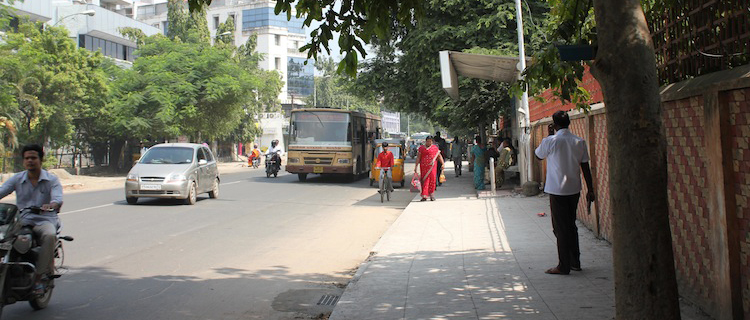
Indian cities have traditionally been centered around walking and cycling as the primary means of transport. For example, Chennai’s Comprehensive Transportation Study reports that walking and cycling account for almost 34 percent of all trips made in the city. With an increasing number of private vehicles on the road, the demand on road space growing by the day. Although there is an inherent recognition of the need to improve walking and cycling facilities in general, there is little understanding of design measures that could help make streets safer for pedestrians and cyclists.

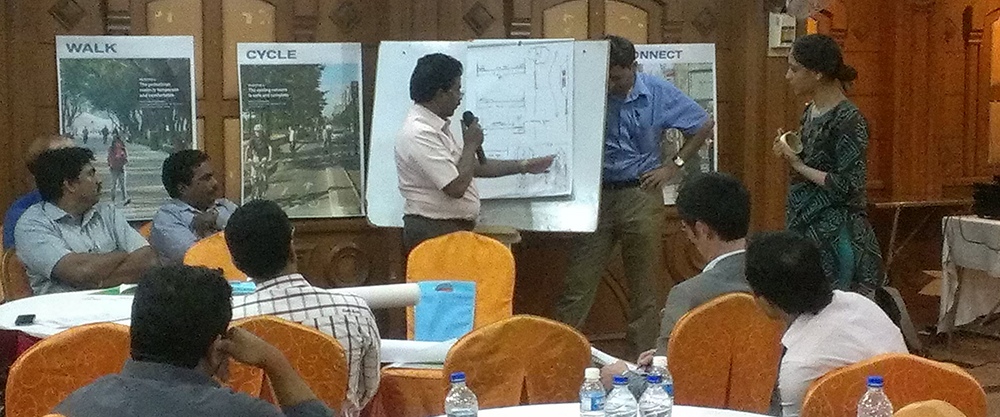
To address all these issues, ITDP held a series of capacity building workshops in Pune and Chennai from 4 to 8 February. The workshops brought together municipal engineers and officials working in the field together with street design expert Michael King from Nelson Nygaard. The workshops sought to bridge the gap between theory, reaality, and practice.

Mr. King specialises in multimodal transportation for livable communities. By working at the intersection of transportation and urban design, with a particular emphasis on pedestrian safety, bicycle facilities, traffic calming, and street architecture, he endeavours to ensure that streets serve the diverse needs of urban residents—beyond their role as a conduit for motor vehicle traffic.

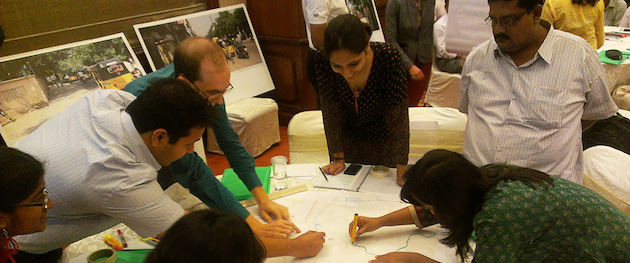
In each workshop, participants formed groups and went out to visit a given site. The site audits gave participants a chance to examine the grim conditions faced by pedestrians every day. These issues were then addressed through a collaborative design exercise among the members of the group, the key aspects of which were then presented to the other groups to enable cross-learning and debate.

Considering that the city of Chennai has initiated a project to improve footpaths on 71 “bus route roads” in the city, the exercise comes at a crucial time to enable the decision makers and engineers to interact with experts and chart out a way forward. In Chennai, eager participation from local bureaucrats gave an impetus to implement some of the proposals as pilot projects, with Mayor Saidai Duraisamy indicating that all 400-odd main streets within the Corporation limits will be taken up for pedestrian improvements over the next 4 years.

ITDP is in the process of compiling the results of the workshop and preparing implementation plans based on participant drawings. Earlier workshops are beginning to yield results: in the city of Pimpri Chinchwad, officials have initiated the redesign of an intersection that was the subject of a workshop in September 2012. To conclude, in the words of Mr. Vikram Kapur, Commissioner, Corporation of Chennai, “All that is required is a change in mindset and a will to do it.”

Filed Under: news Tagged With: Chennai, Pune-Pimpri Chinchwad, Walking and Cycling

Envisioning a Comprehensive Transport Plan for Chennai

28th January 2013 by admin

by C. Ranga Rohini, ITDP

With a population of over 4.7 million and with a rapidly growing economy, the city of Chennai faces the challenge of providing efficient, safe, and reliable transport solutions to its citizens without compromising on quality of life. The onus of this responsibility currently falls on a number of agencies in the city and brings with it a slew of issues in planning, coordination, and accountability. The Chennai Unified Metropolitan Transport Authority (CUMTA) was formed in November 2010 with the aim to address these issues—to serve as a single nodal agency that directs planning, operations, and monitoring of various transport modes in the metropolitan area of Chennai. One of CUMTA’s key responsibilities is the preparation of a Comprehensive Transport Plan that looks at the planning and development of public transport options and their implementation through various agencies.

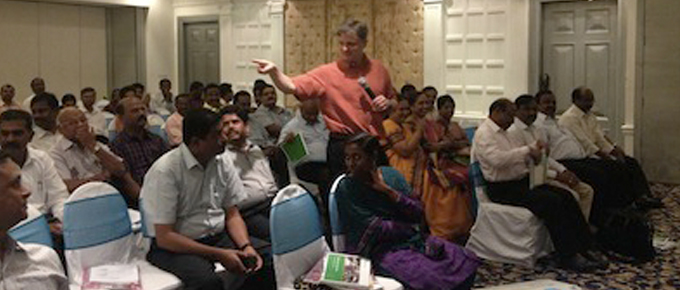
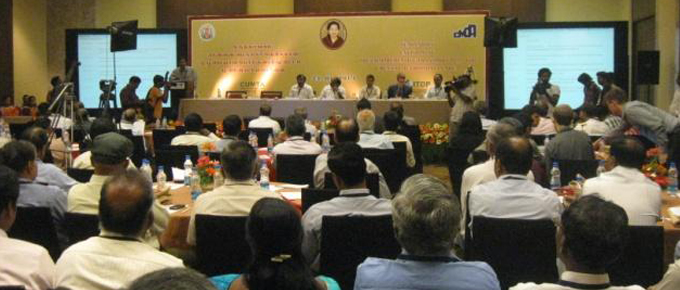
To facilitate this process, CMDA, in collaboration with the Institute of Transport and Development Policy, organized a workshop from 22 to 24 January 2013 that brought together various government stakeholders along with experts and academicians to discuss the CUMTA’s vision and to develop viable strategies and actions to carry the vision forward.

Participants formed groups to deliberate on four primary topic areas: 1) CUMTA as an agent of change for the Chennai Metropolitan Area: defining CUMTA’s role as a planning, monitoring, and coordinating body to facilitate interagency coordination. 2) Developing an integrated, high quality bus and BRT network for the entire city: expanding the bus fleet, implementing BRT, introducing an integrated fare collection systems across modes, and providing customer information. 3) Improving streets and the public realm: developing pedestrian friendly street design standards and planning guidelines, identifying greenway networks, and improving intermodal links. 4) Management of road space and travel demand: implementing a robust on-street parking management system, facilitating compact development around public transport stations, and implementing dynamic road pricing solutions.

At the workshop, Mr. Ben Plowden, Director of Surface Transport at Transport for London, described the city of London’s experience in bringing multiple public transport providers under a single umbrella, starting in 2000. He showed how London has been able to achieve a reduction in the use of private cars over the past decade through the steady expansion of sustainable transport options, including expanded bus service and a network of high quality cycle tracks. “You need a transport system that is adequate to meet the demands that the city will put on it,” pointed out Mr. Plowden. “That means focusing on mass transit.”

Workshop attendees included representatives from CMDA, the Corporation of Chennai, Chennai Metro Rail Limited, Highways Department, Transport Department, TNRDC, Metropolitan Transport Corporation, consultants, NGO Chennai City Connect, faculty from the Indian Institute of Technology, Madras, School of Architecture and Planning, Anna University, and representatives from unified metropolitan transport authorities in Bangalore and Delhi, among others.

To achieve the vision of transforming Chennai into a world-class city, a general consensus was reached on the need to assess existing resources, identify short-term goals, and focus on early wins to build CUMTA’s reputation. Participants stressed the role of data collection in enabling evidence-based planning and identified a need for a financial audit of existing spending patterns. “Data collection is critical,” explained Mr. K. Phanindra Reddy, Secretary of the Department of Housing and Urban Development, Government of Tamil Nadu. “Unless we know the scenario we are starting with, and the lacunae that we need to address, we will be groping in the dark.”

A key initiative to emerge in the workshop’s action plan is the creation of a common information portal for all public transport modes in Chennai. Geographically focused, time-bound pilot projects on pedestrianization, parking, street design, and multi-modal integration were also identified. ITDP has begun compiling the outcomes of the workshop into a strategic plan to be adopted by CUMTA. “The stakeholders have come out with each and every suggestion,” said Mr. Reddy. “That is a critical element for success of CUMTA. It’s time that we turn our plans into assets on the street.”

Comprehensive-Transport-Plan-02

Ensuring that all Chennai residents have access to high quality public transport was a key theme during the workshop. Shown above are the areas within a 5 minute walk of public transport.

Comprehensive-Transport-Plan-03

Charrette participants debated on the potential role of CUMTA in ensuring coordination among Chennai’s transport system operators.

Comprehensive-Transport-Plan-04

Participants discussed the importance of balancing the “link” and “place” functions of streets, using Chennai’s Saidapet area as a case study.

Filed Under: news Tagged With: Chennai, Public Transport, Transit Oriented Development, Walking and Cycling

  • « Previous Page
  • 1
  • …
  • 3
  • 4
  • 5
  • Who We Are
    • Our Team
    • Contact Us
    • Opportunities
    • Our Approach
  • What We Do
    • Complete Streets and Parking Management
    • Public Transport
    • Transit Oriented Development
    • Inclusive Mobility
  • Where We Work
    • Agra
    • Ahmedabad
    • MAHARASHTRA
    • Pune – Pimpri-Chinchwad
    • Nashik
    • TAMIL NADU
    • Chennai
    • Coimbatore
    • JHARKHAND
    • Ranchi
    • NATIONAL
  • News
  • Resources
  • Get Involved
    • Donate

Copyright © 2026 · ITDP Responsive on Genesis Framework · WordPress · Log in


Loading Comments...