ITDP India

Promoting sustainable and equitable transportation worldwide

  • Contact
  • ITDP India’s 2025
  • Who We Are
    • Our Approach
    • Contact Us
    • Career Opportunities
  • What We Do
    • Healthy Streets
    • Public Transport
    • Electric Mobility
    • Transit Oriented Development
    • Low Emission Zones
    • Inclusive Mobility
    • Traffic Reduction
  • Where We Work
    • NATIONAL
    • MAHARASHTRA
      • Pune
      • Pimpri Chinchwad
      • Nashik
    • TAMIL NADU
      • Chennai
      • Coimbatore
    • JHARKHAND
      • Ranchi
    • Agra
    • Ahmedabad
  • Blogs
  • Resources
    • Press
  • National Challenges
    • India Cycles4Change Challenge
    • Streets for People Challenge
    • Transport4All Challenge
  • Urbanlogue
    • Urbanlogue Webinars – Series One
    • Urbanlogue Webinars – Series Two
    • Urbanlogue Webinars – Series Three
    • Urbanlogue Webinars – Series Four

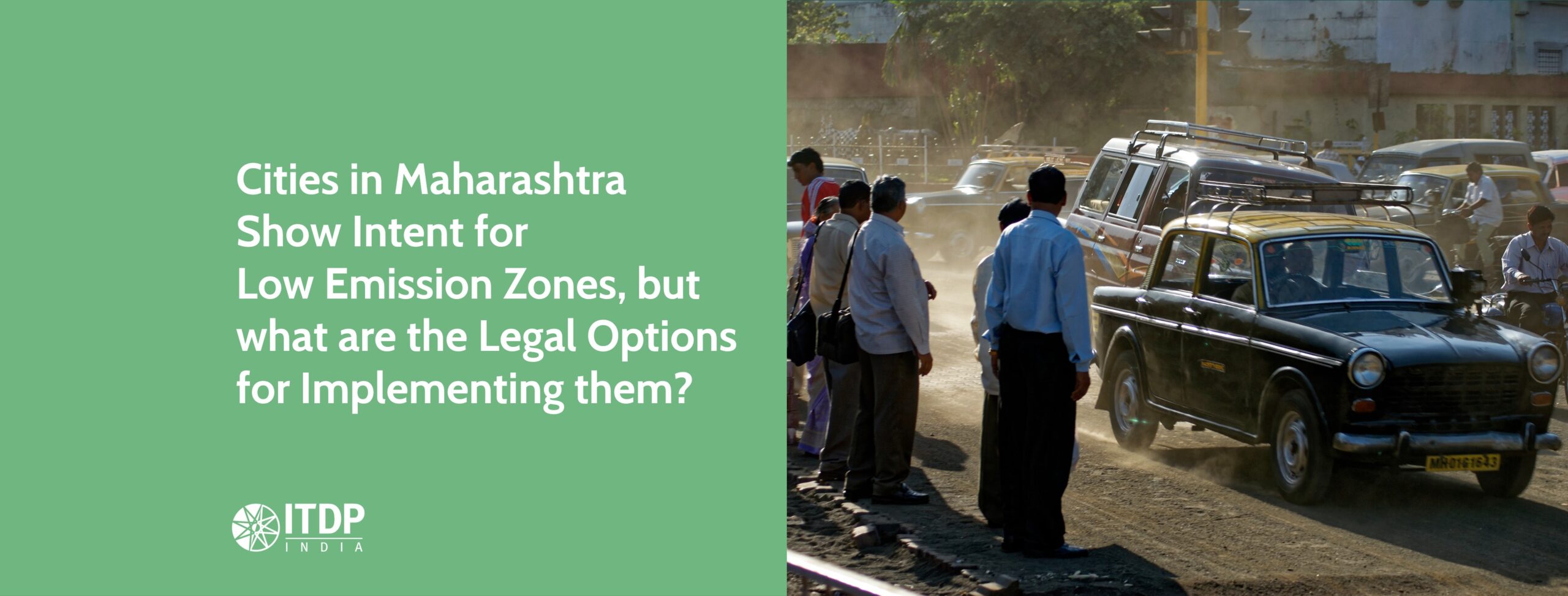
Cities in Maharashtra Show Intent for Low Emission Zones, but what are the Legal Options for Implementing them?

21st August 2026 by admin


As Pune prepares to implement a Low Emission Zone (LEZ), an important question lies at the centre of the discussion: how can cities legally regulate high-polluting vehicles?   

Low emission zones (LEZs) are designated zones in a city where the use of polluting vehicles is restricted or discouraged. Such zoning aims to improve local air quality and health by reducing vehicle tailpipe emissions. One pathway to implement LEZ is straightforward restriction – banning old polluting vehicles from entering identified areas. The other is more strategic; using pricing mechanisms to discourage the use of polluting vehicles while also generating resources to support sustainable transport initiatives. 

ITDP India is working with Pune to implement the idea of introducing a charge on high polluting vehicles. Instead of relying solely on bans, the aim is to introduce a levy on older and more polluting vehicles entering the LEZ. How this can be done is simple: create a system where cleaner mobility becomes the easier and more affordable choice. 

However, choosing “pricing” is not just a policy shift. It is also a legal one. 

In order to kick-start a LEZ, the legal pathway used to introduce these charges must be carefully structured. The legislation supporting it, the authority under which the charge is introduced, and terminology used will determine whether the system can withstand legal scrutiny. 

Understanding the Existing Legal Landscape for Clean Air   

India does not currently have a single consolidated law governing Low Emission Zones. Instead, implementation depends on multiple laws and authorities working together. At the constitutional level, the right to a clean environment is recognised under Article 21, while Article 48-A places a duty on the State to protect and improve the environment. 

Beyond this constitutional backing, several legislations create the broader framework within which an LEZ can operate. 

  • The Environment (Protection) Act, 1986 (EPA) grants the Central Government wide powers to regulate polluting activities and restrict certain areas when necessary for environmental protection. 
  • The Air (Prevention and Control of Pollution) Act, 1981 empowers both the State Pollution Control Board and State Government to plan and implement pollution-abatement programmes, including issuing binding directions. 
  • The Motor Vehicles Act, 1988 allows State Governments to regulate vehicle movement in the interest of public safety and convenience. 

Meanwhile, the Maharashtra Municipal Corporations (MMC) Act, 1949 directs municipal corporations to undertake environmental protection measures. However, the Act currently does not explicitly empower the city to levy environmental charges linked to vehicular pollution. 

This gap becomes central when discussing how Pimpri Chinchwad Municipal Corporation (PCMC) and Pune Municipal Corporation (PMC) can independently implement a pricing-based LEZ. 

What are the Possible Legal Pathways for Indian Cities to Introduce Pricing in LEZ 

To better understand how pricing can be introduced within a Low Emission Zone (LEZ), ITDP India conducted a legal study in the context of Pimpri Chinchwad. The objective was to identify the various legal pathways available for introducing a pricing mechanism and assess which of them could provide a legally robust foundation. The study identifies three possible pathways through which an LEZ and its associated pricing mechanism could be implemented. While the analysis was undertaken for Pimpri Chinchwad, these pathways may also be relevant for other cities in Maharashtra, including Pune. However, they should be viewed as potential legal options rather than definitive solutions. Their feasibility will ultimately depend on discussions with the respective city corporation and a detailed assessment of the city’s legal and administrative context. 

Option I: Implementing Pricing underthe Air (prevention and control of pollution) Act 1981)  

Approaching the Maharashtra State Government under the Air Act provides one of the most viable legal pathways for introducing pricing under a Low Emission Zone. As Maharashtra is already declared an Air Pollution Control Area, the State Government can impose targeted restrictions and environmental charges to address air pollution. 

Under the same Act, the Maharashtra Pollution Control Board (MPCB) is empowered to plan and implement pollution-abatement measures, issue binding directions, and collect restitutionary damages linked to environmental harm. Together, these provisions provide a strong legal basis for introducing pollution pricing through an LEZ. 

Option II: Implementing Pricing under the Maharashtra Municipal Corporation Act (MMC), 1949 

This pathway enables greater local autonomy but also presents the greatest legal challenge. Under the MMC Act, municipal corporations such as PMC and PCMC can regulate transit and impose certain special charges, but only after getting approval from General Body. Further, the Act does not provide authority to levy environmental charges linked to vehicular pollution. 

As a result, cities seeking to independently implement a pricing-based Low Emission Zone would require legislative amendments. In Maharashtra, this would involve strengthening Section 208 of the MMC Act. At present, Section 208 permits the levy of special charges primarily in cases involving physical damage to roads or traffic obstruction, but it does not explicitly recognise environmental protection or air pollution control as valid grounds for imposing such charges. 

A stronger legal foundation would require amending the provision to: 

  • explicitly recognise environmental protection and vehicular pollution control as legitimate grounds for regulating vehicle movement and levying special charges 
  • authorise the levy of environmental charges for these purposes through the existing mechanism under the Act, including the requirement for approval by the Corporation. 

Option III: Implementing pricing under the Environment (Protection) Act, 1986 

This pathway relies on action by the Central Government through the Ministry of Environment, Forest and Climate Change (MoEFCC). While it provides a strong legal basis for implementing a Low Emission Zone (LEZ), it is less likely to be pursued directly by a city, as the necessary powers rest with the Central Government. 

The Environment (Protection) Act provides wide-ranging powers to protect and improve environmental quality. In the context of an LEZ, the most relevant provisions include the power to: 

  • restrict areas where certain operations or processes may be prohibited or permitted only subject to safeguards (Section 3(2)(v)) 
  • issue binding directions for the regulation or prohibition of activities contributing to pollution (Section 5) 
  • prescribe environmental standards and stricter emission limits for specific areas through the Environment (Protection) Rules, 1986 

Using these powers, the Central Government could notify an area in Pune or Pimpri Chinchwad as a Low Emission Zone and prescribe restrictions or environmental charges for high-polluting vehicles. Since the necessary statutory powers already exist under the EPA, this pathway would not require amendments to existing legislation.

The Terminology Matters for Low Emission Zones: Fee vs Charge

At first glance, the difference between a “fee” and a “charge” may seem minor. Legally, however, the distinction is critical. 

A fee is generally understood as something charged in return for a service or benefit provided to the payer. However, this creates a challenge for an LEZ. An LEZ does not provide a direct service to the driver entering the zone. Instead, it restricts access in order to protect public health and reduce environmental harm. If the levy is framed as a “fee”, it becomes vulnerable to legal challenges on the grounds that no direct service is being provided. 

This is where the concept of an Environment Compensation Charge (ECC), or a “Special Charge”, becomes important. 

Unlike a fee, an environmental compensation charge is linked to the idea of compensating for environmental harm caused by polluting activities. Judicial precedents already recognise the principle of restitutionary and compensatory damages in environmental matters. Framing the levy this way creates a far more resilient legal foundation for implementation. 

Building Legally Resilient Low Emission Zones in Indian Cities 

As Pune and Pimpri Chinchwad move closer to implementing Low Emission Zones, with Pune starting the preliminary phases from June 2026, the urgency of establishing a legally secure framework continues to grow. 

If immediate implementation is the priority, pathways through the Central Government, State Government, or MPCB currently offer the strongest legal footing. Existing legislation and precedents already support the collection of environmental charges through these routes. 

However, if cities seek greater local control and long-term autonomy, it requires legislative reform. In this process, terminology itself becomes a form of legal protection. Framing the levy as Environmental Compensation rather than a service-based fee could determine whether the city’s efforts withstand future legal scrutiny. 

For a policy designed to improve air quality and public health in the long term, legal resilience will be just as important as technical planning.

Authors: Shreesha Arondekar, with technical input from Parin Visariya 
Project team: Parin Visariya, Siddhartha Godbole 
Editor: Donita Jose 


Frequently Asked Questions

  1. What is a Low Emission Zone? A Low Emission Zone is a designated area where the older, polluting vehicles are either restricted, discouraged, or required to pay a charge to enter. The goal is to improve air quality by reducing vehicle emissions in areas with high pollution levels. 
  2. Will an LEZ affect all vehicles? No. LEZs typically target vehicles based on their emission performance. Cleaner vehicles may be exempt, while older and more polluting vehicles may face restrictions or charges. 
  3. How does a pricing-based LEZ work? Instead of completely banning vehicles, a pricing-based LEZ imposes a charge on vehicles that do not meet specified emission standards. The charge acts as a disincentive for using polluting vehicles, providing flexibility while still influencing travel behaviour. It allows vehicle owners to make choices while creating a financial incentive to shift towards cleaner vehicles or sustainable transport options. 
  4. How can revenue collected through an LEZ be used? The LEZ charge is not designed as a revenue-generating mechanism. The primary intention of levying a charge is to discourage continued use of high polluting vehicles and gradually phase them out. Revenue from LEZ charges will support initiatives that directly reduce air pollution such as investing in procuring electric buses, and improving walking and cycling infrastructure. 
> Annexure

THE ENVIRONMENT (PROTECTION) ACT, 1986 
 
(1) Section 3 
“3. Power of Central Government to take measures to protect and improve environment.— 
(1) Subject to the provisions of this Act, the Central Government shall have the power to take all such measures as it deems necessary or expedient for the purpose of protecting and improving the quality of the environment and preventing, controlling and abating environmental pollution. 
 
(2) In particular, and without prejudice to the generality of the provisions of sub-section (1), such measures may include measures with respect to all or any of the following matters, namely:— 
(i) co-ordination of actions by the State Governments, officers and other authorities— 
(a) under this Act, or the rules made thereunder; or 
(b) under any other law for the time being in force which is relatable to the objects of this Act; 
(ii) planning and execution of a nation-wide programme for the prevention, control and abatement of environmental pollution; 
(iii) laying down standards for the quality of environment in its various aspects; 
(iv) laying down standards for emission or discharge of environmental pollutants from various sources whatsoever: 
Provided that different standards for emission or discharge may be laid down under this clause from different sources having regard to the quality or composition of the emission or discharge of environmental pollutants from such sources; 
(v) restriction of areas in which any industries, operations or processes or class of industries, operations or processes shall not be carried out or shall be carried out subject to certain safeguards; 
(vi) laying down procedures and safeguards for the prevention of accidents which may cause environmental pollution and remedial measures for such accidents; 
(vii) laying down procedures and safeguards for the handling of hazardous substances; 
(viii) examination of such manufacturing processes, materials and substances as are likely to cause environmental pollution; 
(ix) carrying out and sponsoring investigations and research relating to problems of environmental pollution; 
(x) inspection of any premises, plant, equipment, machinery, manufacturing or other processes, materials or substances and giving, by order, of such directions to such authorities, officers or persons as it may consider necessary to take steps for the prevention, control and abatement of environmental pollution; 
(xi) establishment or recognition of environmental laboratories and institutes to carry out the functions entrusted to such environmental laboratories and institutes under this Act; 
(xii) collection and dissemination of information in respect of matters relating to environmental pollution; 
(xiii) preparation of manuals, codes or guides relating to the prevention control and abatement of environmental pollution; 
(xiv) such other matters as the Central Government deems necessary or expedient for the purpose of securing the effective implementation of the provisions of this Act. 
 
(3) The Central Government may, if it considers it necessary or expedient so to do for the purposes of this Act, by order, published in the Official Gazette, constitute an authority or authorities by such name or names as may be specified in the order for the purpose of exercising and performing such of the powers and functions (including the power to issue directions under Section 5) of the Central Government under this Act and for taking measures with respect to such of the matters referred to in sub-section (2) as may be mentioned in the order and subject to the supervision and control of the Central Government and the provisions of such order, such authority or authorities may exercise the powers or perform the functions or take the measures so mentioned in the order as if such authority or authorities had been empowered by this Act to exercise those powers or perform those functions or take such measures.” 
 
(2) Section 5 
“5. Power to give directions — Notwithstanding anything contained in any other law but subject to the provisions of this Act, the Central Government may, in the exercise of its powers and performance of its functions under this Act, issue directions in writing to any person, officer or any authority and such person, officer or authority shall be bound to comply with such directions. 
 
Explanation.—For the avoidance of doubts, it is hereby declared that the power to issue directions under this section includes the power to direct— 
(a) the closure, prohibition or regulation of any industry, operation or process; or 
(b) stoppage or regulation of the supply of electricity or water or any other service.” 
 
(3) Section 6 
“6. Rules to regulate environmental pollution —  
(1) The Central Government may, by notification in the Official Gazette, make rules in respect of all or any of the matters referred to in Section 3. 
 
(2) In particular, and without prejudice to the generality of the foregoing power, such rules may provide for all or any of the following matters, namely:— 
(a) the standards of quality of air, water or soil for various areas and purposes; 
(b) the maximum allowable limits of concentration of various environmental pollutants (including noise) for different areas; 
(c) the procedures and safeguards for the handling of hazardous substances; 
(d) the prohibition and restrictions on the handling of hazardous substances in different areas; 
(e) the prohibition and restrictions on the location of industries and the carrying on of processes and operations in different areas; 
(f) the procedures and safeguards for the prevention of accidents which may cause environmental pollution and for providing for remedial measures for such accidents.” 
 
(4) Section 15 
“15. Penalty for contravention of provisions of Act, rules, orders and directions —  
(1) Where any person contravenes or does not comply with any of the provisions of this Act or the rules made or orders or directions issued thereunder for which no penalty is provided, he shall be liable to penalty in respect of each such contravention which shall not be less than ten thousand rupees but which may extend to fifteen lakh rupees. 
 
(2) Where any person continues contravention under sub-section (1), he shall be liable to additional penalty of ten thousand rupees for every day during which such contravention continues.” 
 
(5) Section 15-C 
“15-C. Adjudicating officer —  
(1) The Central Government, for the purposes of determining the penalties under this Act, may appoint an officer not below the rank of Joint Secretary to the Government of India or a Secretary to the State Government to be the adjudicating officer, to hold an inquiry and to impose penalty in the manner, as may be prescribed: 
 
Provided that the Central Government may appoint as many adjudicating officers as may be required. 
 
(2) The adjudicating officer may— 
(a) call upon any person alleged to have contravened or not complied with the provisions of this Act and the rules made thereunder or having the knowledge of the facts and circumstances of the case; 
(b) require such person to produce any record, register or other document in his possession or any other document, which in the opinion of the adjudicating officer may be relevant to the subject-matter. 
 
(3) The adjudicating officer shall, after giving the person a reasonable opportunity of being heard in the matter, and if, on such inquiry, he is satisfied that the person concerned has contravened or has not complied with the provisions of this Act or the rules made thereunder, he may impose such penalty as he thinks fit in accordance with the provisions of Sections 14-A, 14-B, 15, 15-A or Section 15-B, as the case may be. 
 
(4) The adjudicating officer, while adjudicating the quantum of penalty under sub-section (3), shall have due regard to the following, namely:— 
(a) the population and the area impacted or affected due to such contravention or non-compliance; 
(b) the frequency and duration of such contravention or non-compliance; 
(c) the vulnerability of the class of persons likely to be adversely affected by such contravention or non-compliance; 
(d) the damage caused or likely to be caused to any person, as a result of such contravention or non-compliance, if any; 
(e) the undue gain derived out of such contravention or non-compliance; and 
(f) such other factor, as may be prescribed. 
 
(5) The amount of penalty imposed under the provisions of Sections 14-A, 14-B, 15, 15-A or 15-B, as the case may be, shall be in addition to the liability to pay relief or compensation under Section 15 read with Section 17 of the National Green Tribunal Act, 2010 (19 of 2010).” 
 
(6) Section 25 
“25. Power to make rules.— 
(1) The Central Government may, by notification in the Official Gazette, make rules for carrying out the purposes of this Act. 
 
(2) In particular, and without prejudice to the generality of the foregoing power, such rules may provide for all or any of the following matters, namely:— 
(a) the standards in excess of which environmental pollutants shall not be discharged or emitted under Section 7; 
(b) the procedure in accordance with and the safeguards in compliance with which hazardous substances shall be handled or cause to be handled under Section 8; 
(c) the authorities or agencies to which intimation of the fact of occurrence or apprehension of occurrence of the discharge of any environmental pollutant in excess of the prescribed standards shall be given and to whom all assistance shall be bound to be rendered under sub-section (1) of Section 9; 
(d) the manner in which samples of air, water, soil or other substance for the purpose of analysis shall be taken under sub-section (1) of Section 11; 
(e) the form in which notice of intention to have a sample analysed shall be served under clause (a) of sub-section (3) of Section 11; 
(f) the functions of the environmental laboratories, the procedure for the submission to such laboratories of samples of air, water, soil and other substances for analysis or test; the form of the laboratory report; the fees payable for such report and other matters to enable such laboratories to carry out their functions under sub-section (2) of Section 12; 
(g) the qualifications of Government Analyst appointed or recognised for the purpose of analysis of samples of air, water, soil or other substances under Section 13; 
(ga) the manner of holding inquiry and imposing penalty by the adjudicating officer under sub-section (1) and other factors for determining quantum of penalty under clause (f) of sub-section (4) of Section 15-C; 
(gb) the other amount under clause (c) of sub-section (2) of Section 16; 
(gc) the other purposes under clause (c) of sub-section (3) of Section 16; 
(gd) the manner of administration of Fund under sub-section (4) of Section 16; 
(ge) form for maintenance of accounts of the Fund and for preparation of annual statement of accounts under sub-section (1) of Section 16-A; 
(gf) form for preparing annual report of the Fund under Section 16-B; 
(h) the manner in which notice of the offence and of the intention to make a complaint to the Central Government shall be given under clause (b) of Section 19; 
(i) the authority or officer to whom any reports, returns, statistics, accounts and other information shall be furnished under Section 20; 
(j) any other matter which is required to be, or may be, prescribed.” 
 
AIR (PREVENTION AND CONTROL OF POLLUTION) ACT, 1981 
 
(1) Section 4 
“4. State Pollution Control Boards constituted under Section 4 of Act 6 of 1974 to be State Boards under this Act — In any State in which the Water (Prevention and Control of Pollution) Act, 1974, is in force and the State Government has constituted for that State a State Pollution Control Board under Section 4 of that Act, such State Board shall be deemed to be the State Board for the Prevention and Control of Air Pollution constituted under Section 5 of this Act, and accordingly that State Pollution Control Board shall, without prejudice to the exercise and performance of its powers and functions under that Act, exercise the powers and perform the functions of the State Board for the prevention and control of air pollution under this Act.” 
 
(2) Section 5 
“5. Constitution of State Boards —  
(1) In any State in which the Water (Prevention and Control of Pollution) Act, 1974 (6 of 1974), is not in force, or that Act is in force but the State Government has not constituted a 8[State Pollution Control Board] under that Act, the State Government shall, with effect from such date as it may, by notification in the Official Gazette, appoint, constitute a State Board for the Prevention and Control of Air Pollution under such name as may be specified in the notification, to exercise the powers conferred on, and perform the functions assigned to that Board under this Act. 
 
(2) A State Board constituted under this Act shall consist of the following members, namely:— 
(a) a Chairman, being a person having special knowledge or practical experience in respect of matters relating to environmental protection, to be nominated by the State Government: 
Provided that the Chairman may be either whole-time or part-time as the State Government may think fit; 
(b) such number of officials, not exceeding five, as the State Government may think fit, to be nominated by the State Government to represent that Government; 
(c) such number of persons, not exceeding five, as the State Government may think fit, to be nominated by the State Government from amongst the members of the local authorities functioning within the State; 
(d) such number of non-officials, not exceeding three, as the State Government may think fit, to be nominated by the State Government to represent the interests of agriculture, fishery or industry or trade or labour or any other interest which, in the opinion of the Government, ought to be represented; 
(e) two persons to represent the companies or corporations owned, controlled or managed by the State Government, to be nominated by that Government; 
(f) a full-time member-secretary having such qualifications, knowledge and experience of scientific, engineering or management aspects of pollution control as may be prescribed, to be appointed by the State Government: 
 
Provided that the State Government shall ensure that not less than two of the members are persons having special knowledge or practical experience in respect of matters relating to the improvement of the quality of air or the prevention, control or abatement of air pollution. 
 
(3) Every State Board constituted under this Act shall be a body corporate with the name specified by the State Government in the notification issued under sub-section (1), having perpetual succession and a common seal with power, subject to the provisions of this Act, to acquire and dispose of property and to contract, and may by the said name sue or be sued.” 
 
(3) Section 16 
“16. Functions of Central Board.— 
(1) Subject to the provisions of this Act, and without prejudice to the performance of its functions under the Water (Prevention and Control of Pollution) Act, 1974 (6 of 1974), the main functions of the Central Board shall be to improve the quality of air and to prevent, control or abate air pollution in the country. 
 
(2) In particular and without prejudice to the generality of the foregoing functions, the Central Board may— 
(a) advise the Central Government on any matter concerning the improvement of the quality of air and the prevention, control or abatement of air pollution; 
(b) plan and cause to be executed a nationwide programme for the prevention, control or abatement of air pollution; 
(c) co-ordinate the activities of the State Boards and resolve disputes among them; 
(d) provide technical assistance and guidance to the State Boards, carry out and sponsor investigations and research relating to problems of air-pollution and prevention, control or abatement of air pollution; 
(dd) perform such of the functions of any State Board as may be specified in an order made under sub-section (2) of Section 18; 
(e) plan and organise the training of persons engaged or to be engaged in programmes for the prevention, control or abatement of air pollution on such terms and conditions as the Central Board may specify; 
(f) organise through mass media a comprehensive programme regarding the prevention, control or abatement of air pollution; 
(g) collect, compile and publish technical and statistical data relating to air pollution and the measures devised for its effective prevention, control or abatement and prepare manuals, codes or guides relating to prevention, control or abatement of air pollution; 
(h) lay down standards for the quality of air; 
(i) collect and disseminate information in respect of matters relating to air pollution; 
(j) perform such other functions as may be prescribed. 
 
(3) The Central Board may establish or recognise a laboratory or laboratories to enable the Central Board to perform its functions under this section efficiently. 
 
(4) The Central Board may— 
(a) delegate any of its functions under this Act generally or specially to any of the committees appointed by it; 
(b) do such other things and perform such other acts as it may think necessary for the proper discharge of its functions and generally for the purpose of carrying into effect the purposes of this Act.” 
 
(4) Section 17 
“17. Functions of State Boards.— 
(1) Subject to the provisions of this Act, and without prejudice to the performance of its functions, if any, under the Water (Prevention and Control of Pollution) Act, 1974 (6 of 1974), the functions of a State Board shall be— 
(a) to plan a comprehensive programme for the prevention, control or abatement of air pollution and to secure the execution thereof; 
(b) to advise the State Government on any matter concerning the prevention, control or abatement relating to air pollution; 
(c) to collect and disseminate information relating to air pollution; 
(d) to collaborate with the Central Board in organising the training of persons engaged or to be engaged in programmes relating to prevention, control or abatement of air pollution and to organise a mass-education programme relating thereto; 
(e) to inspect, at all reasonable times, any control equipment, industrial plant or manufacturing process and to give, by order, such directions to such persons as it may consider necessary to take steps for the prevention, control or abatement of air pollution; 
(f) to inspect air pollution control areas at such intervals as it may think necessary, assess the quality of air therein and take steps for the prevention, control or abatement of air pollution in such areas; 
(g) to lay down, in consultation with the Central Board and having regard to the standards for the quality of air laid down by the Central Board, standards for emission of air pollutants into the atmosphere from industrial plants and automobiles or for the discharge of any air pollutant into the atmosphere from any other source whatsoever not being a ship or an aircraft: 
Provided that different standards for emission may be laid down under this clause for different industrial plants having regard to the quantity and composition of emission of air pollutants into the atmosphere from such industrial plants; 
(h) to advise the State Government with respect to the suitability of any premises or location for carrying on any industry which is likely to cause air pollution; 
(i) to perform such other functions as may be prescribed or as may, from time to time, be entrusted to it by the Central Board or the State Government; 
(j) to do such other things and to perform such other acts as it may think necessary for the proper discharge of its functions and generally for the purpose of carrying into effect the purposes of this Act. 
 
(2) A State Board may establish or recognise a laboratory or laboratories to enable the State Board to perform its functions under this section efficiently.” 
 
(5) Section 18 
“18. Power to give directions —  
(1) In the performance of its functions under this Act— 
(a) the Central Board shall be bound by such directions in writing as the Central Government may give to it; and 
(b) every State Board shall be bound by such directions in writing as the Central Board or the State Government may give to it: 
 
Provided that where a direction given by the State Government is inconsistent with the direction given by the Central Board, the matter shall be referred to the Central Government for its decision. 
 
(2) Where the Central Government is of the opinion that any State Board has defaulted in complying with any directions given by the Central Board under sub-section (1) and as a result of such default a grave emergency has arisen and it is necessary or expedient so to do in the public interest, it may, by order, direct the Central Board to perform any of the functions of the State Board in relation to such area, for such period and for such purposes, as may be specified in the order. 
 
(3) Where the Central Board performs any of the functions of the State Board in pursuance of a direction under sub-section (2), the expenses, if any, incurred by the Central Board with respect to the performance of such functions may, if the State Board is empowered to recover such expenses, be recovered by the Central Board with interest (at such reasonable rate as the Central Government may, by order, fix) from the date when a demand for such expenses is made until it is paid from the person or persons concerned as arrears of land revenue or of public demand. 
 
(4) For the removal of doubts, it is hereby declared that any direction to perform the functions of any State Board given under sub-section (2) in respect of any area would not preclude the State Board from performing such functions in any other area in the State or any of its other functions in that area.” 
 
(6) Section 19 
“19. Power to declare air pollution control areas —  
(1) The State Government may, after consultation with the State Board, by notification in the Official Gazette, declare in such manner as may be prescribed, any area or areas within the State as air pollution control area or areas for the purposes of this Act. 
 
(2) The State Government may, after consultation with the State Board, by notification in the Official Gazette,— 
(a) alter any air pollution control area whether by way of extension or reduction; 
(b) declare a new air pollution control area in which may be merged one or more existing air pollution control areas or any part or parts thereof. 
 
(3) If the State Government, after consultation with the State Board, is of opinion that the use of any fuel, other than an approved fuel, in any air pollution control area or part thereof, may cause or is likely to cause air pollution, it may, by notification in the Official Gazette, prohibit the use of such fuel in such area or part thereof with effect from such date (being not less than three months from the date of publication of the notification) as may be specified in the notification. 
 
(4) The State Government may, after consultation with the State Board, by notification in the Official Gazette, direct that with effect from such date as may be specified therein, no appliance, other than an approved appliance, shall be used in the premises situated in an air pollution control area: 
Provided that different dates may be specified for different parts of an air pollution control area or for the use of different appliances. 
 
(5) If the State Government, after consultation with the State Board, is of opinion that the burning of any material (not being fuel) in any air pollution control area or part thereof may cause or is likely to cause air pollution, it may, by notification in the Official Gazette, prohibit the burning of such material in such area or part thereof.” 
 
(7) Section 20 
“20. Power to give instructions for ensuring standards for emission from automobiles — With a view to ensuring that the standards for emission of air pollutants from automobiles laid down by the State Board under clause (g) of sub-section (1) of Section 17 are complied with, the State Government shall, in consultation with the State Board, give such instructions as may be deemed necessary to the concerned authority in charge of registration of motor vehicles under the Motor Vehicles Act, 1939 (4 of 1939), and such authority shall, notwithstanding anything contained in that Act or the rules made thereunder be bound to comply with such instructions.” 
 
(8) Section 31-A 
“31-A. Power to give directions.—Notwithstanding anything contained in any other law, but subject to the provisions of this Act and to any directions that the Central Government may give in this behalf a Board may, in the exercise of its powers and performance of its functions under this Act, issue any directions in writing to any person, officer or authority, and such person, officer or authority shall be bound to comply with such directions. 
 
Explanation.—For the avoidance of doubts, it is hereby declared that the power to issue directions under this section includes the power to direct— 
(a) the closure, prohibition or regulation of any industry, operation or process; or 
(b) the stoppage or regulation of supply of electricity, water or any other service.” 
 
MOTOR VEHICLES ACT, 1988 
 
(1) Section 109 
“109. General provision regarding construction and maintenance of vehicles —  
(1) Every motor vehicle shall be so constructed and so maintained as to be at all times under the effective control of the person driving the vehicle.  
 
(2) Every motor vehicle shall be so constructed as to have right hand steering control unless it is equipped with a mechanical or electrical signalling device of a prescribed nature.  
 
(3) If the Central Government is of the opinion that it is necessary or expedient so to do in the public interest, it may by order published in the Official Gazette, notify that any article or process used by a manufacturer shall conform to such standard as may be specified in that order.” 
 
(2) Section 110 
“110. Power of Central Government to make rules —  
(1) The Central Government may make rules regulating the construction, equipment and maintenance of motor vehicles and trailers with respect to all or any of the following matters, namely:—  
(a) the width, height, length and overhang of vehicles and of the loads carried;  
(b) the size, nature, maximum retail price and condition of tyres, including embossing thereon of date and year of manufacture and the maximum load carrying capacity;  
(c) brakes and steering gear;  
(d) the use of safety glasses including prohibition of the use of tinted safety glasses;  
(e) signalling appliances, lamps and reflectors;  
(f) speed governors;  
(g) the emission of smoke, visible vapour, sparks, ashes, grit or oil;  
(h the reduction of noise emitted by or caused by vehicles;  
(i) the embossment of chassis number and engine number and the date of manufacture;  
(j) safety belts, handle bars of motor cycles, auto-dippers and other equipments essential for safety of drivers, passengers and other road users;  
(k) standards of the components used in the vehicle as inbuilt safety devices;  
(l) provision for transportation of goods of dangerous or hazardous nature to human life;  
(m) standards for emission of air pollutants;  
(n) installation of catalytic convertors in the class of vehicles to be prescribed;  
(o) the placement of audio-visual or radio or tape recorder type of device in public vehicles;  
(p) warranty after sale of vehicle and norms therefor: 
Provided that any rules relating to the matters dealing with the protection of environment, so far as may be, shall be made after consultation with the Ministry of the Government of India dealing with environment.  
 
(2) Rules may be made under sub-section (1) governing the matters mentioned therein, including the manner of ensuring the compliance with such matters and the maintenance of motor vehicles in respect of such matters, either generally in respect of motor vehicles or trailers or in respect of motor vehicles or trailers of a particular class or in particular circumstances.  
 
(3) Notwithstanding anything contained in this section,— (a) the Central Government may exempt any class of motor vehicles from the provisions of this Chapter; (b) a State Government may exempt any motor vehicle or any class or description of motor vehicles from the rules made under sub-section (1) subject to such conditions as may be prescribed by the Central Government.” 
 
(3) Section 115 
“115. Power to restrict the use of vehicles — The State Government or any authority authorised in this behalf by the State Government, if satisfied that it is necessary in the interest of public safety or convenience, or because of the nature of any road or bridge, may by notification in the Official Gazette, prohibit or restrict, subject to such exceptions and conditions as may be specified in notification, the driving of motor vehicles or of any specified class or description of motor vehicles or the use of trailers either generally in a specified area or on a specified road and when any such prohibition or restriction is imposed, shall cause appropriate traffic signs to be placed or erected under section 116 at suitable places: Provided that where any prohibition or restriction under this section is to remain in force for not more than one month, notification thereof in the Official Gazette shall not be necessary, but such local publicity as the circumstances may permit, shall be given of such prohibition or restriction.” 
 
(4) Section 194 
“194. Driving vehicle exceeding permissible weight —  
(1) Whoever drivers a motor vehicle or causes or allows a motor vehicle to be driven in contravention of the provisions of section 113 or section 114 or section 115 shall be punishable with minimum fine of two thousand rupees and an additional amount of one thousand rupees per tonne of excess load, together with the liability to pay charges for off-loading of the excess load.  
 
(2) Any driver of a vehicle who refuses to stop and submit his vehicle to weighing after being directed to do so by an officer authorised in this behalf under section 114 or removes or causes the removal of the load or part of it prior to weighing shall be punishable with fine which may extend to three thousand rupees.” 
 
MAHARASHTRA MUNICIPAL CORPORATIONS ACT, 1949 
 
(1) Section 63(1b) 
“63. Matters to be provided for by the Corporation — It shall be incumbent on the Corporation to make reasonable and adequate provision, by any means or measures which it is lawfully competent to it to use or to take, for each of the following matters, namely :— (1b) urban forestry, protection of the environment and promotion of ecological aspects;” 
 
(2) Section 66(42) 
“66. Matters which may be provided for by Corporation at its discretion — The Corporation may, in its discretion, provide from time to time, either wholly or partly, for all or any of the following matters, namely:— (42) any measure not hereinbefore specifically named, likely to promote public safety, health, convenience or instruction.” 
 
(3) Section 82 
“82. Constitution of Municipal Fund — Subject to the provisions of this Act and the rules and subject to the provisions of Section 44 of the Bombay Primary Education Act, 1947 (Bom. LXI of 1947)— 
(a) all moneys received by or on behalf of the Corporation under the provisions of this Act or of any other law for the time being in force, or under any contract, 
(b) all proceeds of the disposal of property by or on behalf of the Corporation, 
(c) all rents accruing from any property of the Corporation, 
(d) all moneys raised by any tax levied for the purposes of this Act, 
(e) all fees and fines payable and levied under this Act or under any rule, by-law, regulation or standing order other than fines imposed by a Court, 
(f) all moneys received by way of compensation or for compounding offences under the provisions of this Act, 
(g) all moneys received by or on behalf of the Corporation from the Government or public bodies, private bodies or private individuals by way of grant or gift or deposit, subject, however, to the conditions, if any, attached to such grant, gift or deposit, and 
(h) all interest and profits arising from any investment of, or from any transaction in connection with, any money belonging to the Corporation, shall be credited to a fund which shall be called “ the Municipal Fund” and which shall be held by the Corporation in trust for the purposes of this Act, subject to the provisions herein contained.” 
 
(4) Section 88 
“88. Purpose for which Municipal Fund is to be applied — The moneys from time to time credited to the Municipal Fund shall be applied in payment of all sums, charges and costs necessary for carrying this Act into effect, or of which the payment shall be duly directed or sanctioned under any of the provisions of this Act or of any other law for the time being in force inclusive of,— 
(a) the expenses of every ward election; 
(b) the salary, joining time allowances and other allowances of the Commissioner and of leave and pension contribution, if any, payable on his account to the State Government; 
(c) the salaries and other allowances of all municipal officers and servants and all contributions to provident funds, pensions, gratuities and compassionate allowances payable under the provisions of this Act or the regulations or of the statement framed under this Act for the time being in force; 
(d) all expenses and costs incurred by the Commissioner in the exercise of any power or the discharge of any duty conferred or imposed upon him by this Act, including moneys which he is required or empowered to pay by way of compensation; 
(e) the grant payable under Section 44 of the Bombay Primary Education Act, 1947 (Bom. XLI of 1947), to the Primary Education Fund maintained thereunder for the City; 
(f) the loans advanced under the rules for building purposes; 
(g) any sum chargeable under Section 108; 
(h) every sum payable,— 
(i) under Section 422 or sub-section (1) of Section 449 to the State Government; 
(ii) under a decree or order of a civil or criminal court passed against the Corporation or against the Commissioner, Deputy Commissioner or Assistant Commissioner ex-officio; 
(iii) under a compromise of any suit or other legal proceeding or claim effected under Section 481; 
(i) contributions to public institutions; 
(j) expenses incurred on the provision of traffic signs.” 
 
(5) Section 127 
“127. Taxes to be imposed under this Act — 
(1) For the purposes of this Act, the Corporation shall impose the following taxes, namely:— 
(a) property taxes; 
(b) a tax on vehicles, boats and animals. 
 
(2) In addition to the taxes specified in sub-section (1) the Corporation may for the purposes of this Act and subject to the provisions thereof impose any of the following taxes, namely:— 
(c) a tax on dogs; 
(d) a theatre tax; 
(e) a toll on animals and vehicles entering the City; 
(f) any other tax (not being a tax on profession, trades, callings and employments), which the State Legislature has power under the Constitution to impose in the State. 
 
(2A) Notwithstanding anything contained in sub-section (1) or sub-section (2), no tax or toll shall be levied on motor vehicles save as provided in section 20 of the Bombay Motor Vehicles Tax Act, 1958. 
 
(3) The Municipal taxes shall be assessed and levied in accordance with the provisions of this Act and the rules. 
 
(4) Nothing in this section shall authorise the imposition of any tax which the State Legislature has no power to impose in the State under the Constitution.” 
 
(6) Section 149 
“149. Procedure to be followed in levying other taxes.— 
(1) In the event of the Corporation deciding to levy any of the taxes specified in sub-section (2) of section 127, it shall make detailed provisions, in so far as such provision is not made by this Act, in the form of rules, modifying, amplifying or adding to the rules at the time in force for the following matters, namely:— 
(a) the nature of the tax, the rates thereof, the class or classes of persons, articles or properties liable thereto and the exemptions therefrom, if any, to be granted; 
(b) the system of assessment and method of recovery and the powers exercisable by the Commissioner or other officers in the collection of the tax; 
(c) the information required to be given of liability to the tax; 
(d) the penalties to which person evading liability or furnishing incorrect or misleading information or failing to furnish information may be subjected; 
(e) such other matters, not inconsistent with the provisions of this Act, as may be deemed expedient by the Corporation: 
 
Provided that no rules shall be made by the Corporation in respect of any tax coming under clause (f) of sub-section (2) of section 127 unless the State Government shall have first given provisional approval to the selection of the tax by the Corporation. 
 
(2) The rules shall be submitted by the Corporation to the State Government and the State Government may either refuse to sanction them or refer them back to the Corporation for further consideration or sanction them either as they stand or with such modifications as it thinks fit, not, however, involving an increase in the rate or rates of the levy or the extent thereof. 
 
(3) Any sanction given by the State Government under sub-section (2) shall become operative on such date not earlier than one month from the date of the sanction as the State Government shall specify in the order of sanction, and the Corporation shall be competent to levy the tax covered by the sanction as from the date so specified. 
 
(4) The Corporation and the State Government shall take such steps as may be practicable to ensure that the date specified in the order of sanction is the first day of April, unless the sanction is given in pursuance of a proposal for supplementary taxation under section 150: 
 
Provided that nothing in sub-section (4) shall affect the power of the Corporation to levy a tax as from a date later than the first day of April if the sanction of the State Government is not given by the first day of March immediately preceding and if the State Government in the order of sanction specifies a date later than the first day of April for the commencement of the levy of the tax. 
 
(5) The provisions of this section shall apply, as far as may be, to any alterations which the Corporation may from time to time decide to make in the rates fixed for any tax, or in the class or classes of persons, articles, or properties liable thereto or in the exemptions therefrom, if any, to be granted.” 
 
(7) Section 208 
“208. Power to prohibit use of public streets for certain kinds of traffic —  
(1) It shall be lawful for the Commissioner with the sanction of the Corporation to,— 
(a) prohibit vehicular traffic in any particular public street vesting in the Corporation so as to prevent danger, obstruction or inconvenience to the public by fixing up posts at both ends of such street or portion of such street; 
(b) prohibit in respect of all public streets, or particular public streets, the transit of any vehicle of such form, construction, weight or size or laden with such heavy or unwieldy objects as may be deemed likely to cause injury to the roadways or any construction thereon, or risk of obstruction to other vehicles or pedestrians along or over such street or streets, except under such conditions as to time, mode of traction or locomotion, use of appliances for protection of the roadway, number of lights and assistants, and other general precautions and the payment of special charges as may be specified by the Commissioner generally or specially in each case. 
 
(2) Notices of such prohibitions as are imposed under sub-section (1) shall be posted up in conspicuous places at or near both ends of the public streets or portions thereof to which they relate, unless such prohibitions apply generally to all public streets.” 
 
(8) Section 456 
“456. Power of State Government to make rules —  
(1) The State Government may at any time require the Corporation to make rules under Section 454 in respect of any purpose or matter specified in Section 457. 
 
(2) If the Corporation fails to comply with such requisition within such reasonable time as may be fixed by the State Government, the State Government may, after previous publication, make such rules and the rules so made shall, on final publication in the Official Gazette, have effect as if enacted in this Act.” 
 
(9) Section 457(13)(k) 
“457. Matters in respect of which rules may be made — In particular, and without prejudice to the generality of the powers conferred by Section 454, rules made thereunder may provide for or regulate all or any of the following purposes and matters, namely :— (13) Sanitary provisions.— (k) the prevention and regulation of the discharge of smoke, steam, fumes and noxious vapours;” 

Filed Under: Low Emission Zones Tagged With: Air Pollution, Environmental Compensation Charge, Low Emission Zones, Pimpri chinchwad, Pune, Sustainable Transport

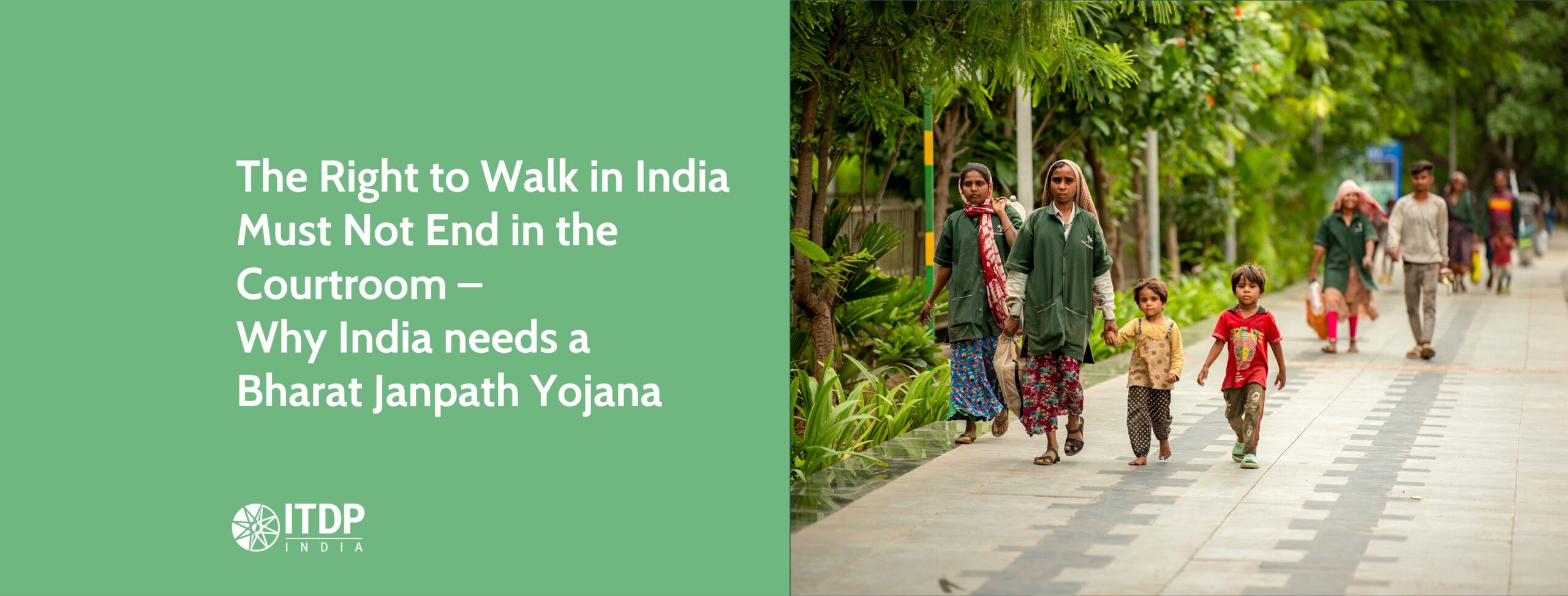
The Right to Walk in India Must Not End in the Courtroom – Why India needs a Bharat Janpath Yojana

22nd July 2026 by admin


Every day, millions of Indians begin and end their journeys on foot. Yet our cities continue to treat walking as an afterthought. The consequences are measured not just in inconvenience, but also in the lives lost.   

The Supreme Courts’s landmark judgement in Maniyar Iliyaz v. P. Ayyappan in June 2026 marks a clear break from this reality. By recognising the right to walk on safe, well demarcated footpaths as a fundamental right under Article 19(1)(d) and 21 of the Constitution, the Court has fundamentally changed the way India’s streets must be planned and governed.   
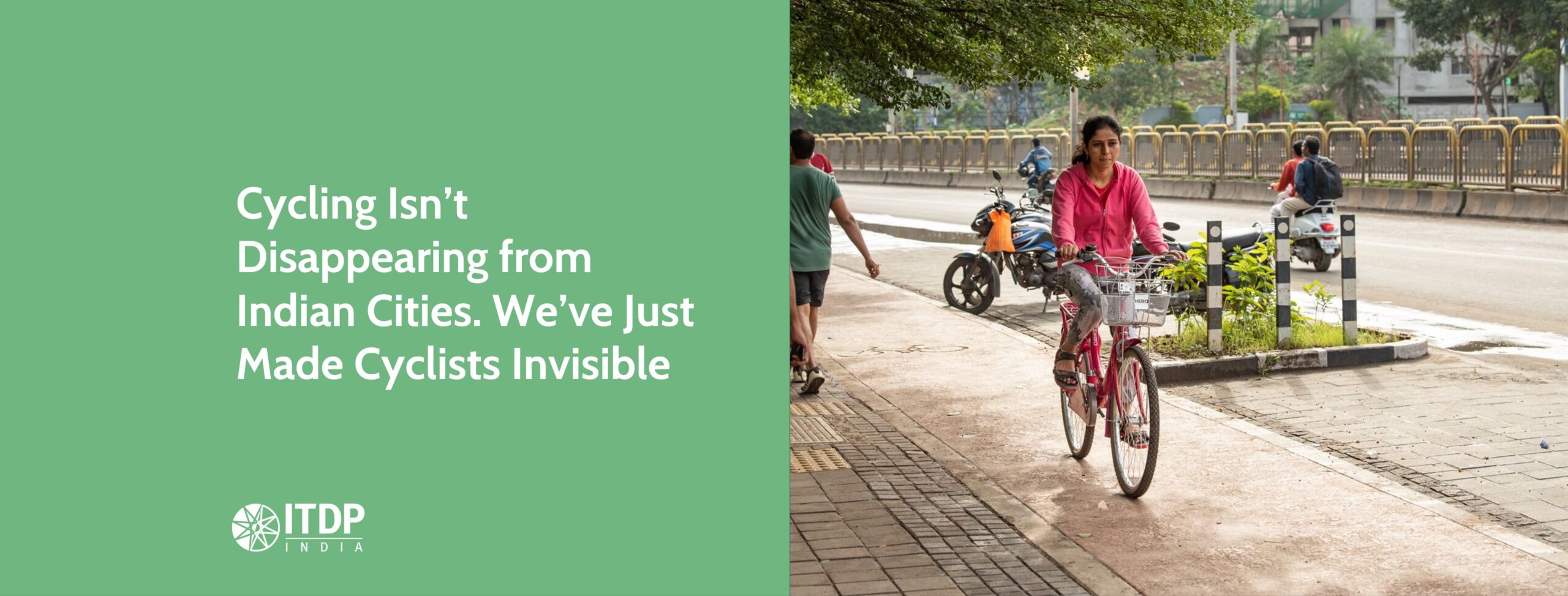
More importantly, the Court has established a new hierarchy for urban mobility: the movement of people on foot takes priority over the movement of vehicles. The judgement has made clear that footpaths are no longer optional urban amenities, but essential public infrastructure. Wherever a road exists, municipal authorities have an enforceable duty to provide and maintain a safe footpath.   

While the judgement settles an important constitutional question, the answer to a practical question remains: how do we ensure that every Indian can exercise the right to walk?   

Because rights alone do not build safe footpaths.

What is Missing in the System to Deliver Better Streets?  

Across India, cities have demonstrated that people-first streets are possible. The challenge is that these remain isolated successes because the systems needed to plan, fund, and sustain them at scale are still missing.

  1. No long-term vision: Firstly, cities continue to operate without a long-term vision for connected pedestrian networks, resulting in isolated projects rather than continuous walking infrastructure. This is compounded by the absence of a strong legislative framework that makes safe footpaths and pedestrian infrastructure a mandatory part of every road project. Existing policies and guidelines encourage better streets, but they are largely advisory and often ignored.  
  2. Lack of funding and misallocation of resources: Even where the intent exists, cities struggle to implement Healthy Streets because the problem is not just one of limited funding, but of how funding is prioritised. Transport budgets continue to favour infrastructure for vehicles, while walking infrastructure receives only a fraction of the investment it needs.  
  3. Frequent changes in administrative leadership and lack of technical capacity: This imbalance of funding is compounded by frequent changes in political and administrative leadership, weak technical capacity, and poor coordination between multiple road-owning agencies. Tier II and III cities face even greater constraints, with limited municipal finances and little access to specialised expertise for planning and delivering high-quality streets.  
  4. Public perception tilted in favour of vehicles: Finally, transforming streets also requires changing public perception. For decades, road space has been designed almost exclusively around vehicles. When projects seek to rebalance streets in favour of pedestrians and cyclists, they are often met with resistance because the vehicle owners see this as taking road space away from vehicles. Without sustained public engagement to communicate the wider benefits—for safety, mobility, health, and local economies—cities will continue to face pushback that slows or derails meaningful street transformation.  

What’s Needed to Make the Constitutional Right a Public Reality?

The next task for decision-makers is to redefine how Indian streets are planned and delivered. The Supreme Court has recognised the right to walk; translating that right into everyday reality requires pedestrian infrastructure to be treated with the same priority as every other mode of transport. The proposed Bharat Janpath Yojana, as elaborated in the recent report: The Healthy Street Dividend, offers a framework to achieve this through three interconnected actions.

  1. Legislative Framework: The first is a legislative framework that formally recognises and protects the right to walk while making safe, continuous, and universally accessible pedestrian infrastructure a mandatory part of every road project. While a comprehensive national framework is the long-term aspiration, states are well placed to lead this reform in the near term by enacting legislation that reflects the Supreme Court’s principles. Just as the Motor Vehicles Act provides a statutory framework for improvement of vehicular movement, India now needs a legislation that makes safe, continuous, and universally accessible footpaths mandatory in every road. Karnataka’s proposed Active Mobility Bill offers one such pathway.   
  2. National Streets Programme: India also needs a dedicated national programme to support implementation at scale. The second action is a National Streets Programme to help cities move beyond isolated street improvement projects and build connected walking networks at scale. Beginning with a target of 10,000 kilometres of Healthy Streets across 100 cities, the programme would prioritise continuous footpaths, safe at-grade crossings, traffic-calmed streets, protected cycling infrastructure, shade, lighting, and universal accessibility. More importantly, it would create complete networks that connect homes with schools, healthcare, markets, workplaces, and public transport hubs, closing the critical first- and last-mile gap while making streets safer and more inclusive for everyone.    
  3. Creating an enabling ecosystem: The third action is to build the institutional and financialecosystem needed to sustain this transformation. Delivering better streets cannot depend on individual champions or one-time funding. States should establish dedicated Urban Transport Cells, while cities create Active Mobility Cells to coordinate agencies, build technical expertise, and oversee implementation. This must be backed by dedicated funding for Healthy Streets, regular monitoring of outcomes, and sustained public engagement to build support for people-first streets. Together, these reforms can ensure that India’s walking networks are not only built, but maintained, expanded, and continuously improved. 

The Case for Investing in Better Streets  

The proposed Bharat Janpath Yojana is more than a roadmap for implementing the Supreme Court’s Judgement. It is a compelling public investment. The strongest argument for better footpaths and well-designed streets will always be that they save lives; this alone is reason enough to act. However, the benefits don’t end there. Streets designed for people determine who can access the city, how healthy neighbourhoods become, how resilient cities are to extreme weathers, and even how local economies grow.  

This is the central finding of The Healthy Street Dividend, a multi-city, multi-indicator assessment launched by the Ministry of Housing and Urban Affairs (MoHUA) and GIZ India, prepared by ITDP India. The study examined Healthy Streets across 10 cities and compared it with streets in the same city where basic pedestrian infrastructure is lacking. The findings make a compelling case.  

The most immediate dividend is social. A well-designed street gives people confidence to step out, especially those who have historically been excluded from public spaces. Women are 1.5 times more likely to walk on Healthy Streets, and nearly nine in ten women report feeling safe after dark. Older adults and children also use these streets significantly more. Healthy Streets allow for independence, dignity, and equal access.  

The benefits extend to the environment we live in. Healthy Streets improve air quality by 27%, reducing people’s exposure to harmful pollutants such as PM1, PM2.5, and PM10 by 23%. They also help cities cope with rising heat street through shaded trees. As Indian cities grapple with extreme heat and worsening air pollution, pedestrian infrastructure must be recognised as climate and public health infrastructure too.  

The economic dividend is equally compelling. Streets that are safer and easier to walk on attract more customers and increase spending at local shops. Shopkeepers on Healthy Streets reported a 20% increase in annual turnover, while street vendors saw 50.6% higher daily sales. The benefits extend beyond individual businesses. Walkable, people-friendly streets make neighbourhoods more desirable, contributing to 10–60% higher real estate values across cities, strengthening the local tax base. They also unlock the value of India’s massive investments in public transport by making the first and last leg of every journey safer and more convenient. In other words, the same investment that protects lives also supports businesses, strengthens city finances, and makes existing transport systems work better.  

The Stars Have Aligned. We Must Act Now!

In May 2026, the Prime Minister of India, called on Indians to rely more on public transport and reduce dependence on private vehicles, recognising the strategic importance of reducing fuel consumption in an uncertain geopolitical landscape. The Supreme Court has affirmed safe footpaths as a fundamental right. With political intent and constitutional backing moving in the same direction, what remains is decisive implementation. The time to redesign India’s streets is not sometime in the future, it is now. 

Written by Shreesha Arondekar, Senior Associate, Development and Communications | With inputs from Venugopal AV, Programme Manager, Healthy Streets and Partnerships, ITDP India 


Frequently Asked Questions

  1. What does the Supreme Court judgement on walkability say? 

The Supreme Court’s judgment recognises the right to walk safely on a footpath as a fundamental right under the Constitution of India. The Court held that the right to walk is an essential part of a person’s right to life, dignity, and freedom of movement. 

The judgment makes five important points: 

  • People walking on footpaths should be given priority over motor vehicles. 
  • Footpaths are a legal responsibility. Wherever there is a road, local authorities such as municipal corporations, municipalities, development authorities, and panchayats have a duty to provide and maintain safe, well-demarcated footpaths. 
  • Current laws are not enough, such as the Motor Vehicles Act, which focuses on vehicles, and does not protect the rights of pedestrians. 
  • India needs a dedicated legal framework that clearly protects the right to walk, defines the responsibilities of governments, and creates systems to ensure this right is implemented. 
  • Citizens can seek legal remedy, if authorities fail to provide safe walking infrastructure, and a person’s right to walk is violated. 
  1. What is the proposed Bharat Janpath Yojana? 

The Prime Minister’s Bharat Janpath Yojana is a proposed national mission, recommended by ITDP India, to help cities build safe, accessible, and people-friendly streets across India. Its vision is to reclaim India’s streets as vibrant, equitable, and sustainable public spaces that prioritise people over vehicles, recognising that the right to walk safely is an integral part of the Right to Life under Article 21. 

To make this vision a reality, the proposed Yojana brings together three key elements: 

  • A legislative framework to protect the right to walk and make safe pedestrian infrastructure a mandatory part of every road project. 
  • A National Streets Programme to create 10,000 kilometres of Healthy Streets across 100 cities, building connected walking and cycling networks instead of isolated pilot projects. 
  • An enabling ecosystem that provides dedicated funding, strengthens state and city institutions, builds technical capacity, and establishes monitoring and accountability mechanisms to support long-term implementation. 
  1. What is Healthy Street? 

A Healthy Street is defined as a thoroughfare designed with pedestrian-oriented infrastructure that prioritises people and social activity over the movement of motorised vehicles. Unlike conventional “Unwalkable Streets” which lack dedicated pedestrian space, Healthy Streets are reimagined as equitable public spaces that support economic growth, social interaction, and environmental health. 

The key characteristics and design components of a Healthy Street include: 

  • Wide, continuous footpaths 
  • Traffic-calming measures 
  • Universal accessibility 
  • Green buffers and shade to improve thermal comfort and manage stormwater 
  • Street amenities 
  • Integrated underground utility corridors 

Filed Under: Walking and cycling Tagged With: Active Mobility India, Article 21 Right to Walk, Bharat Janpath Yojana, Complete Streets India, Footpath Development, healthy streets India, Pedestrian Infrastructure India, People-First Streets, Right to Walk in India, Road Safety India, Safe Footpaths, Supreme Court Right to Walk Judgment, sustainable transport India, urban mobility India, Walkability India

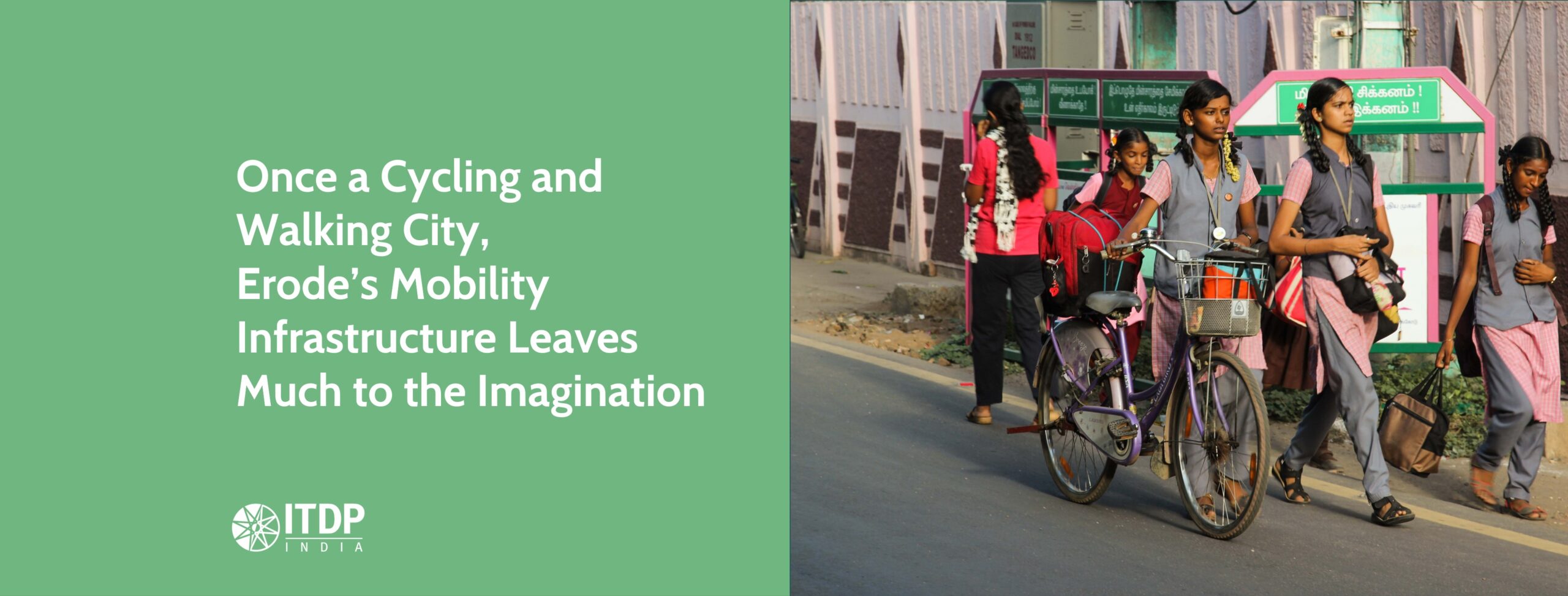
Once a cycling and walking city, Erode’s mobility infrastructure leaves much to the imagination

15th July 2026 by admin


One day. Three commuters. 

5:30 AM: Selvi, a 23- year-old walks 20 minutes to a bus stop with no light as streetlights are not planned to illuminate walking paths. 

8:00 AM: A few hours later, Rajeshwari, a 35-year-old  is dropping her son to school by foot. She’s seen walking on a tightrope of the dusty road edge as large trucks zoom by, as school streets are also commercial and industry access streets. 

5:00 PM: Muthusamy is exhausted by the end of his work shift. However now a longer wait awaits him, for a bus that may not come. He’s seen squatting on the road, as the narrow concrete bench at the shelter is already occupied. 

Erode’s mobility crisis is not abstract. It is lived, daily, by hundreds of thousands. 

Figure 1: A mobility baseline of Erode

Erode is a city presenting a striking paradox. While on one hand, 63% of daily trips rely on sustainable modes of transport, in sharp contrast, city lacks essential pedestrian infrastructure, adequate public transport coverage, and safe, comfortable access to transit. At the same time, vehicle ownership continues to rise, intensifying competition for limited road space and contributing to congestion, pollution, and increasing urban heat. 

These challenges are not unique to Erode. Across many Tier-2 cities in Tamil Nadu, decades-old road networks are struggling to accommodate rapid motorisation, often at the expense of pedestrians, bus users, women, and other vulnerable groups. In one of India’s hottest cities, the impacts are compounded by rising temperatures and climate risks. 

To better understand these gaps and identify targeted solutions, ITDP India, under the UK PACT-supported Climate-Resilient, Sustainable and Inclusive Urban Mobility project, undertook a detailed assessment of Erode’s streets, bus stops, and transit accessibility. The findings reveal not only where the city is falling short, but also how it can build a more inclusive, climate-resilient, and sustainable mobility future.  

Where are the pedestrians of Erode?

Figure 2: Footpath network of Erode city

People like Rajeshwari walk in Erode to the bus stops, markets, schools, temples and other public places –  either as a primary mode or as a last-mile mode of travel. However, this walk is unsafe as there’s no footpath. 

Figure 3: Analysis framework to assess pedestrian access 

At least 40 kms of the road network in Erode has a width greater than 12m RoW, making it feasible to implement adequate footpath infrastructure; however, the city has currently built only around 10.7 kms of footpaths, serving just 3 of 74 Corporation schools and 42 out of 225 bus stops. 

The nature of the footpath was assessed using a framework of analysis, combining infrastructure audits, user perception surveys with 300 citizens, as well as speed surveys. The data revealed that  the existing infrastructure hardly helps where needed most. 

Figure 4: From top to bottom: 1. Absence of defined footpath,  2. Obstructed footpath, 3. Absence of footpath on most roads

Figure 5: Results from perception surveys and footpath audits

Walking should be the easiest and most natural way to get around a city. Yet, for many people in Erode, the lack of continuous, safe, and comfortable footpaths leaves them with little choice but to walk on the carriageway, exposing people to speeding traffic, air pollution, and extreme heat.

Residents are clear about what they want: safer, cooler streets and well-connected footpaths linking homes, schools, workplaces, and bus stops. Their aspirations highlight an opportunity to reimagine Erode’s streets around people, creating a comprehensive pedestrian network that is safer, more inclusive, and climate-resilient.

Is bus transport a better option?

If walking is difficult, perhaps the bus offers relief—but ITDP India’s analysis suggests otherwise. As shared above, bus users like Muthuswamy and Selvi almost end up waiting for prolonged times in unsafe and unprotected situations.

Although the Erode bus network boasts a daily ridership of 6 lakh passengers, the city’s public transit network is currently limited to major arterial corridors totalling 55.56 km, supported by 225 bus stops, 725 TNSTC buses, and 38 private buses. But this means that there are only 25 buses per lakh population, as against the 60 prescribed by MoHUA, indicating a significant overall deficit in the bus network.

Access to public transport was assessed using an analytical framework that combined PNT, bus stop infrastructure audits, and user perception studies. How was this done?

Figure 6: Analysis framework to assess access to public transport

The PNT Analysis is an overlay of the city’s transit network, its land uses and population. This revealed that the bus network is accessible within a 5-minute walking distance only for 44% of the population!  However, if we consider access to Frequent Transit (FT), that is, routes that consist of buses every 5 minutes, only 14% of the population can access it within walking distance. This percentage is much less when it comes to access to buses for schools, institutional areas, or slums, at just 18.6%, 9.3% and 1.7%, respectively.    

Left Figure 7: Bus transit shed (only TNSTC) and Right Figure 8: Frequent transit shed (only TNSTC)

Figure 9: From left to right: 1. Absence of safe crossing at bus stops, 2. Absence of bus shelter, 3. Inadequate seating at bus shelters 

Figure 10: Results from bus user surveys and bus stop audits

The results of the survey and audits reveal a lack of, as well as poor quality infrastructure provided at bus stops, resulting in 99% of audited bus stops falling under Level of Service (LoS) C, which is the lowest scoring category used in the study. 

Therefore, bus shelter infrastructure and buses require comprehensive upgrades to improve safety, comfort, accessibility, and information. Bus users have highlighted the need for panic buttons, help lines, and CCTV in buses and bus stops; low-floor buses; better lighting and more seating; and an increase in bus frequency as top priorities.  

These findings also establish the need for optimising existing routes, developing secondary and tertiary routes served by mini-buses or Intermediate Public Transport (IPT) services like autos, physical integration of bus stops with IPT stops, adding modern buses (Electric and petrol/diesel/CNG) to the fleet, and installing modern bus shelters connected to the footpath, enabling pedestrian access. 

How can Erode move towards sustainable transport?

Erode’s upcoming Master Plan 2041 presents a unique opportunity to build a city that works for everyone. Safe footpaths, comfortable bus stops, reliable and affordable public transport, and essential amenities such as lighting, seating, shade, drinking water, and restrooms are not just infrastructure investments—they are the foundations of dignity, inclusion, and resilience. 

Ultimately, Erode’s progress will be measured not by the roads it builds, but by how safely and comfortably its people can move. The choices made today can help create a more equitable, connected, and climate-resilient city for the future because for Rajeshwari, for Selvi waiting in the dark, for every child who nearly gets hit—there is no more time to waste.  

Those who wish to read through detailed insights, kindly refer to the publication. 

Written by Sanchana S, Senior Associate, Healthy Streets 

Edited by Donita Jose, Deputy Manager, Communications


Frequently Asked Questions

  1. What is PNT analysis? 
    People Near Transit (PNT) Analysis is a method that overlays a city’s public transport network with land-use and population data to understand how many people can access public transport within a walkable distance. In Erode, it was used to identify areas and population groups that lack sufficient access to bus services and frequent transit. 
  1. How extensive is Erode’s public transport network? 

Erode’s public transport network currently consists of: 

  • 55.56 km of bus corridors along major arterial roads
  • 225 bus stops  
  • 725 TNSTC buses  
  • 38 private buses  

Around 6 lakh daily passenger trips . However, the PNT analysis found that only 44% of Erode’s population can access the bus network within a 5-minute walk, and only 14% can access Frequent Transit services (buses every 5 minutes) within walking distance. 

  1. How many roads in Erode have footpaths? 

Erode currently has only 10.7 km of roads with footpaths, despite having at least 40 km of roads wider than 12 metres where adequate footpath infrastructure could be provided. 

  1. How many schools in Erode have access to footpaths? 

Out of 74 Corporation schools in Erode, only 3 schools are currently served by footpaths. Additionally, among the 10 most populated Corporation schools, where 40% of students and teachers walk to school, footpaths adequately serve only 2 schools. 

  1. What are GEDSI principles? 

GEDSI stands for Gender Equality, Disability and Social Inclusion. GEDSI principles ensure that transport and urban infrastructure are designed to be: 

  • Safe and accessible for women, children, older adults, and persons with disabilities  
  • Inclusive of marginalised and vulnerable communities  
  • Equitable in providing access to mobility, services, and opportunities  
  1. What is the UK PACT Project about in Erode? 

The UK PACT-supported Climate-Resilient, Sustainable and Inclusive Urban Mobility Project in Erode aims to improve walking and public transport conditions while supporting low-carbon urban development. As part of the project, ITDP India: 

  • Conducted a People Near Transit (PNT) Analysis  
  • Audited 21 km of footpaths and 30 bus stops  
  • Surveyed 300 pedestrians (including 150 students)

Filed Under: Sustainable transport, Walking and cycling Tagged With: Bus accessibility, Bus stop infrastructure, Climate-resilient cities, Climate-resilient mobility, Erode mobility, Footpath infrastructure, Gender Equality Disability and Social Inclusion (GEDSI), Healthy Streets, Inclusive mobility, Non-motorised transport (NMT), Pedestrian safety, People Near Transit (PNT), Public Transport, Sustainable mobility Erode, Sustainable Transport, Transit accessibility, urban mobility, Urban transport planning, Walkability, Walkable streets, Walking infrastructure

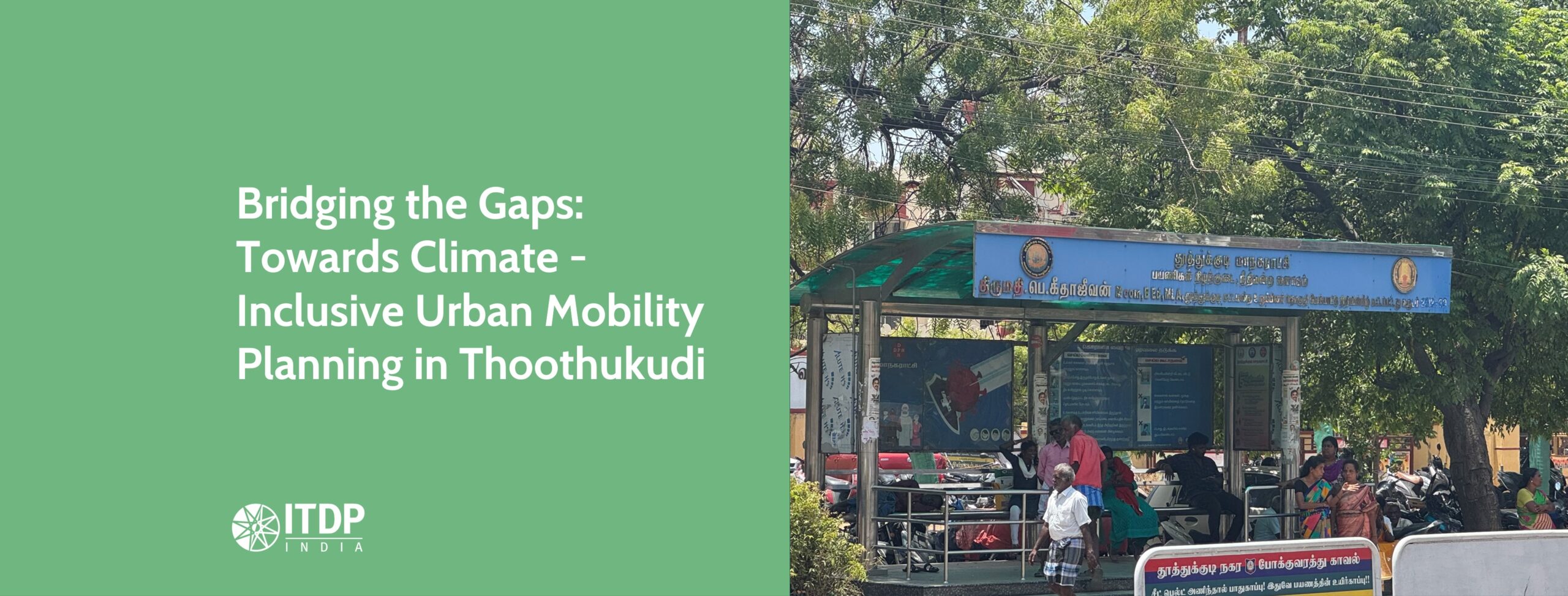
Bridging the Gaps: Towards Climate – Inclusive Urban Mobility Planning in Thoothukudi

22nd April 2026 by admin

Introduction: A Port City at a Mobility Crossroads 

Thoothukudi, also known as Tuticorin, stands at a pivotal stage in its urban mobility planning and economic development trajectory. As one of Southern India’s most important maritime hubs, the city’s growth is anchored by the V.O. Chidambaranar (VOC) Port. It is Tamil Nadu’s second largest port and the country’s third largest container terminal. Positioned as a rapidly expanding Tier II port and industrial centre, Thoothukudi plays a strategic role in enabling regional and national trade flows. Its economy is shaped by a diverse set of drivers, including shipping and logistics, energy production, salt manufacturing, and marine-based livelihoods. Thoothukudi contributes 70% of Tamil Nadu’s total salt production and meets nearly 30% of India’s salt requirements, underscoring its national significance. Industrial activity is robust, with approximately 736, operational factories, 377 of which lie within the municipal limits. Collectively, these economic forces have spurred steady population growth, urban expansion, and escalating travel demand, positioning Thoothukudi as an emerging economic and logistics powerhouse in Tamil Nadu. 

However, the city’s rapid economic expansion has simultaneously intensified pressures on its transportinfrastructure. Between 2022 and 2025, the number of registered vehicles in Thoothukudi increased by nearly 18% reflecting a growing dependence on private motorised transport. Rising vehicle ownership and growing congestion are straining mobility systems, while persistent safety challenges continue to affect pedestrians and cyclists. A total of 165 road accidents (Source: District Crime Record Bureau, Traffic Police, Thoothukudi) were recorded between 2023 and 2025 highlighting road safety issues. In addition, increasing exposure to climate risks such as flooding, heat stress, and cyclonic disturbances is further reshaping mobility patterns across Thoothukudi. Nearly 30% of the composite local planning area (CLPA) is vulnerable to flooding. These trends reinforce both climate and safety-related concerns. 

Strengthening integrated urban mobility and planning in Thoothukudi is about building a system that is safe, inclusive, reliable, and resilient to climate risks; one that supports both people’s daily commuting needs and the city’s long-term growth. This technical blog draws from a comprehensive Gap Assessment and Stakeholder Consultation study undertaken as part of the UK-PACT (Partnering for Accelerated Climate Transitions) programme in Thoothukudi. It examines the current urban mobility planning landscape in Thoothukudi and discusses how targeted, climate-inclusive interventions can strengthen existing systems and position the city as a model for sustainable urban mobility planning in Tier-II Indian cities.  

Why Urban Mobility Planning and Climate Must Be Planned Together 

Urban mobility planning in Thoothukudi reflects the broader challenges confronting many rapidly expanding Indian cities. While economic activities intensify and the urban footprint continues to grow, transport infrastructure and governance framework often struggle to keep pace. As of December 2025, Thoothukudi had 3.6 lakhs registered vehicles, with over 79% being two-wheelers, followed by 11% cars and 6% commercial vehicles, reflecting a strong reliance on two-wheelers. 

Public buses (41 TNSTC and 58 private operators are operating) continue to serve as the primary mode of mass transport; however, issues related to service quality, network coverage, and first and last mile connectivity persist. Currently, 37% of daily commuters rely on buses, yet nearly 51% depend on motorised modes for their first and last mile, highlighting significant gaps in non-motorised and shared mobility options. 

At the same time, climate risks are becoming increasingly visible in travel patterns. Flooding during heavy rainfall disrupts road networks, heat stress reduces walkability, and cyclonic events threaten the reliability of transport services. Survey findings show that more than one-third of commuters experience weather-related travel disruptions, while over a quarter report skipping or cancelling trips during extreme conditions, resulting in economic losses and reduced access to livelihoods. 

These patterns highlight a critical insight: urban mobility planning that ignores climate resilience and social inclusion risks locking cities into high-cost, high-carbon, and inequitable pathways. 

Methodological Approach: A Multi-Layered Gap Assessment 

The Thoothukudi gap assessment adopted a structured, evidence-based methodology that combines three complementary lenses. 

First, a policy and plan review was conducted using a SWOT-based framework to assess how existing statutory and non-statutory documents align with climate-inclusive mobility principles. Key documents reviewed include,  

  • Comprehensive Mobility Plan (2014) 
  • Draft GIS-Based Master Plan (2041)
  • Tamil Nadu Electric Vehicle Policy (2023)  
  • Tamil Nadu Climate Change Mission (2022) 
  • Port Master Plan (2014) 
  • Tamil Nadu Logistics Policy and Integrated Logistics Plans (2023)

alongside Smart Cities Mission and relevant industrial development strategies. 

Second, structured stakeholder consultations were conducted with key agencies responsible for shaping mobility in Thoothukudi—spanning municipal departments, planning authorities, transport operators, and enforcement bodies. Key stakeholders engaged include,  

  • Thoothukudi City Municipal Corporation (Engineering, Town Planning, Accounts, and ICCC departments) 
  • Local Planning Authority, Thoothukudi 
  • Directorate of Town and Country Planning (DTCP) 
  • Tamil Nadu State Transport Corporation (TNSTC)  
  • Regional Transport Office (RTO) 
  • Traffic Police  

These discussions assessed governance structures, inter-agency coordination, budgeting systems, infrastructure execution practices, regulatory frameworks, data limitations and climate considerations influencing urban mobility in the city.  

Third, a commuter perception survey captured covering approximately 800 respondents across 13 strategically selected locations within the Thoothukudi City Municipal Corporation (TCMC) boundary. The survey providedgranular insights into travel behaviour, accessibility, affordability, safety, inclusion, and climate-related disruptions. Together, these layers enabled a comprehensive understanding of systemic gaps as well as on-ground realities.  

Policy and Institutional Gaps: Fragmentation at the Core 

One of the most significant findings of the assessment relates to institutional and policy fragmentation. While Thoothukudi has multiple plans and sectoral policies in place, they address mobility, climate action, land use,freight and economic development largely in silos. 

Public transport strengthening, non-motorised transport (NMT), electric mobility, freight movement, and climate mitigation appear across different documents, but without a unified implementation framework or clear alignment with city-level climate targets. Transport-sector greenhouse gas baselines, mitigation indicators, and monitoring mechanisms are inconsistently embedded within statutory plans, limiting the city’s ability to track progress toward low-carbon mobility goals. 

Stakeholders further highlighted that inter-departmental coordination is predominantly ad hoc and project specific. While the city has demonstrated capacity to deliver large infrastructure projects through national and state schemes, mobility initiatives remain largely scheme-driven rather than guided by a long-term, integrated strategyand vision for the city.  

Understanding Mobility Patterns: What the Data Reveals 

Data from the commuter perception survey and secondary analysis reveal a nuanced picture of mobility in Thoothukudi. 

Public buses account for approximately 37% of daily trips, while two-wheelers contribute around 32%.Walking and cycling together represent a significant 14% share-indicating strong latent demand for NMT that remainsunderserved due to inadequate infrastructure. Work trips dominate travel demand, accounting for nearly 60% of all journeys, followed by education and shopping trips which each constitute 17% of the total trips. 

Gender-disaggregated data highlights important equity dimensions.  Men predominantly rely on two-wheelers (50.6%) and buses (28.9%), whereas women show a higher dependence on buses (52.9%) and NMT (bicycle and walk) (21%). This highlights the need for safe, accessible, and affordable public transport and NMT systems to support women’s mobility and enable their full participation in the urban economy. 

Figure 1: Mode of Commute – Gender Aggregated Preferences. Source: TERI 

Understanding Mobility Patterns: What the Data On-Ground Challenges: Accessibility, Safety, and Affordability  

Despite relatively high public transport usage, commuters face multiple barriers across the travel chain. More than half of respondents rely on motorised modes for first and last-mile access, while 15% report that bus stops are located over a radius of more than one kilometre from their homes. Average waiting time for buses stand at around 16 minutes, reducing reliability for daily commuters. 

Safety and inclusivity concerns are particularly acute. Nearly 70% of respondents cited poor pedestrian facilities, including the absence of safe crossings, signages, and continuous footpaths. Only 15 bus shelters meet universal accessibility standards, and inadequate street lighting affects night-time safety-especially for women, elderly persons, and persons with disabilities. 

In this regard, discussions with stakeholders revealed a shared concern: while the intent to create safer and more inclusive streets exists, translating it into on-ground design remains a challenge. Limited technical capacity impedes efforts to map climate-vulnerable stretches, address missing road links, and develop a coherent NMT network for the city. There is a strong need for targeted design and planning support particularly for creating universally accessible footpaths with tactile paving and appropriate signages, and for integrating pedestrian safety measures such as pelican crossings and signalised intersections. Strengthening technical capacity and institutionalising these measures is critical to delivering safer, more inclusive, and climate-responsive streets for all. 

Affordability also remains a critical issue, around one-third of commuters spend 10 -20% of their income on travel.  One in four avoid trips altogether due to high transport costs. Additionally, low digital adoption-reflected in the limited willingness to use app-based mobility systems highlights the need for inclusive, accessible service models. 

Figure 2: Commuter Perceptions – SWOT. Source: TERI 

The commuter perception survey highlights that systematic barrier that limits walkability in the city. Many people are reluctant to walk due to safety concerns arising from poor street lighting, high traffic volumes, and encroached or discontinuous footpaths. They expressed a clear need for continuous, well-connected pedestrian infrastructure and frequent, reliable public transport services, underscoring the importance of strengthening both walkability and service quality to improve everyday mobility. 

Climate Risk and Mobility: Exposure and Vulnerability 

Climate risk analysis reveals that existing mobility systems in Thoothukudi lack resilience to extreme weather events. Several neighbourhoods, including Matha Koil and Muthu Nagar function as “triple hazard zones,” where recurrent urban flooding, intense heat stress, and cyclonic impacts converge to disrupt travel and transport operations. 

These climate stresses disproportionately affect vulnerable populations who depend on walking, cycling, and public transport for daily mobility. During extreme events, disruptions to transport networks translate directly into lost incomes, reduced access to essential services, and elevated safety risks particularly for women, informal workers, the elderly, and persons with disabilities. In the absence of systematic climate vulnerability mapping and its integration into transport planning, infrastructure design, and service operations, these impacts are likely to intensify in both frequency and severity over the coming decades. 

Strategic Pathways: From Gaps to Action 

The gap assessment points toward a set of interlinked strategic priorities for building climate-inclusive mobility in Thoothukudi. 

Figure 3: Strategic Priorities – Towards Climate Inclusive Mobility. Source: ITDP India 

  • Dedicated Urban Mobility Unit: At the institutional level, establishing a dedicated Urban Mobility Unit within the Municipal Corporation can provide a focal point for coordinated planning, budgeting, and monitoring across agencies. Leveraging existing statutory mechanisms, such as the District Road Safety Committee, can further support integrated decision-making without creating parallel structures. 

Implication: Stronger governance structures will move the city from project-based execution to long-term, system-level planning.  

  • NMT and Public Transport Infrastructure Strengthening NMT and public transport infrastructure emerges as a high-impact intervention. City-wide NMT and Complete Streets network planning, universally accessible bus shelters, and improved feeder integration can drive mode shift away from private vehicles while enhancing resilience during extreme weather events. 

Implication: Investments in public and non-motorised transport deliver high returns—improving equity, safety, overall system efficiency and revenue gains through improved businesses and real estate.  

  • Climate-Responsive Infrastructure Embedding climate-responsive design principles- including flood- and heat-sensitive infrastructure, shaded walkways, and route-level vulnerability mapping-can reduce service disruptions and long-term maintenance costs. A phased electric mobility roadmap, starting with public and para-transit fleets, offers opportunities to reduce tailpipe emissions and improve urban air quality. 

Implication: Climate-responsive infrastructure reduces long-term costs while strengthening resilience and service continuity. 

  • Dedicated Financing: Equally important is the creation of predictable, ring-fenced financing for mobility infrastructure, supported by climate finance, multilateral funding, and CSR partnerships. Strengthening data systems and linking mobility indicators to the city’s Integrated Command and Control Centre (ICCC) can enable evidence-based planning and performance monitoring. 

Implication: Moving away from ad-hoc/one-time, scheme-based funding ensures continuity and scalability of mobility investments. 

Thoothukudi – A Lighthouse Opportunity for Tier-II Cities 

Thoothukudi’s urbanisation trajectory reflects a broader shift underway across India’s Tier-II cities. As cities like Coimbatore, Madurai, Surat, Nagpur, and Visakhapatnam expand, mobility systems are under increasing pressure to evolve often outpacing the capacity of existing planning and governance frameworks. These challenges are systemic, interconnected and shape how people experience their city every day whether urban mobility and planning feel safe, accessible, and dependable. 

Within this context, Thoothukudi presents a critical opportunity. As a mid-sized, fast-growing port city, it offers the right scale to test solutions that are practical, adaptable, and grounded in local realities. Strengthening public transport, improving last-mile connectivity, prioritising walking and cycling, and embedding climate resilience into infrastructure can collectively move the city towards a more balanced and future-ready mobility system. Therecommendations emerging from the gap assessment and stakeholder consultation study sets a strong foundationto guide and enable this transition. 

Aligning Local Action with State Ambition 

Playing a catalytic role, the gap assessment and stakeholder consultations, has helped build a robust evidence base, deepen institutional understanding, and identify priority actions towards climate-inclusive urban mobilityplanning. By supporting data-driven analysis and fostering cross-sectoral collaboration, the UK-PACT programme is accelerating early wins while demonstrating how targeted technical assistance can unlock scalable and replicable urban transformations. 

It also aligns with Tamil Nadu’s broader development vision. The state has consistently positioned itself as a leader in sustainable urbanisation, climate action, and inclusive economic growth; Tamil Nadu has committed to achieving net-zero emissions well before 2070, supported by dedicated institutions like the Tamil Nadu Climate Change Mission and targeted climate financing. At the same time, it is strengthening data-driven planning through state-level climate-tracking systems that help guide policy and monitor progress.

On the mobility front, the state is emerging as a major hub for electric mobility. It already accounts for a significant share of India’s EV manufacturing and continues to attract large-scale investments in the sector. Alongside this, investments in urban infrastructure across Tier-II cities and district-level decarbonisation efforts are also beginning to integrate mobility, energy, and resilience planning. Together, these efforts signal a clear direction: building cities that are not only economically competitive, but also low-carbon, inclusive, and resilient. 

By advancing climate-inclusive and people-centric mobility through the programme, Thoothukudi can directly contribute to these state-level goals. It can support lower emissions, improve air quality, enhance accessibility for all groups, and strengthen resilience to climate risks—while continuing to drive economic growth through its port and industrial base. Thoothukudi can emerge as a true lighthouse city—demonstrating how Tier-II cities can move beyond fragmented improvements and align mobility, climate, and equity goals within a coherent and scalable framework. 

Authors

Varsha Vasuhe V, Senior Associate, ITDP India  

Sharif Qamar, Fellow & Associate Director, TERI 

Ruchika Mattoo, Associate Fellow, TERI  

Richa Joshi, Senior Manager, MInT, IIT Madras 

Reviewed by Sooraj EM, Program Manager, ITDP India

Technical support by

Priya Dharshini, Research Associate, ITDP India

Anushree Harde, TERI

Arun Babu, TERI

Filed Under: Public transport Tagged With: climate inclusive transport India, climate resilient cities India, EV policy Tamil Nadu, non motorised transport India, public transport challenges India, sustainable urban mobility planning, Thoothukudi urban mobility, Tier II city transport planning, Tuticorin transport infrastructure, urban mobility gaps analysis

Cycling Isn’t Disappearing from Indian Cities. We’ve Just Made Cyclists Invisible

14th April 2026 by admin

Walk down a busy arterial road in an Indian city and you might conclude that cycling is a thing of the past. But look closer, especially during peak hours, and a different story emerges. On wide streets in Pune, industrial corridors in Pimpri-Chinchwad, and arterial streets in Nagpur, cyclists are very much present. They are just easier to miss because our streets are no longer designed to see them. 

A recent study conducted by ITDP India across these three Maharashtra cities (Pune, Pimpri Chinchwad, and Nagpur) found visibly high cycle volumes at peak hours, even on streets where cycling infrastructure is incomplete or poorly enforced. The data challenges a popular myth: cycling hasn’t disappeared. It has simply been pushed to the margins. 

Who Are India’s Cyclists Today?

India’s cyclists are not a homogenous group. Some ride to work, some to school, some to save money, and some for health or the environment. According to the survey of over 600 residents in three cities, nearly half of all cyclists use their cycles for daily, non-recreational trips—to jobs, colleges, markets, and homes. 

58% of responses from male cyclists said they cycle for recreation and fitness, but women, in particular, seem to rely on cycling as a mode of necessity. Nearly 60% of women cyclists reported using cycles for commuting, education, or errands. This distinction matters because it reframes cycling not as a lifestyle choice, but as essential urban mobility—especially for those with limited access to private vehicles or public transport. 

Children, too, are a critical yet overlooked group. Among cyclists under 18, two-thirds cycle primarily to reach schools and colleges, and 84% said they prefer dedicated cycle tracks over mixed traffic conditions. Their message is clear: safety, not speed, determines whether young people cycle. As one student cyclist put it, “Sometimes it gets too hot when I cycle back from school. I wish there were more trees or shade on the way.” Infrastructure, for them, is not just concrete—it is comfort, dignity, and protection. Some also said that their parent didn’t allow them to cycle to school as it was perceived to be unsafe.  

Infrastructure Exists. But Is It Working?

Over the past decade, Indian cities have invested in cycling infrastructure. Pune alone has built over 90 km of cycle tracks, Pimpri-Chinchwad more than 50 km, and Nagpur has begun developing an early-stage network.  

On paper, the city is making progress—cycle tracks have been built, and space has been allocated. But the reality on the ground tells a different story. 

Nearly 60% of cyclists rate segregated cycle tracks as ‘bad’ for comfort, pointing to fundamental design and maintenance issues. More than 60% report that these tracks are frequently obstructed by parked vehicles and vendor encroachments, while 44% highlight discontinuity—tracks that simply disappear mid-route. 

Faced with these challenges, cyclists are making a pragmatic choice. Instead of using unreliable and blocked infrastructure, many prefer riding in regular traffic lanes, even if it feels less safe. Ironically, shared streets with traffic calming measures receive better feedback, with 53% rating them as ‘good’ for comfort. 

The takeaway is clear: infrastructure alone is not enough. If cycle tracks are not continuous, unobstructed, and comfortable, they fail to serve their purpose—leaving cyclists to navigate the very traffic they were meant to be protected from. 

The single biggest complaint across all three cities? Obstructions.

Over 56% of cyclists cited parked vehicles and vendors blocking cycle tracks, while 54% pointed to weak enforcement as a key deterrent. One respondent asked bluntly: “What’s the use of a cycle track if it’s always full of parked vehicles?” 

 For women, the stakes are even higher. Half reported speeding vehicles and lack of enforcement as major deterrents, and more than 60% flagged poor road conditions and potholes as serious safety concerns. It is no surprise, then, that 87% of women cyclists said they prefer physically segregated cycle tracks.  

Regarding surface materials, 52% of respondents preferred asphalt(blacktop) as the ideal material for cycle tracks. Paver clocks are strict no-no as surface materials. 

The Silent Majority Waiting to Cycle 

Perhaps the most striking finding is not about those who already cycle, but those who don’t. 

Among non-cyclists and infrequent cyclists, 72% said they would consider cycling if safe, continuous cycle tracks were available, and 61% said strict enforcement of traffic rules would make a difference. These are not ideological opponents of cycling; they are pragmatic urban residents responding to risk.  

With Comprehensive Mobility Plans in these cities ambitiously targeting ~35% of trips by walking and cycling by 2030, there is a clear need for reliable, safe, and high-quality cycling infrastructure—not just to support existing cyclists, but to encourage new users and a broader section of citizens to adopt cycling. 

A Way Forward: From Token Lanes to People-Centred Streets

If we really want to see the cyclist back on the streets, we will need to provide dignity, safety and convenience to the users through nuanced design and strict enforcement.  

  1. First, continuity matters more than length. Fragmented cycle tracks that disappear at junctions or merge into traffic are worse than none at all.  
  1. Second, enforcement is infrastructure. Without managing parking, vending, and vehicle speeds, even well-designed tracks fail.  
  1. Third, cities must prioritise vulnerable users—women, children, and older adults—by providing shaded routes, smooth surfaces like asphalt, and traffic calming near schools and neighbourhood streets. 
  1. Finally, shared streets deserve renewed attention. When designed with narrow carriageways, speed tables, and pedestrian priority, they offer inclusive mobility without excessive segregation—an approach that many European cities have embraced and Indian cities can adapt. 

Cycling in India is not dying. It is waiting. Waiting for streets that acknowledge its users, protect their journeys, and recognise that a cycle is not a symbol of the past—but a vehicle for a more equitable urban future. 

Written by Pranjal Kulkarni, Programme Manager, Healthy Streets, ITDP India 

Edited by Kashmira Dubash, Deputy Director, ITDP India 

Filed Under: Pune, Walking and cycling Tagged With: bicycle commuting India, cycling in India, cycling infrastructure India, Nagpur cycling infrastructure, non motorized transport, Pimpri Chinchwad cycling, Pune cycling tracks, road safety cyclists India, shared streets design, sustainable transport India, traffic enforcement India, urban mobility India, women cyclists India

From Scrapyard to Supply Chain, Tamil Nadu is Bringing Circularity in its Clean Mobility Transition 

10th April 2026 by admin


As India works towards its climate and clean air goals, efforts are focused on making the shift to cleaner vehicles happen faster. However, for this transition to succeed, two equally important challenges need to be addressed. 

The first is moving older, more polluting vehicles off the road. In 2025, around 12 million vehicles across India were eligible for scrappage, yet between 2022 and 2025, fewer than 3% of them were actually scrapped. This is a serious problem because older vehicles do not just pollute a little more — they can pollute many times more. In fact, one BS4 truck or bus can emit as much pollution as around 14 BS6 vehicles, while one BS4 car can be equivalent to nearly 11 newer BS6 cars in terms of emissions. If cleaner mobility is to become a reality, this shift away from ageing, high-emission vehicles needs to happen at scale. 

The second challenge is what happens once these vehicles begin to leave the system. Tamil Nadu alone is expected to see around 1.56 crore vehicles enter the scrapping market by 2030. At the same time, as EV adoption increases, the state will also begin to see a rise in battery waste over the coming years. This means that a sustainable transition is not only about bringing cleaner vehicles onto the road. We need to deal responsibly with the old vehicles, tyres, vehicle components, and batteries that this shift will leave behind. Without proper systems in place, end-of-life vehicles (ELVs) and batteries can create environmental and public health risks. 

At the same time, vehicle components and batteries are valuable resources that contain valuable resources that can be recovered and reused, and should not be simply discarded. Critical minerals and rare earth elements used in EV batteries are limited, expensive, and highly import-dependent. Discarding what can be recovered works against the very idea of a sustainable transition. 

Hence, the next phase for a Greener Tamil Nadu needs to go beyond adoption. It must help people move away from older, polluting vehicles, while also creating a responsible and circular pathway for the materials and components they leave behind. In many ways, this is what will determine whether the transition is truly clean. 

The vision for a Greener Tamil Nadu 

The manufacturing sector, including vehicle manufacturing, forms the backbone of Tamil Nadu’s economic growth story. As the state works towards becoming a trillion-dollar economy by 2030, the demand for materials and resources to support this growth will also rise significantly. In the mobility sector, this raises an important question: how can Tamil Nadu continue to move towards cleaner transport without creating a new burden of old vehicles, EV batteries, tyres, and parts that are left unmanaged? 

Tamil Nadu’s recent policy direction – the Vehicle Scrappage Policy, implemented through G.O. Ms. No. 451, and the Tamil Nadu Circular Economy Investment Policy 2026, together address three parts of the transition:  

  1. Moving people away from older, polluting vehicles;  
  2. Preparing for the rise in end-of-life components and battery flows; and 
  3. Reducing the pressure on limited and expensive raw materials through reuse, recycling, and second-life applications. 

What Tamil Nadu’s Vehicle Scrappage Policy Means 

Tamil Nadu’s Vehicle Scrappage Policy does more than create a process for scrapping old vehicles. It puts in place a more organised system for retiring vehicles that are old, unfit, damaged, or no longer economical to repair, while also linking scrappage to cleaner mobility goals. 

For citizens, the policy creates a formal and digitally tracked pathway to scrap eligible vehicles through authorised Registered Vehicle Scrapping Facilities (RVSFs). By moving the process to the Vahan portal and authorised scrapping facilities, the policy seeks to make scrappage more transparent, accountable, and easier to navigate than informal channels. 

The policy also lays down a method for determining scrap value, allowing vehicle owners to recover some value from an ageing vehicle through an authorised scrapping facility. It also provides a Certificate of Deposit, which can be used to access benefits when purchasing a new vehicle. 

Image source: Tata motors

Beyond citizens, the policy also has implications for the scrapping and recycling ecosystem itself. By shifting vehicle retirement into a more formal and regulated system, it creates the possibility for the sector to gradually move away from unsafe and environmentally harmful dismantling practices towards safer, more standardised, and traceable methods. For workers and enterprises in this space, formalisation can also mean clearer processes, more predictable pricing, and stronger integration with authorised recycling and recovery industries. While much of the sector still operates informally today, policies like this begin to lay the groundwork for a more organisedecosystem over time. 

At the same time, the policy recognises that this transition cannot rest on citizens alone. It requires the government itself to lead by example by phasing out vehicles in its own fleet that are older than 15 years. In Tamil Nadu, this applies to 11,908 government-owned vehicles, including those belonging to State Transport Undertakings and local bodies, which are to be disposed off through RVSFs. The policy also empowers the state to build the supporting ecosystem by enabling the establishment of scrapping facilities and automated testing stations, both of which are essential for making this shift work in practice. 

Together, these provisions make the policy larger than a scrappage rule. It is both a citizen-facing and system-facing reform.  

How the Circular Economy Investment Policy 2026 Strengthens the Clean Mobility Transition 

If the Vehicle Scrappage Policy focuses on helping older vehicles exit the system more responsibly, the Tamil Nadu Circular Economy Investment Policy 2026 looks at what happens next. The policy identifies the automobile sector as a major part of the state’s greener industrial future and focuses on three linked areas: end-of-life vehicles, EV batteries, and tyres. 

One of the clearest signals in the policy is that Tamil Nadu is preparing for scale. With 1.56 crore vehicles expected to enter the scrapping market by 2030, there is a need to build the industries and systems needed to recover value from them. The state is facilitating the development of Registered Vehicle Scrapping Facilities (RVSFs) and associated infrastructure, aligning with the national Voluntary Vehicle Fleet Modernisation Program (VVMP).  

There is a major focus on advanced-chemistry cells and battery recycling, which is increasingly important as EV adoption rises. From a 3.94% adoption rate in 2022, Tamil Nadu reached 7.85% EV adoption in 2025, with over five lakh registered EVs as of February 2026. While this is a positive sign for cleaner mobility, it points to a challenge that is going to emerge. Since EV batteries typically last up to ten years, a large number of batteries will be reaching their end-of-life in the coming decade.  

Instead of seeing used batteries only as a disposal challenge, the policy treats them as a source of valuable materials such as lithium, nickel, and cobalt that can be recovered and fed back into future manufacturing. This is particularly important for India, which remains heavily dependent on imports for these critical minerals — entirely so in the case of lithium and cobalt, and significantly for nickel and rare earth elements. Today, a large share of battery-related waste is either exported or lost to informal channels, representing not only an environmental concern but also economic loss and a resource security risk.  

Image source: Tata World

By creating systems to recover these materials from old batteries in a more robust and localised way, Tamil Nadu can help reduce future import dependence while building a more resilient EV ecosystem. To support this, the policy focuses on the entire battery value chain, including collection, diagnostics, dismantling, recycling, and material recovery. It also encourages second-life uses for batteries, such as for energy storage, backup power, and support for EV charging infrastructure. 

The third component looks at tyres, which are among the most frequently replaced parts of a vehicle due to constant exposure and wear. A tyre typically lasts only one-fifth of a vehicle’s life, which means that the number of tyresreaching the end of their use is far greater than the number of vehicles. This becomes especially important in a country like India, which is the world’s third-largest automobile market, with the tyre manufacturing sector reaching a total production of 217 million units. Tamil Nadu plays a significant role in this ecosystem, contributing to nearly to 25% of the country’s total tyre exports, while also having the third largest vehicle fleet registrations in the country. Together, this means the state is likely to see a substantial volume of used tyres over time. In this context, the policy encourages more circular ways of handling used tyres, from recycling and retreading to creating downstream uses in other industries. This helps position circularity not only as an environmental response, but also as an industrial opportunity. 

To make this ecosystem viable, the policy also introduces financial and institutional support. It offers incentives for new recycling and circular economy businesses, support for skilling and employment, and added assistance for smaller enterprises. It also proposes enabling infrastructure such as low-carbon green industrial parks, digital platforms to connect waste generators with authorised recyclers, and climate-focused funding mechanisms. 

By supporting the recovery, recycling, and repurposing of old vehicle components, tyres, and batteries, Tamil Nadu is not only addressing an environmental challenge but also opening up new opportunities for investment in industries that can bring these materials back into productive use. This is especially relevant for EV batteries, where second-life applications and material recovery can create value beyond the vehicle’s first use. 

Along with reducing carbon emissions, the Circular Economy Investment Policy 2026 focuses on building the industries, recovery systems, and material loops needed to make the transition from ICE vehicles more sustainable over time. 

Tamil Nadu’s two recent reforms mark an important shift in how the clean mobility transition is being approached 

Having these policies in place is, in itself, a positive start. At a time when vehicle registrations continue to rise across India – now at 42 crore – and Tamil Nadu alone accounts for over 3.5 crore registered vehicles, these reforms are a logical next step in preparing for the long-term realities of a growing and changing mobility ecosystem. The state’s vehicle registration has also continued to expand steadily in recent years, increasing by 6.98% in 2024 and 8.44% in 2025, underlining the need to think not only about cleaner vehicles entering the system, but also about how older vehicles, batteries, and materials exit it 15 years down the line.  

At the same time, it is important to keep in mind that the EV ecosystem is still in a nascent stage, and the real promise of these reforms will depend on how effectively the government is able to build the supporting infrastructure, strengthen implementation, and translate policy intent into systems that work on the ground. 

Written by Shreesha Arondekar, Senior Associate, Development and Communications, with inputs from Pavithiran R , Associate, Transport Systems and Electric Mobility and Sooraj E M Program Manager, Transport Systems and Electric Mobility 

Edited by Donita Jose, Deputy Manager, Communications 

Filed Under: Chennai, news Tagged With: auto recycling, automotive sector, battery recycling, circular economy, clean air, clean mobility, climate action, electric vehicles, end-of-life vehicles, energy transition, EV adoption, EV batteries, future of mobility, green policy, green transport, industrial policy, low emissions, recycling ecosystem, resource efficiency, sustainability, sustainable development, tyre recycling, urban mobility, vehicle scrappage

Why Liveable Cities, Not Flyovers, Will Win Urban Votes

8th April 2026 by admin


As published in The Hindu(Tamil)

For decades now, the opening of a new flyover has been the ultimate symbol of political progress. These towering structures of concrete and steel were marketed as the ultimate solution to congestion and a promise of modernity and speed.  

But ask any commuter on any major artery in our cities, and the answer is clear: the promise has expired. The congestion returns, often worse than before, while the immense investment delivers only fleeting relief for a small segment of commuters. 

The larger public sees very little benefit. 

The core problem here lies in an old belief in city planning: that we can build our way out of traffic. In reality, new roads encourage more people to use private vehicles. When driving becomes slightly easier, more cars and two-wheelers come onto the road. Soon, congestion returns. This cycle keeps repeating and cities keep spending huge public money on projects that are both environmentally and fiscally unsustainable.  

Globally, most forward-thinking cities have begun to question this approach. One famous example is Seoul in South Korea. The city famously dismantled a massive elevated highway through its centre, over the Cheonggyecheon stream. Many feared traffic chaos. Instead, Seoul gained a six-kilometre public park, better air quality, a 15% increase in public transport use, and rising property values. Traffic did not increase. The city became healthier and more liveable. 

San Francisco, Portland, and Paris have followed suit, removing urban highways to reclaim space for people, not just vehicles. These cities recognised that the competition for the future isn’t about which city is fastest to drive through, but which is the most desirable to live in. 

So, what is the political alternative in Tamil Nadu? It’s a platform that addresses the actual anxieties of the 21st-century voter: the crushing cost of living, the daily drain of the time-tax commute, and the health burden of toxic air. 

1. Fiscal Responsibility: Better Use of Public Money 

Flyovers are extremely expensive. One kilometre of flyover can cost ₹200 crore or more. This money serves a limited number of private vehicles. In contrast, the same amount can fund solutions that help far more people. 

For example, well-planned Bus Rapid Transit (BRT) corridors can move seven to eight times more people per hour than a flyover. The same budget can also buy around 100 electric buses or build over 100 kilometres of safe footpaths and pedestrian-friendly streets. 

The real question for governments should be: how can public money help the maximum number of people? Flyovers benefit a minority. Strong public transport systems benefit everyone—office workers, students, elderly citizens, women, and low-income families. From a financial point of view, investing in buses, walking, and cycling gives far better returns for taxpayers. 

2. The Daily “Time Tax” on Citizens 

For city residents, time has become a hidden tax. Hours are lost every week in traffic jams. This affects work, family life, health, and mental well-being. For professionals, small business owners, and gig workers, time lost is income lost. 

A city with frequent, reliable buses and good last-mile connectivity gives people back their time. Shorter and predictable commutes improve productivity and reduce stress. Today, many employees value an easy commute as much as salary hikes. Real estate prices already show this—areas close to good public transport are in high demand. 

When governments invest in strong public transport, they are not just improving mobility. They are strengthening the economy. Reduced travel time means more efficient cities and happier citizens. 

3. Public Health and Quality of Life 

Our cities are struggling with pollution, noise, and unsafe streets. Transport is one of the biggest contributors to air pollution and climate emissions. Every new flyover encourages more vehicle use, which worsens air quality. 

The alternative is cities designed for people. Safe footpaths, cycle tracks, shaded streets, and green spaces make cities healthier. These changes reduce respiratory illness, traffic accidents, and stress. Children can walk safely. Elderly citizens can move around without fear. Neighbourhoods become connected instead of divided by large concrete structures. 

This is not a luxury idea. It is about basic health, safety, and dignity in everyday life. 

What Voters Want Today

The voter is no longer impressed by a photo-op on an empty flyover. They are counting the hours lost in their week, calculating the fuel burning a hole in their pocket, and worrying about the air their children breathe. They are choosing quality of life. 

The winning manifesto will not list flyovers. It will pledge a statewide transit revolution – a commitment to doubling bus fleets, digitizing payments, and integrating schedules and ticketing so that a seamless multi-modal journey is a reality. It will promise to reclaim street space for people, turning dangerous corridors into complete streets. It will frame mobility not as a civic engineering challenge, but as the backbone of a prosperous, healthy, and efficient Tamil Nadu. 

The world’s most admired cities  have learned that you cannot build your way to prosperity with more concrete. Tamil Nadu has the chance to leapfrog the mistakes of the past and build truly smart, sustainable cities. The question is not whether we can afford to make this shift, but whether we can afford not to. The voter on the crowded bus, the parent worried about polluted air, and the citizen tired of traffic jams are waiting for an answer. And their votes will reflect it. 

Authored by A V Venugopal is a Program Manager at ITDP India, based in Chennai, where he leads sustainable mobility projects focused on street transformation and parking management. His work spans Tamil Nadu and extends nationally, in close collaboration with a multidisciplinary team. 

Filed Under: Chennai, news, Public transport, Walking and cycling Tagged With: Chennai, India, non-motorised transport, Parking, parking management, Public Transport, Safe Route To School, Sustainable Transport, Tamil Nadu, Walking and Cycling

What Indian Cities can Learn From Chennai’s New Mobility Playbook

19th March 2026 by admin

As published in The Times of India

Indian cities do not suffer from a lack of transport plans; they struggle to turn those plans into coordinated action on the ground. Over the past two decades, most large cities have articulated similar ambitions—prioritising public transport, integrating land use and mobility, improving safety, and reducing dependence on private vehicles. Yet congestion has worsened, road fatalities remain high, and private vehicle ownership continues to rise across urban India. The problem has not been a lack of vision, but the difficulty of translating that vision into aligned implementation across agencies. 

Chennai reflects this broader national challenge. The city has planned for mobility before: a Comprehensive Traffic and Transportation Study in 2010 and a Comprehensive Mobility Plan in 2019, both aligned with national policy priorities around public transport, non-motorised travel, and land-use integration. Yet the outcomes fell short. This pattern is familiar across urban India: mobility plans do not fail because their goals are wrong, but because the institutional conditions required to implement them are weak. 

What’s Changed This Time 

For context, Chennai’s latest Comprehensive Mobility Plan (CMP) for 2023–2048 must be understood in this context. It is not the city’s first attempt at mobility planning, nor does it radically depart from earlier goals. 

But the key shift is institutional. With the operationalisation of the Chennai Unified Metropolitan Transport Authority (CUMTA) in 2022, Chennai now has a coordinating body for transport decisions across agencies and jurisdictions—something most Indian cities still lack in practice. Mandated under the CUMTA Act, the preparation of the Comprehensive Mobility Plan is a statutory requirement, marking a move away from ad-hoc planning towards a formally instituted process. This matters because fragmented decision-making, rather than a lack of projects, has fundamentally shaped poor mobility outcomes in Indian cities. 

Planning at the Right Scale, with the Right Evidence 

The CMP reflects the scale at which Chennai’s mobility challenges now operate. While earlier plans were anchored to a smaller planning area—1,189 square kilometres, the current CMP adopts a much broader metropolitan lens, covering 5,904 square kilometres. This expanded boundary brought rapidly urbanising suburban regions into the mobility planning framework, recognising that travel patterns, commuting pressures, and infrastructure demand today extend well beyond the city core and municipal limits. 

Planning at this scale required being backed by a stronger evidence base. The CMP draws on large-scale household surveys covering over 50,000 households and approximately two lakh citizens, complemented by fifteen primary surveys on traffic, parking, road conditions, freight movement, and travel behaviour. This shifts planning away from assumptions and corridor-level fixes towards a clearer understanding of how people travel across the region. 

Additionally, the planning process was participatory from the outset. Multiple government departments responsible for roads, public transport, planning, utilities, and finance, and public stakeholders, were engaged throughout, contributing to problem framing as well as solution design. By involving these agencies and the public from the outset, the CMP seeks to build shared ownership, an essential condition for implementation that earlier mobility plans often lacked. 

Where the Real Test Lies: Governance 

If evidence and participation explain why this CMP is different in its preparation, governance will determine whether it changes outcomes. Across Indian cities, mobility failures arise from projects implemented without alignment—often cancelling out each other’s benefits. Roads are widened while bus fleets stagnate for decades; metro and rail systems are built without reliable last-mile access; and parking supply continues to expand even as public transport struggles for priority. Each decision may appear defensible in isolation, but together they undermine the city’s mobility goals. 

Chennai’s CMP is explicit about this failure—and about what must change. At the centre of this shift is the role envisaged for the CUMTA. Unlike earlier arrangements that relied on goodwill or ad-hoc coordination, CUMTA is positioned as a reviewing authority for transport and mobility proposals initiated by different departments. The intent is straightforward: major transport interventions should proceed only if they align with the metropolitan mobility vision set out in the CMP. 

This is more than a procedural adjustment. It signals a shift in how transport decisions are expected to be made. Cities that have built high-performing urban mobility systems such as London and Singapore—have done so by consolidating authority, standardising dataand design systems, and enforcing alignment across agencies through institutions like Transport for London and the Land Transport Authority. Chennai’s CMP moves in this direction through proposals for standardised right-of-way design, region-wide data systems, parking management as a demand-management tool, and the exploration of a dedicated urban transport fund. 

Early Gains and the Test Ahead

This institutional experiment is already showing signs of traction. As the CMP is being integrated with the city’s Third Master Plan, its priorities are beginning to acquire statutory force through land-use planning. This alignment has the potential to significantly strengthen implementation—anchoring mobility decisions within the city’s formal planning framework and reducing the risk of fragmented or competing interventions. 

That said, it would be premature to treat this as a settled outcome. The durability of this shift will depend on consistent enforcement of alignment, the ability to resolve inter-agency conflicts, and the extent to which the coordinating institution’s role is sustained through administrative practice over time. 

What Could Change on the Ground 

If the CMP holds through implementation, its most visible impact will be a different everyday experience for commuters. Commutes become more predictable. Public transport becomes a reliable first choice rather than a reluctant compromise. Streets acquire clearer priorities, reducing conflict between buses, pedestrians, cyclists, and private vehicles. 

For residents in the metropolitan periphery—where growth has outpaced services—the plan’s metropolitan lens is especially significant. Better alignment of suburban rail, bus services, and regional connectivity with where people live and work can reduce dependence on two-wheelers and long, expensive commutes. Safer, more legible transport systems expand access for women, older adults, and children. Businesses benefit from more reliable labour access and logistics. 

A Test Case for Indian Cities 

Chennai’s CMP does not offer a shortcut, nor does it guarantee success. What it offers is a clearer diagnosis of why mobility planning has struggled in Indian cities—and a credible attempt to address those weaknesses through governance, coordination, and evidence-led decision-making. 

The lesson here is not that cities need better plans. Most cities already have them. The lesson is that without empowered institutions, shared ownership across departments, and mechanisms to enforce alignment, even the most technically sound plans will struggle to change outcomes. Chennai has begun to test that proposition. Other Indian cities would do well to pay attention. 

About the Authors 

I. Jeyakumar, is an retired officer of the Indian Railway Traffic Service (IRTS) from the 1997 batch, has been serving on deputation to the Government of Tamil Nadu as Member Secretary, Chennai Unified Metropolitan Transport Authority (CUMTA) since August 2022. He has been instrumental in building the organization and driving transformative initiatives such as the Comprehensive Mobility Plan, City Logistics Plan, Journey Planner cum QR-based Integrated Ticketing System, Parking Policy and Management for Chennai, Street Design for Safe Commute to School, and several other Multimodal Integration projects.  

Aswathy Dilip is the Managing Director of ITDP India. She is a sought-after expert in raising support for sustainable mobility from key decision-makers, governments, and stakeholders. With support from her team, she works with the National, State, and City governments; providing them with technical assistance on sustainable, inclusive, and equitable urban mobility. Her work has contributed to creating streets safe for walking and cycling, implementing parking reforms, accelerating transition and building support for high-quality, sustainable mass transit. She has a degree as an urban designer from Cardiff University, UK, with a bachelor’s in architecture. 

Filed Under: Chennai, E mobility, Public transport Tagged With: Chennai, India, non-motorised transport, Public Transport, Sustainable Transport, Walking and Cycling

Making Tamil Nadu’s Cities Future-Ready:  Mobility Priorities By 2031

10th March 2026 by admin

Everyone talks about the future like it is all about gadgets and AI, with Robo dogs manning our cities, flying cars helping us cut the traffic at grade, and everything becoming ‘smart’ to save time.  

And while having some of these would actually make the future of cities more exciting and optimised, there is one uncomfortable truth that we can’t ignore: 
If we can’t fix the city’s mobility, by fixing the buses networks and fleet, footpaths, and the city’s air pollution — 2031 won’tfeel futuristic at all! 

And this degenerated version of future is already in play in many of our cities, where while we have summits on AI, the basic transport facilities are still tied to private vehicles and unsafe roads, forcing even the smartest minds feel humbled in front of the infrastructure. 

So, we asked a simple question: 
What does a realistic future-ready Tamil Nadu really look like? 

To answer this, it is crucial to acknowledge that transport is no longer a basic service issue for Tamil Nadu’s (TN) citizensthat simply moves people from point A to point B. It has become an issue of safety, women’s rights, and family livelihood. Increasingly, it has gone even beyond these fundamentals and become a climate issue as well, with the state’s GHG emissions growing by between 2005–2019. In major cities of TN, transport contributes up to one-third of total emissions. 

In this context, the Sustainable Mobility Network (SMN) has developed the Tamil Nadu (TN) Urban Mobility Priorities, 2031, which lists out four priority areas we wish to see addressed. These are built on the principle that safe transport and healthy cities are fundamental rights.  
 
While drafting the priority areas, the attempt was to ensure that these build on the existing schemes like TN road safety policy, TN EV Policy, Chennai parking policy, Chennai climate action plans, and CMPs, and doesn’t require for the state to reinvent the wheel. 

More and Convenient Public Transport for All!

Despite MoHUA’s recommendation of 60 buses per lakh urban population, major cities in TN operate with only 18 buses per lakh, totalling 7,909 buses across the state. To add to this, in Chennai, 50% residents lack access to a bus stop within walking distance inside the Chennai Metropolitan Area.  

Owing to this shortage of buses on the whole, even well-intended schemes like the Vidiyal Payanam scheme, which led to female ridership increasing from approximately 40%to 61.78%, has had a stunted impact. Inadequate fleet strength has led to overcrowding and long wait times for existing users, highlighting the need for more buses. 

What should be prioritised? 

First and foremost, to meet the current demand, at least 15,800 more buses are needed. This is to ensure that there is a ride for every 5-minutes by bus/ public transport in urban areas and a bus stop within 5-minute walking distance for all residents. While buses increase, it is crucial to ensure these new buses are low-floor, wheelchair friendly with ramps, automatic doors and emergency buttons. To further make it futuristic, enabling digital payments for all services, having real time passenger information and ensuring smooth transfer between various modes is crucial. 

Cleaning Up Urban Mobility

The average mode share of private vehicles is 35% in major TN cities; with Chennai Metropolitan Area alone reaching 63,413 private vehicles per lakh population! These are staggering numbers which not only leave the road networks choked with congestion, but also rapidly worsen air quality! Road transport is a major contributor to air pollution, with 4 million high-emissions vehicles in Chennai alone. This causes serious health concerns amongst citizens. 

What should be prioritised? 

When it comes to cleaning up air, every effort matters. 

Both pull and push measures. As pull measures, starting with 100% electrification of vehicles and buses in Chennai could be a start, with 50% target for other five largest cities. To further bolster cleaning up the air, ensuring smooth EV transition in private vehicles is key. For this, having one charger for every 20 EVs is crucial, along with incentivising scrapping vehicles older than 15 years.  

While EVs get promoted, disincentivising polluting vehicles is equally crucial. Here come the push factors. The state should also prioritise having a green tax on polluting vehicles along with implementation of Low Emission Zones in cities with population over 10 lakhs. 

A Pedestrian First Initiative! 

As per an analysis of Accident Data from Tamil Nadu State Transport Authority (TNSTA) and Traffic Police, 2022-2024 by ITDP IndiaIn Chennai and Coimbatore, pedestrians account for 30-50% of all road crash fatalities, highlighting the urgent need for safer streets. A school-going child in Chennai would encounter about 10 obstructions every 100 metres on a footpath, with parking being the leading contributor. The elderly and the differently-abled suffer the most. 

What should be prioritised? 

First and foremost, pedestrian- and cycle-friendly street design guidelines must be formally adopted and embedded into the Tamil Nadu Combined Development and Building Regulations (TNCDBR) and city masterplans. This can be the foundation of all future efforts. Next, all roads must be designed or redesigned in accordance with Indian Roads Congress codes, ensuring at least two-metre-wide, well-lit, continuous footpaths and accessible pedestrian crossings. 

Building on this foundation, speed-calmed zones should be implemented around hospitals, educational institutions, and markets to prioritise safety in high-footfall areas. There should also be a simultaneous focus on a Safe Routes to School programme, with a need to be rolled out in at least 50% of all government schools to protect children’s daily journeys. 

Finally, cities with populations above 10 lakhs must implement comprehensive parking policies and Area Level Parking Management plans to manage demand and reinforce safer, people-first streets. 

Urban Transport Planning to be Holistic and Coordinated!

Despite strong public demand for better buses and safer footpaths, nearly 70% of city budgets in Chennai, Coimbatore, and Erode are spent on flyovers and road development, which are vehicle-centric (as per a study on budgets of the three cities by ITDP India). This contradiction caters to only vehicle users, resulting in transport challenges. 

What should be prioritised? 
 
First, urban laws under the Tamil Nadu Motor Vehicle Rules (TNMVR) must be strengthened to explicitly protect pedestrians, cyclists, and public transport users. 

Next, a state-level Unified Transport Authority and an Urban Transport Fund should be established, along with Gender and Policy Labs in all cities to institutionalise inclusive and evidence-based decision-making. 

With governance structures in place, at least 60% of transport budgets must be allocated to public transport, clean mobility, walking, and cycling. 

All urban projects should then be aligned with city-level Comprehensive Mobility Plans, Road Safety Plans, and Climate Action Plans to ensure coherence and long-term impact. Finally, local public meetings and community audits must be conducted through city mobility forums to ensure transparency, accountability, and continuous citizen engagement. 

Will this future become the reality? 

The future of mobility in TN can’t be limited to a gadget, or an app, or a code. 

The future is whether a child can walk to school safely. 

Whether a woman can board a bus without fear. 

Whether an elderly citizen can cross the street without risking their life. 

Whether a young professional can breathe clean air on their commute. 

And encouragingly, Tamil Nadu is beginning to act on this vision, not just in words, but in budgets. 

In Chennai, a historic Rs 200 crore allocation for Safe Routes to Schools in the 2026 city budget, covering 50 km, marks the first-ever dedicated SRTS budget. This year also marks the second consecutive year of large-scale funding (Rs 250 crore) for walking and cycling infrastructure. The city has further committed Rs 50 crore for 25 km of Non-Motorised Transport corridors, Rs 110 crore for bus terminal redevelopment through PPP, Rs 40 crore for multimodal integration at Washermenpet and Chepauk–Marina, Rs 10 crore for junction improvements, and a citywide Smart Parking Management programme across 20 locations. Institutional reforms, including the strengthened Quality Control and Project Development Department, indicate that implementation capacity is being built alongside vision. 

In Coimbatore, the FY 26–27 budget allocates Rs 60 crore to build 26 km of footpaths by converting storm water drains into usable walkways, which is a transformative shift in reclaiming space for people. This is complemented by Rs 10 crore for Safe Streets on Trichy Road, Rs 5 crore for public EV charging infrastructure at 25 locations, and funding to operationalise the Diwan Bahadur (DB) Road multi-level car park (MLCP), opening opportunities for behaviour change campaigns. 

Alongside MTC’s phased induction of e-buses, the Bus First campaign, and CUMTA’s push for unified mobility guidelines, Tamil Nadu is increasingly aligning policy, funding, and governance structures toward a people-first mobility transition. 

If Tamil Nadu continues on this path – strengthening bus fleets, cleaning the air, prioritising pedestrians, and coordinating institutions, 2031 will not just be futuristic, it will feel equitable, breathable, and safe. 

The opportunity is here. The budgets are beginning to reflect intent. Now the task is to stay the course! 

Inputs from Sanchana S, Tejesvini Ravi, AV Venugopal, Sooraj EM, Bezylal Praysingh and Donita Jose, ITDP India

Filed Under: Chennai, Public transport Tagged With: Chennai, India, non-motorised transport, Public Transport, Sustainable Transport, Walking and Cycling

One Challenge, Five Startups, Better Public Transport for All 

23rd February 2026 by admin

As appeared in the Sustainable Transport Magazine


“Where is my bus?” Ask any Indian commuter, and chances are they have asked this before. The long waits and uncertainty often push people to simply give up and hail a rickshaw. Over time, what should be a city’s most reliable service — public buses — caninstead drive people towards private vehicles. This frustration is not unique to India, and innovation is needed to improve today’s bus systems across the board. 

History shows that significant challenges like this can often be solved by breaking them into more manageable parts. That is how ‘hackathons’ began in the 1990s — computer programmers fixing one glitch at a time until entire systems are improved. The lesson was simple: solve more minor problems first, and the larger system benefits. 

In April 2021, India embarked on a collaborative journey to solve issues with its urban bus systems. The Ministry of Housing and Urban Affairs (MoHUA) and the Smart Cities Mission launched the Transport4All (T4A) Challenge — India’s first and largest digital transport challenge. Co-hosted by ITDP India, with support from the World Bank, Startup India, and CiX, the program brought together over 240,000 citizens, 130 cities, and 28 startups. This collective effort aimed to tackle a single mammoth problem, divided intoseven clearly defined challenges. The outcome? Of the 10 pilot projects born from the Challenge, several are already helping to ease commuters’ daily challenges through digital innovation. 

The Concept and Challenge Design 

The T4A Challenge used a dynamic, three-stage process to bring together cities, citizens, and startups to co-create solutions for public transport.  

Stage 1: Identifying Problems  

The first stage in 2021 involved a comprehensive assessment of the realities on-the-ground. Ninety-nine cities formed a Transport4All Task Force, a multi-stakeholder collective, to guide decision-making. This collective included city bus authorities, traffic police, metro rail operators, and NGOs. Since T4A was a digital innovation challenge driven by data at its core, a massive data collection exercise — the largest of its kind in India — was undertaken. Over 200 NGOs supported a city survey that involved more than 200,000citizens, 17,000 bus drivers and conductors, and 25,000 informal public transport drivers. Their inputs helped shape eight core problem statements. 

Stage 2: Solution Generation  

With the problem statements defined, the Challenge shifted its focus to finding solutions by reaching out to startups in 2022. From over 160 applicants, 45 startups with 70 proposals were shortlisted to develop and refine digital solutions through mentoring and workshops. After another round of screening, the top ten winning startup solutions were selected. They each received a reward of up to ₹20 lakhs (USD $22,000) per solution, along with the chance to proceed to the next stage of implementation. 

Stage 3: Pilot Testing  

This was where theory met practice. In 2023, the winning startups received pilot orders to engage with public bus operators for large-scale testing of their digital solutions. This stage was crucial for refining the solutions based on four mentorship rounds, in which the startups ironed out their selling points, business models, and prototypes. At the end of this stage, eventually, two problem statements were dropped due to a lack of robust solutions. Five startups ultimately took on the following six problem areas:  

  • Route Rationalization 
  • Network Digitization 
  • Bus and Staff Scheduling 
  • Transit Performance Monitoring 
  • Passenger Information and Ticketing 
  • Bus Maintenance Scheduling 

The Impacts and Innovations

Years of effort finally came to fruition when these five startups rolled out their ten pilot projects in six cities — Pune, Pimpri Chinchwad, Mira Bhayandar, Belagavi, Kalyan-Dombivli, and Davanagere. Each pilot started with a simple question that needed to be answered.  

Take bus route planning, for instance. In Pune and Pimpri Chinchwad (two neighboring cities with one public bus operator) and Mira Bhayandar, bus operators asked: “Why can’t bus networks be viewed and planned digitally, instead of being scattered across paper files and Excel sheets?” One startup, Anamar Technologies, digitized 1,100 routes in Pune and Pimpri Chinchwad into General Transit Feed Specification (GTFS) formats, enabling multiple digital solutions for the bus operators at Pune Mahanagar ParivahanMahamandal Limited (PMPML). Meanwhile, the startup Amiraj Wahan did the same in Mira Bhayandar for three routes. Now, staff can update routes in minutes, and passengers can see them directly on Google Maps. 

There has also always been an issue of planning staff and vehicle schedules dynamically based on passenger demand and traffic. Drivers and conductors have long asked: “Why can’t our shifts be planned reasonably and efficiently?” In Belagavi, the startupInnoctive Technologies (CargoFL) introduced a scheduling tool that reduced scheduling time from 1410 minutes to just 120 minutes. In addition to improving scheduling, it also saved up to ₹13 lakh (USD $15,000) per depot annually and increased vehicle utilizationfrom 25 to 80 percent. 

For many city bus operators, another frustration was: “Why don’t we have a dashboard to see how buses are performing?” The startup, Vrishchik Technologies LLP, stated that in Davanagere, they created digital dashboards that track operations with 95% accuracy and generate up to 30 actionable reports on various operational aspects.  

Even bus maintenance was reimagined. Instead of waiting for breakdowns, bus operators asked: “Why can’t repairs be predicted and planned?” QED Analyticals and ApnaWahan piloted predictive maintenance in Pune, using on-board devices and digital platforms. The result: repair turnaround times dropped by 50% from 3 hours to 1.5 hours, and overall costs fell by 16 percent. 

And what about the passengers who often wonder: “Why don’t the buses go through the areas where people actually live and work?” As cities grow, routes get outdated, which means some buses run nearly empty while others are overcrowded. The startup, AmirajWahan Pvt Ltd, helped three cities — Belagavi, Kalyan-Dombivli, and Mira Bhayandar — redesign their networks. In Kalyan-Dombivli alone, 84 routes were rationalized, expanding coverage from 280,000 to 720,000 people.  

Lastly, one issue is persistent for many of India’s modern bus users: “Why can’t bus information be at our fingertips, and why can’t fares go cashless?” In Pune and Mira Bhayandar, Anamar Technologies and Aloha Tech, respectively, launched mobile apps offering live arrival times, multimodal journey planning, and cashless ticketing.  

Going Digital is Now Essential

T4A’s four-year journey, culminating in these ten pilots across six Indian cities, underscores the power of collective action. It shows what is possible when citizens ask the right questions, innovators create freely, mentors guide, and cities open their doors to change. Data and digital tools tied it all together. From dashboards that track fleet performance, to predictive systems that flag maintenance needs, to apps that display live bus information and tickets — these pilots have proven that technology and public transport can work together. They also sent a clear message to India’s 100+ bus operators: going digital is no longer optional, it is essential. 

The next step is to ensure that these solutions do not remain short-lived pilots but become part of daily operations. That means building the capacity within public bus operators and, just as importantly, investing in them in the long term. Innovation needs funding to survive and scale. The T4A Challenge has shown us that it is attainable. Now it is about making it the norm, so that bus riders across India no longer need to keep asking, “Where is my bus?”  

By Donita Jose, ITDP India and Varsha Jeyapandi, ITDP India 

Filed Under: Public transport Tagged With: India, non-motorised transport, Public Transport, Sustainable Transport

  • 1
  • 2
  • 3
  • …
  • 25
  • Next Page »
  • Who We Are
    • Our Team
    • Contact Us
    • Opportunities
    • Our Approach
  • What We Do
    • Complete Streets and Parking Management
    • Public Transport
    • Transit Oriented Development
    • Inclusive Mobility
  • Where We Work
    • Agra
    • Ahmedabad
    • MAHARASHTRA
    • Pune – Pimpri-Chinchwad
    • Nashik
    • TAMIL NADU
    • Chennai
    • Coimbatore
    • JHARKHAND
    • Ranchi
    • NATIONAL
  • News
  • Resources
  • Get Involved
    • Donate

Copyright © 2026 · ITDP Responsive on Genesis Framework · WordPress · Log in

Loading Comments...