ITDP India

Promoting sustainable and equitable transportation worldwide

  • Contact
  • ITDP India’s 2025
  • Who We Are
    • Our Approach
    • Contact Us
    • Career Opportunities
  • What We Do
    • Healthy Streets
    • Public Transport
    • Electric Mobility
    • Transit Oriented Development
    • Low Emission Zones
    • Inclusive Mobility
    • Traffic Reduction
  • Where We Work
    • NATIONAL
    • MAHARASHTRA
      • Pune
      • Pimpri Chinchwad
      • Nashik
    • TAMIL NADU
      • Chennai
      • Coimbatore
    • JHARKHAND
      • Ranchi
    • Agra
    • Ahmedabad
  • Blogs
  • Resources
    • Press
  • National Challenges
    • India Cycles4Change Challenge
    • Streets for People Challenge
    • Transport4All Challenge
  • Urbanlogue
    • Urbanlogue Webinars – Series One
    • Urbanlogue Webinars – Series Two
    • Urbanlogue Webinars – Series Three
    • Urbanlogue Webinars – Series Four

Steady Progress on the Pune-Pimpri-Chinchwad BRT

9th April 2014 by admin

Pimpri-Chinchwad, the robust industrial city in central Maharashtra state, is making exciting progress on its BRT network, with construction on the first station near completion and work on corridors one and two forging ahead. The BRT in Pune and Pimpri-Chinchwad is an ambitious vision for a network of 40 kilometers and 90 stations connecting two municipalities and reaching nearly a million residents. Now the pace of progress is picking up, and both cities are refocusing energy on turning the plans for a strong transit network into reality.

Dapodi Station, in Pimpri-Chinchwad, is the first station in the network to be completed, and workers have made strong progress on the dedicated lanes, with approximately 60% of the corridor complete. In addition, in Pune, the regional BRT operator Pune Mahanagar Parivahan Mahamandal Limited (PMPML) recently put out a tender to develop business and operational plans for their BRT system. As plans are fine-tuned and finalized, ITDP has worked to support the process and to improve pedestrian access and non-motorized transit around stations. Most recently, a workshop examined the Govind Garden intersection and as a result, the city implemented stronger crosswalks, sidewalks, and clearer lane divisions (See images below). These important steps demonstrate both cities’ commitment to running a strong, high-quality BRT system.

Govind-Garden-intersection-Mock-up

After the workshop, the city built a mock up of the proposed design to test traffic flows.

Govind-Garden-intersection-Built

Today, the intersection has been redesigned to ensure efficient BRT and traffic movement on the corridor,

India-border

Pune and Pimpri-Chinchwad are neighboring cities in central India, and are both part of the larger Pune Metropolitan Area.

The Pune-Pimpri-Chinchwad BRT is an extensive network that will offer new transit options within both Pune and Pimpri-Chinchwad, as well as connections between the two cities. Though the infrastructure is being implemented by each municipality separately, strong coordination will allow the two systems to be fully integrated. ITDP has worked closely on the project, and with the Pimpri Chinchwad Municipal Corporation (PCMC) at each stage of the process.

Learning lessons from previous pilots with BRT in the region, the Pune-Pimpri-Chinchwad BRT has been designed to meet international high-quality BRT standards as well as the area’s unique needs. The operational plan, developed in partnership with ITDP, calls for a hybrid BRT system, where buses run inside dedicated lane for the majority of the route, with some buses traveling beyond the corridor to serve as a traditional bus service and extend the system’s reach. As a result, buses will have doors on both sides: at-level BRT doors on the right, and traditional bus steps down on the left. The corridor will incorporate segregated bus lanes, level-boarding within the corridor, and GPS vehicle tracking for station display and fleet coordination.

image2014-4-7-16-14-54

Under the proposed service plan, bus riders would see large reductions in wait time between buses

When complete, the BRT network will deliver significant benefits to bus riders and city residents alike. The Pune Metropolitan Area, which encompasses both Pune and Pimpri-Chinchwad, already has over 5 million residents and is growing rapidly. For commuters, the result will be a reduction in average overall waiting time by 50%. More than 85% of passengers will wait less than 10 minutes for a bus- a monumental improvement on the current system, where 50% of riders wait longer than 10 minutes, and many much longer.

The new system will provide more coverage with fewer, less convoluted routes than those currently running. Efficient fleet use and reduced vehicle miles will save the city money, and reduce costs for riders. By making room for smarter transport and reducing the focus on  personal vehicles Pune and Pimpri-Chinchwad together are making a strong statement that BRT is the right choice for their citizens, and will keep the cities moving.

Filed Under: news Tagged With: Bus Rapid Transit, Public Transport, Pune-Pimpri Chinchwad

Related News

  • ITDP India to Conduct Surveys for Pune Bus Day

    October 30, 2012

  • New High Quality BRT Corridors Planned for Pimpri Chinchwad, India

    January 22, 2013

  • New Video: Janmarg BRT Changing Transit in Ahmedabad, India

    November 4, 2013

More News >

2014 Sustainable Transport Award Finalist: Indore, India

20th December 2013 by admin

The City of Indore a major commercial hub and the largest city in the Indian state of Madhya Pradesh. Like many Indian cities, Indore is facing a growing population, increasing congestion, and environmental degradation due to ever-higher vehicle use. To address these issues, in 2013 Indore launched iBus, the second true BRT corridor in India. For its successful implementation of iBus in a challenging political environment, Indore is a finalist for the 2014 Sustainable Transport Award.

In May 2013, Indore launched iBus, the second true BRT corridor in India after Ahmedabad’s Janmarg BRT. iBus provides a safe, comfortable, and efficient transport for 30,000 passengers per day on an 11 km corridor. This is the first of three phases of a 120 km BRT network along AB Road, one of the most congested streets in Indore. A hallmark of iBus’ implementation has been public input. Through public presentations and community meetings, the citizens of Indore become strong supporters of the iBus system.


Indore has already set a new standard for public transport in India and surpassed all known benchmarks for bus-based urban public transport in the country. iBus has exceeded ridership estimates with its first phase, and is providing an average of 26 percent reduction in travel time along the corridor. As the system is expanded, the city expects to see even greater impacts. At present, 16 buses operate on the corridor, from 7:00 AM in the morning to 10:30 PM at night. As the BRTS system extends its network, it will continue to improve traffic conditions in the city and enhance the overall quality of life for the residents of Indore.

BRT has been identified as a critical component of sustainable growth in Indian cities, and the success of iBus is an exciting tipping-point project for the adoption of BRT across the country. It demonstrates that affordable, high quality public transport is possible and is a necessity for rapidly growing cities, and is proving to be a model for other municpalities looking to address transport concerns. As a result of the initial success of the Indore BRT, the city of Bhopal (the capital of Madhya Pradesh and second largest city in the state) has already fast tracked the implementation their own BRT, which will serve more than 30,000 people per day.

Despite the success of iBus, the city has been grappling with political pressure to open the designated bus-only lanes to private car traffic. The city is fighting an order of the High Court to allow cars to use the lanes. The final decision is pending, and the STA Committee supports Indore’s fight to keep the BRT moving by keeping out cars.

Since 2005, the STA has been given annually to a city that has implemented innovative and sustainable transportation projects in the past year. These strategies must improve mobility for all residents, reduce transportation greenhouse and air pollution emissions, as well as improve safety and access for cyclists and pedestrians.

The 2014 finalists will be honored at a reception at the Washington Hilton International Ballroom on January 14, 2014, during the Transport Research Board annual conference in Washington, DC.

Past winners of the Sustainable Transport Award include:  Mexico City, Mexico (2013); Medellin, Colombia and San Francisco, United States (2012); Guangzhou, China (2011); Ahmedabad, India (2010); New York City, USA (2009); London, UK (2008); Paris, France (2008); Guayaquil, Ecuador (2007); Seoul, South Korea (2006), and Bogotá, Colombia (2005).

Filed Under: news Tagged With: BRT, Indore, Public Transport

New Video: Janmarg BRT Changing Transit in Ahmedabad, India

4th November 2013 by admin

Touting the Janmarg BRT systems success, ITDP India released a video promoting the many benefits of sustainable transportation in Ahmedabad, India. Janmarg, which opened in 2009, paved the way for further sustainable transportation projects in India, and has become a model for BRT in the region. Projects such as the Indore BRT and the Rajkot BRTS, which recently reached 14,000 riders a day, were based on the Janmarg BRT. Ahmedabad was the 2010 winner of the Sustainable Transport Award, in large part due to Janmarg’s success in transforming the city’s transit landscape. The video explains how BRT cuts through the traditional problems of transportation with its accessible, efficient, and environmentally-friendly design.

Filed Under: news Tagged With: Ahmedabad, Bus Rapid Transit, Public Transport

Gauging Transportation Needs in Nashik, India

2nd April 2013 by admin

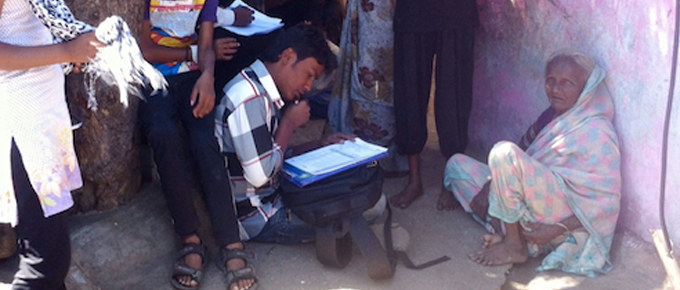
Conducting a household survey in a low-income area in Nashik

In early March, ITDP joined Clean Air Initiative-Asia to implement a rapid mobility assessment tool in Nashik, a city in western India about 150km northeast of Mumbai. The project, funded by UN-Habitat, seeks to create a quick and inexpensive way to gauge transportation needs in cities with little existing data. After reviewing existing data collection methods a new rapid assessment tool was developed, which consists of two parts: a household survey and a focus group discussion. The household survey aims to collect information about many different parts of the city while the focus group discussion aims to gather data from underrepresented groups whose important input might not be covered in the household survey. The city of Nashik was selected for the first test of the new tool.

In Nashik, the focus group discussion was held on Sunday, March 3, and included representatives of the blind, the disabled, women, the medical community, and the traffic police. The discussion brought forth a variety of perspectives on transportation, with particularly informative input from women and the disabled who discussed the daily challenges of safety and access that they faced when traveling around the city.

The household survey was conducted with help from the NDMVP’s Nashik College of Architecture-Nashik, National Institute of Technology (NIT)-Nashik, and the Institute for Design Environment and Architecture (IDEA) College. These student spent four hours on a Sunday learning the survey form and practicing techniques. The actual survey was conducted on three weekdays in over 12 neighborhoods, which were scouted ahead of time by the survey team. Students visited every part of Nashik, from informal settlements in the heart of the city to new, high-income areas in the outskirts.

Transportation-Needs-Nashik-02

Focus group discussion in Nashik

With oversight from university professors and the survey team, students went to a variety of households in each neighborhood. Over the course of three days, over 1,000 surveys were conducted. Each survey, conducted by a team of two students, took approximately one hour, and most households were happy to provide information in order to improve transportation in Nashik. From the survey, ITDP and Clean Air Asia learned a great deal about the City of Nashik and about conducting surveys in the Indian context. ITDP will further refine this tool for use in other cities that lack transportation data.

Filed Under: news Tagged With: Community engagement, Nashik, Public Transport

Envisioning a Comprehensive Transport Plan for Chennai

28th January 2013 by admin

by C. Ranga Rohini, ITDP

With a population of over 4.7 million and with a rapidly growing economy, the city of Chennai faces the challenge of providing efficient, safe, and reliable transport solutions to its citizens without compromising on quality of life. The onus of this responsibility currently falls on a number of agencies in the city and brings with it a slew of issues in planning, coordination, and accountability. The Chennai Unified Metropolitan Transport Authority (CUMTA) was formed in November 2010 with the aim to address these issues—to serve as a single nodal agency that directs planning, operations, and monitoring of various transport modes in the metropolitan area of Chennai. One of CUMTA’s key responsibilities is the preparation of a Comprehensive Transport Plan that looks at the planning and development of public transport options and their implementation through various agencies.

To facilitate this process, CMDA, in collaboration with the Institute of Transport and Development Policy, organized a workshop from 22 to 24 January 2013 that brought together various government stakeholders along with experts and academicians to discuss the CUMTA’s vision and to develop viable strategies and actions to carry the vision forward.

Participants formed groups to deliberate on four primary topic areas: 1) CUMTA as an agent of change for the Chennai Metropolitan Area: defining CUMTA’s role as a planning, monitoring, and coordinating body to facilitate interagency coordination. 2) Developing an integrated, high quality bus and BRT network for the entire city: expanding the bus fleet, implementing BRT, introducing an integrated fare collection systems across modes, and providing customer information. 3) Improving streets and the public realm: developing pedestrian friendly street design standards and planning guidelines, identifying greenway networks, and improving intermodal links. 4) Management of road space and travel demand: implementing a robust on-street parking management system, facilitating compact development around public transport stations, and implementing dynamic road pricing solutions.

At the workshop, Mr. Ben Plowden, Director of Surface Transport at Transport for London, described the city of London’s experience in bringing multiple public transport providers under a single umbrella, starting in 2000. He showed how London has been able to achieve a reduction in the use of private cars over the past decade through the steady expansion of sustainable transport options, including expanded bus service and a network of high quality cycle tracks. “You need a transport system that is adequate to meet the demands that the city will put on it,” pointed out Mr. Plowden. “That means focusing on mass transit.”

Workshop attendees included representatives from CMDA, the Corporation of Chennai, Chennai Metro Rail Limited, Highways Department, Transport Department, TNRDC, Metropolitan Transport Corporation, consultants, NGO Chennai City Connect, faculty from the Indian Institute of Technology, Madras, School of Architecture and Planning, Anna University, and representatives from unified metropolitan transport authorities in Bangalore and Delhi, among others.

To achieve the vision of transforming Chennai into a world-class city, a general consensus was reached on the need to assess existing resources, identify short-term goals, and focus on early wins to build CUMTA’s reputation. Participants stressed the role of data collection in enabling evidence-based planning and identified a need for a financial audit of existing spending patterns. “Data collection is critical,” explained Mr. K. Phanindra Reddy, Secretary of the Department of Housing and Urban Development, Government of Tamil Nadu. “Unless we know the scenario we are starting with, and the lacunae that we need to address, we will be groping in the dark.”

A key initiative to emerge in the workshop’s action plan is the creation of a common information portal for all public transport modes in Chennai. Geographically focused, time-bound pilot projects on pedestrianization, parking, street design, and multi-modal integration were also identified. ITDP has begun compiling the outcomes of the workshop into a strategic plan to be adopted by CUMTA. “The stakeholders have come out with each and every suggestion,” said Mr. Reddy. “That is a critical element for success of CUMTA. It’s time that we turn our plans into assets on the street.”

Comprehensive-Transport-Plan-02

Ensuring that all Chennai residents have access to high quality public transport was a key theme during the workshop. Shown above are the areas within a 5 minute walk of public transport.

Comprehensive-Transport-Plan-03

Charrette participants debated on the potential role of CUMTA in ensuring coordination among Chennai’s transport system operators.

Comprehensive-Transport-Plan-04

Participants discussed the importance of balancing the “link” and “place” functions of streets, using Chennai’s Saidapet area as a case study.

Filed Under: news Tagged With: Chennai, Public Transport, Transit Oriented Development, Walking and Cycling

New High Quality BRT Corridors Planned for Pimpri Chinchwad, India

22nd January 2013 by admin

by Sam Mohamad-Khany

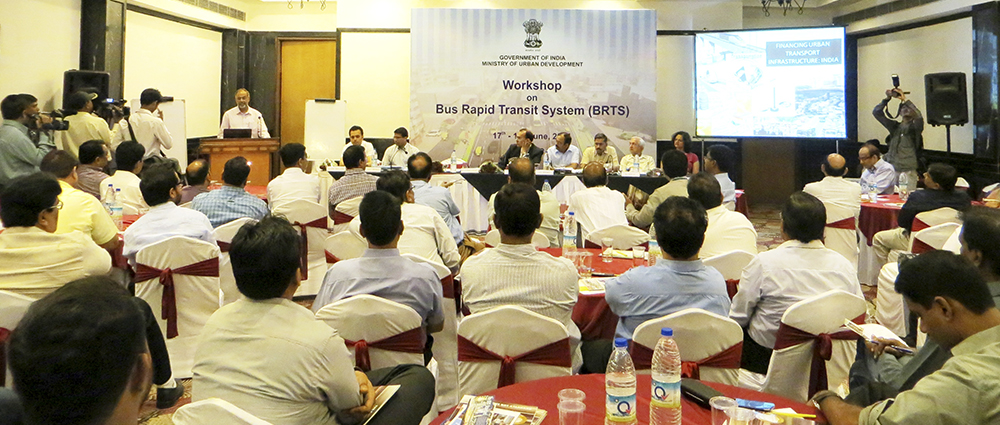
Pimpri Chinchwad is a city of 1.7 million in the state of Maharashtra, India. On January 5, ITDP conducted a full-day workshop on the BRT Standard, which was attended by over 25 officials from the Pimpri Chinchwad Municipal Corporation (PCMC), public transport operator Pune Mahanagar Parivahan Mahamandal Ltd (PMPML), and consultants Creations Pvt Ltd, S. N. Bhobe, and C. V. Kand, who are preparing detailed designs for new bus rapid transit (BRT) corridors.

Pimpri Chinchwad’s BRT network includes four corridors and spans a total length of 40 km. The goal of the workshop was to inform the BRT planning process by identifying gaps and opportunities for improvement in the current plans for new corridors. Commissioner Shrikar Pardeshi of PCMC opened the session, followed by presentations by ITDP staff on the BRT Standard and salient system features of the Janmarg BRT system in Ahmedabad. Mr Ramkrishna from UMTC, who has been appointed as a project management consultant for the region’s BRT, presented the details of the plan and design.  As a warm-up, attendees formed groups and rated the Ahmedabad system using the BRT Standard. In the afternoon, the groups rated the planned BRT lines in their own region. Groups then presented their scores to each other and engaged in lively debate about various opportunities and possible pitfalls of BRT planning and implementation. “We are now aware that what major steps to be taken to upgrade and enhance BRT service in this region,” said Rajan Patil, Joint City Engineer for PCMC.

Workshop participants identified several areas of improvement for the Pimpri Chinchwad BRT corridors, including intersection design, branding and communications, and the provision of adequate pedestrian facilities to enable passengers to reach the future BRT stations. “The workshop conducted by ITDP gave us insight about BRTS element to be incorporated in the design and planning of BRTS for PCMC,” said B. K. Gaikwad, Traffic Engineer, PCMC. “It provided ideas to our engineers, consultants, planners, and operators through discussions in interactive sessions on each of the aspects of the BRTS. Also the importance of pedestrian safety while accessing BRTS has been deliberated during this workshop. Overall, it was very helpful to PCMC.” ITDP will compile recommendations from the groups and follow up with PCMC to facilitate implementation.

The BRT Standard is available for download at www.brtstandard.org.

Filed Under: news, sustainable-transport-magazine Tagged With: BRT, Pimpri chinchwad, Public Transport, Pune-Pimpri Chinchwad

UN Climate Conference in Doha to Feature Two ITDP Projects

28th November 2012 by admin

Guangzhou, China, and Ahmedabad, India’s, bus rapid transit systems, both designed by ITDP and partners, were recognized as leaders in the fight against climate change at the 18th Conference of the Parties to the United Nations Framework Convention on Climate Change in Doha. These two systems were selected as part of the UN’s Momentum for Change Initiative, and are among nine featured “lighthouse activities” which help to curb greenhouse gas emissions, help people adapt to climate change, and benefit the urban poor.

The Guangzhou BRT was selected for excellence in mitigation and adaption, siting improvements in air pollution and passenger time savings of a combined 32 million hours per year. The quality of life improvements, specifically around Guangzhou’s “urban villages” located near the BRT corridor, and the resulting improved economic outcomes. Ahmedabad’s Janmarg BRT was selected for its mitigation impacts and reduction of overall vehicle travel, as 22 percent of commuters have switched from motorbikes to the bus since its implementation. It was also cited as a catalyst in the rejuvenation of Ahmedabad, serving to better connect the city. Both projects were selected as best practice models with high potential for scaling up and replication.

UN-Climate-Conf-Guangzhou-BRT

“We are very excited to showcase this year’s lighthouse activities as they demonstrate the commitment by communities, civil society organizations, local governments and private businesses to take concrete action to address climate change. The examples are inspiring and encouraging, not least for governments who have already set the course towards greater climate resilience, but who need to take the next essential steps to galvanize the speed and scope of climate action,” said UNFCCC Executive Secretary Christiana Figueres.

Projects were selected by an international advisory panel as part of the UNFCCC’s Momentum for Change Initiative, which is funded by the Bill & Melinda Gates Foundation. The other activities include the promotion of electric buses and rickshaws in Sri Lanka, energy efficient brick kilns in Peru and a project to support to the work of clean energy entrepreneurs in Uganda. More information on the activities, along with a description of the advisory panel and selection criteria.

Filed Under: news Tagged With: Ahmedabad, Bus Rapid Transit, Public Transport

ITDP India Finds Improved Mobility on Pune Bus Day

12th November 2012 by admin

by Kumar Manish

On a typical day, old Mumbai Pune Highway connects the Indian cities of Pune and Pimpri Chinchwad with long snarls of traffic jams. For one day, however, the road was free from traffic chaos and had a steady flow during morning peak hour on Pune Bus Day, an initiative to promote and popularize public transport in the city. Various government offices and NGOs worked together to encourage commuters to leave cars at home and try the bus for a day, with the intention of demonstrating how easy it can be to take the bus. There was a 21 percent drop in the number of passengers travelling daily by private vehicles, with a massive jump of 116 per cent in number of people travelling by bus. For the event, the city added many more buses, increasing frequency from 60 buses per hour to 90 per hour, and as there were fewer cars on the road, the buses were able to move even more quickly.

Before and during Pune Bus Day, ITDP surveyed the existing traffic condition on major roads at peak traffic hours at ten different locations to compare the effects of increased bus use and decreased car use. The surveys captured the use of private vehicles (two wheelers and cars), auto rickshaws, and both official and informal buses, which include private buses and cycles. The operations for Bus Day were designed to accommodate twice the total daily trips by public transport, which, according to the surveys, decreased traffic and increased bus speeds.

Pune-Bus-Day-02
Pune-Bus-Day-03

The success of Pune Bus Day suggests that the most economical and effective traffic congestion solutions involves better public transport facilities, especially express bus services like BRT, supported with traffic management and re-branding of public transport system. The initial findings from Pune Bus Day indicate that private vehicle use came down drastically on city roads improving mobility for all modes of transport. It was hassle-free movement for most of the daily commuters.The results are encouraging do show people faith in a public transport system, if adequate and prioritized facilities are provided to public transport users.

ITDP India team of Pranjali Deshpande Agashe & Pratik Dave supervised and analysed the surveys. The team got support from first year students of Padmabhushan Dr. Vasantdada Patil College of Architecture, studio team of Prasanna Desai Architects and PMPML and volunteers from Art of Living foundation conducted the survey.

Filed Under: news Tagged With: Bus Rapid Transit, Public Transport, Pune-Pimpri Chinchwad

ITDP India to Conduct Surveys for Pune Bus Day

30th October 2012 by admin

by Kumar Manish

Pune, India: ITDP India is providing technical support for ‘Pune Bus Day (PBD)’, a first of its kind event to promote & popularise public transport facilities in Pune city.  PBD is a social media initiative of Sakal group, a media conglomerate, to encourage the use of public transport among all classes of people on November 1, 2012.

In the run up to the event, ITDP India team has analysed the existing public transport trips, comprehensive mobility plan, and identified major transport corridors in Pune for making ‘Pune Bus Day’ bus operational plan – the event to be held on Thursday. ITDP has been actively working with various public agencies to promote the use of public transport in Pune for the past three years. Ms Shreya Gadepalli, Regional director, ITDP India, said, “The Pune Bus Day is a wonderful initiative that has brought together many stakeholders to showcase importance of bus based public transport in improving mobility for all.”

ITDP India team will be conducting several technical surveys to gauge the impact of bus day, when a good number of daily commuters will be using public buses instead of private vehicles, and a day prior to the event. Pune is IT and educational hub located in Western part of India and has grown exponentially in economic and geographical terms. Once known as, city of cyclists, now the city is bursting at seams with increasing number of private vehicles resulting in traffic congestion, deterioration in quality of air, high number of traffic accidents and marginalization of cyclists & pedestrians on roads. According to Pune RTO, there were 23.13 lakh vehicles registered in Pune till October 2012.

Pune-Bus-Day-Survey

Pranjali Deshpande Agashe, senior associate with ITDP India, part of PBD team, said, “ The surveys are aimed to understand the impact of Pune Bus Day when a good number of private vehicle users will be leaving their vehicles at home and will be using public mode of transport, mostly PMPML buses, to commute. Analysis will be useful the for Pune region towards long term investments for sustainable transportation options,”

“ For Pune Bus Day, the city bus services have been planned well in advance, with additional public transport buses with higher frequency and express bus services in the main traffic corridors run by PMPML,” added she volunteers from Vaikunth Mehta National Institute of Co-operative Management, Art of Living foundation, Padmabhushan Dr. Vasantdada Patil College of Architecture and Indira Management Institute will be supporting ITDP team for conducting the bus occupancy, on and off board, willingness and user satisfaction survey on the bus day.

According to Sakal Media Group,‘Pune Bus Day’ initiative is an attempt to demonstrate how the use of optimum number of buses with high frequency can actually reduce the traffic congestion in the city and to influence decision makers to improve public transport facilities in the city. The event has full support from all the quarters including different political parties, local NGOs, institutions, corporate houses, among others.

Filed Under: news Tagged With: Outreach and awareness, Public Transport, Pune, Pune-Pimpri Chinchwad

  • « Previous Page
  • 1
  • …
  • 7
  • 8
  • 9
  • Who We Are
    • Our Team
    • Contact Us
    • Opportunities
    • Our Approach
  • What We Do
    • Complete Streets and Parking Management
    • Public Transport
    • Transit Oriented Development
    • Inclusive Mobility
  • Where We Work
    • Agra
    • Ahmedabad
    • MAHARASHTRA
    • Pune – Pimpri-Chinchwad
    • Nashik
    • TAMIL NADU
    • Chennai
    • Coimbatore
    • JHARKHAND
    • Ranchi
    • NATIONAL
  • News
  • Resources
  • Get Involved
    • Donate

Copyright © 2026 · ITDP Responsive on Genesis Framework · WordPress · Log in


Loading Comments...