ITDP India

Promoting sustainable and equitable transportation worldwide

  • Contact
  • Who We Are
    • Our Approach
    • ITDP India’s 2024
    • Contact Us
    • Career Opportunities
  • What We Do
    • Healthy Streets
    • Public Transport
    • Electric Mobility
    • Transit Oriented Development
    • Low Emission Zones
    • Inclusive Mobility
    • Traffic Reduction
  • Where We Work
    • NATIONAL
    • MAHARASHTRA
      • Pune
      • Pimpri Chinchwad
      • Nashik
    • TAMIL NADU
      • Chennai
      • Coimbatore
    • JHARKHAND
      • Ranchi
    • Agra
    • Ahmedabad
  • Blogs
  • Resources
  • National Challenges
    • India Cycles4Change Challenge
    • Streets for People Challenge
    • Transport4All Challenge
  • Urbanlogue
    • Urbanlogue Webinars – Series One
    • Urbanlogue Webinars – Series Two
    • Urbanlogue Webinars – Series Three
    • Urbanlogue Webinars – Series Four
  • Press

Envisioning a Comprehensive Transport Plan for Chennai

28th January 2013 by admin

by C. Ranga Rohini, ITDP

With a population of over 4.7 million and with a rapidly growing economy, the city of Chennai faces the challenge of providing efficient, safe, and reliable transport solutions to its citizens without compromising on quality of life. The onus of this responsibility currently falls on a number of agencies in the city and brings with it a slew of issues in planning, coordination, and accountability. The Chennai Unified Metropolitan Transport Authority (CUMTA) was formed in November 2010 with the aim to address these issues—to serve as a single nodal agency that directs planning, operations, and monitoring of various transport modes in the metropolitan area of Chennai. One of CUMTA’s key responsibilities is the preparation of a Comprehensive Transport Plan that looks at the planning and development of public transport options and their implementation through various agencies.

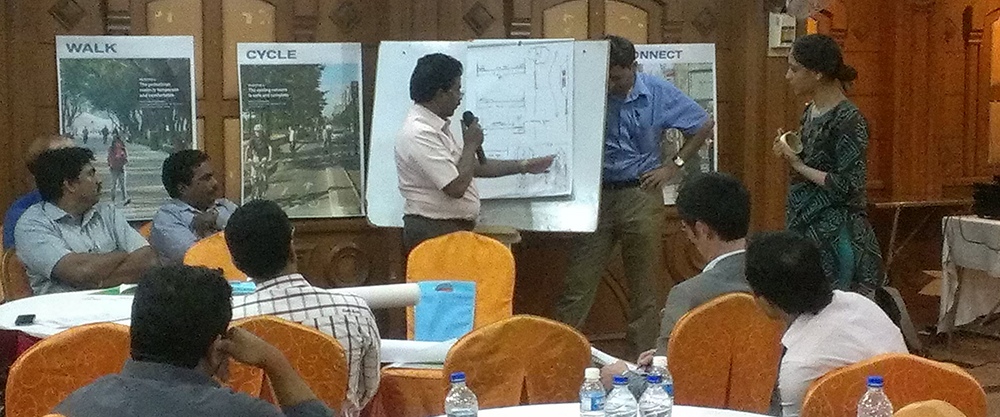
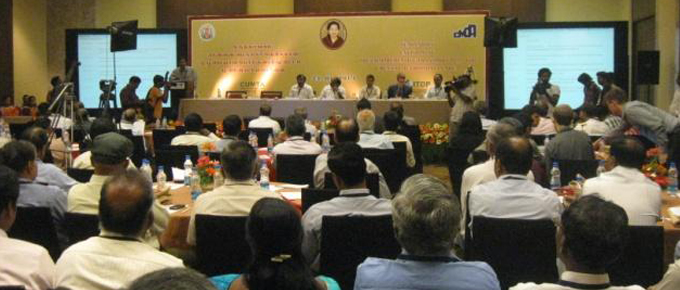
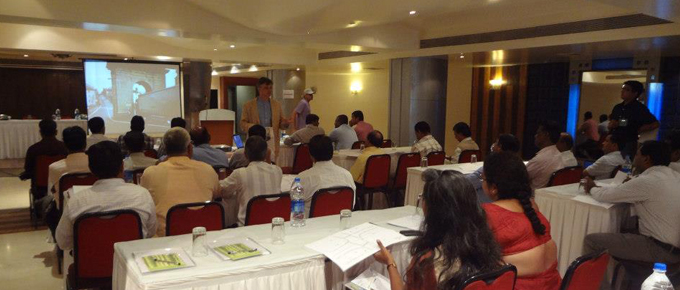
To facilitate this process, CMDA, in collaboration with the Institute of Transport and Development Policy, organized a workshop from 22 to 24 January 2013 that brought together various government stakeholders along with experts and academicians to discuss the CUMTA’s vision and to develop viable strategies and actions to carry the vision forward.

Participants formed groups to deliberate on four primary topic areas: 1) CUMTA as an agent of change for the Chennai Metropolitan Area: defining CUMTA’s role as a planning, monitoring, and coordinating body to facilitate interagency coordination. 2) Developing an integrated, high quality bus and BRT network for the entire city: expanding the bus fleet, implementing BRT, introducing an integrated fare collection systems across modes, and providing customer information. 3) Improving streets and the public realm: developing pedestrian friendly street design standards and planning guidelines, identifying greenway networks, and improving intermodal links. 4) Management of road space and travel demand: implementing a robust on-street parking management system, facilitating compact development around public transport stations, and implementing dynamic road pricing solutions.

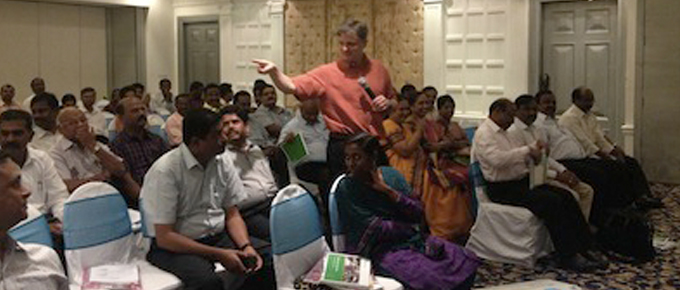
At the workshop, Mr. Ben Plowden, Director of Surface Transport at Transport for London, described the city of London’s experience in bringing multiple public transport providers under a single umbrella, starting in 2000. He showed how London has been able to achieve a reduction in the use of private cars over the past decade through the steady expansion of sustainable transport options, including expanded bus service and a network of high quality cycle tracks. “You need a transport system that is adequate to meet the demands that the city will put on it,” pointed out Mr. Plowden. “That means focusing on mass transit.”

Workshop attendees included representatives from CMDA, the Corporation of Chennai, Chennai Metro Rail Limited, Highways Department, Transport Department, TNRDC, Metropolitan Transport Corporation, consultants, NGO Chennai City Connect, faculty from the Indian Institute of Technology, Madras, School of Architecture and Planning, Anna University, and representatives from unified metropolitan transport authorities in Bangalore and Delhi, among others.

To achieve the vision of transforming Chennai into a world-class city, a general consensus was reached on the need to assess existing resources, identify short-term goals, and focus on early wins to build CUMTA’s reputation. Participants stressed the role of data collection in enabling evidence-based planning and identified a need for a financial audit of existing spending patterns. “Data collection is critical,” explained Mr. K. Phanindra Reddy, Secretary of the Department of Housing and Urban Development, Government of Tamil Nadu. “Unless we know the scenario we are starting with, and the lacunae that we need to address, we will be groping in the dark.”

A key initiative to emerge in the workshop’s action plan is the creation of a common information portal for all public transport modes in Chennai. Geographically focused, time-bound pilot projects on pedestrianization, parking, street design, and multi-modal integration were also identified. ITDP has begun compiling the outcomes of the workshop into a strategic plan to be adopted by CUMTA. “The stakeholders have come out with each and every suggestion,” said Mr. Reddy. “That is a critical element for success of CUMTA. It’s time that we turn our plans into assets on the street.”

Comprehensive-Transport-Plan-02

Ensuring that all Chennai residents have access to high quality public transport was a key theme during the workshop. Shown above are the areas within a 5 minute walk of public transport.

Comprehensive-Transport-Plan-03

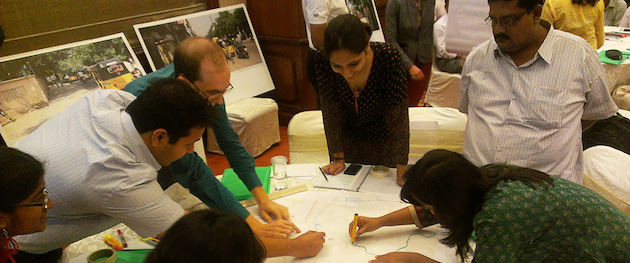
Charrette participants debated on the potential role of CUMTA in ensuring coordination among Chennai’s transport system operators.

Comprehensive-Transport-Plan-04

Participants discussed the importance of balancing the “link” and “place” functions of streets, using Chennai’s Saidapet area as a case study.

Filed Under: news Tagged With: Chennai, Public Transport, Transit Oriented Development, Walking and Cycling

ITDP and Pune Municipal Corporation jointly organize Street Design Workshop

19th September 2012 by admin

Pune, traditionally known as the “city of cyclists,” and having built over 100 kilometers of cycle tracks, presently suffers from poor state of pedestrian and cycling infrastructure. A recent CAI-Asia report in 2011 states, “residential, educational areas and public transport terminals lack proper footpaths and other facilities that leaves pedestrians competing with vehicles for space, making it a one sided contest in Pune.”

To address these concerns, Institute for Transportation & Development Policy and Pune Municipal Corporation (PMC) jointly organized a two-day Street Design Workshop on September 6 and 7, 2012.

The workshop consisted of a discussion of road safety principles for all users and a hands-on-exercise for 49 members of the technical staff from PMC. The workshop was led by street design expert Michael King, Principal at Nelson Nygaard, who outlined a three-pronged strategy for designing pedestrian-friendly streets: first, observation of physical conditions and street user behavior; second, iterative testing of design solutions; and third, setting a direction for policies that are supportive of non-motorized transport.

Throughout the workshop, King emphasized the importance of streets in urban fabric saying, “The most progressive cities of the world are the most walkables ones. The city should make streets for people and not highways for traffic.”

A walking audit of the network of streets connecting Pune Railway Station, Sadhu Vaswani chowk, Sassoon Hospital, and Council hall in Pune was conducted by the participants which comprised of executive engineers, deputy engineers, and junior engineers among others to assess the on-ground state of current pedestrian infrastructure, observe road user movement and capture the safety issues concerning people walking on the street. Participants were divided into five teams and sent to the selected site to observe pedestrian infrastructure, cycling facilities, public transport uses, land use changes and motor vehicle movement among others. The site was selected because of the heavy pedestrian movement in large numbers between the bus terminal, railway station and neighboring commercial and institutional land uses all throughout the day.

SDW-Pune-02

Sabnis Madam, executive engineer with PMC giving a presentation on walking audit

Participants reacted to the conditions of the site saying, “There is a good chunk of cyclists on the road, and sadly for them there is no provision in the existing design. Also, there are too many obstructions on the walkway forcing pedestrians to walk on middle of road risking their lives”.

Later on, the teams were assigned the task of redesigning Alankar Talkies Chowk (located adjoining to the Pune Railway Station) based on the theme of pedestrians, cyclists, motor vehicle users, public transport users and public place. Each team visited the site at morning & evening peak hour to conduct traffic counts, observe the user behavior and traffic movement patterns. After the exercise, the team gave a group presentation on their “observation of the site” and “solution for the site” based on the designated theme.

Nitin Warrier, Senior Associate, ITDP India said, “The idea was to enhance participants understanding of road user behavior and to encourage participatory and inclusive planning of streets based on its usages by different road users. The learning from the workshop will help PMC in designing better streets for pedestrians, cyclists and enhancing the walking connectivity to nearest public transport facilities”

A similar one-day long workshop was conducted with 46 of Pimpri Chinchwad Municipal Corporation’s engineering staff on street design taking Chafekar Chowk, located in the heart of Pimpri -Chinchwad as the site for intersection design exercise.

ITDP India team comprising of Anuj Malhotra, Nitin Warrier, Pranjali Deshpande, Kumar Manish and Pratik Dave facilitated the team discussions and site visits in both the workshops.

Filed Under: news Tagged With: Complete Streets, cycle, Pimpri chinchwad, Pune, Walking and Cycling

  • « Previous Page
  • 1
  • …
  • 7
  • 8
  • 9
  • Who We Are
    • Our Team
    • Contact Us
    • Opportunities
    • Our Approach
  • What We Do
    • Complete Streets and Parking Management
    • Public Transport
    • Transit Oriented Development
    • Inclusive Mobility
  • Where We Work
    • Agra
    • Ahmedabad
    • MAHARASHTRA
    • Pune – Pimpri-Chinchwad
    • Nashik
    • TAMIL NADU
    • Chennai
    • Coimbatore
    • JHARKHAND
    • Ranchi
    • NATIONAL
  • News
  • Resources
  • Get Involved
    • Donate

Copyright © 2025 · ITDP Responsive on Genesis Framework · WordPress · Log in


Loading Comments...