ITDP India

Promoting sustainable and equitable transportation worldwide

  • Contact
  • Who We Are
    • Our Approach
    • ITDP India’s 2024
    • Contact Us
    • Career Opportunities
  • What We Do
    • Healthy Streets
    • Public Transport
    • Electric Mobility
    • Transit Oriented Development
    • Low Emission Zones
    • Inclusive Mobility
    • Traffic Reduction
  • Where We Work
    • NATIONAL
    • MAHARASHTRA
      • Pune
      • Pimpri Chinchwad
      • Nashik
    • TAMIL NADU
      • Chennai
      • Coimbatore
    • JHARKHAND
      • Ranchi
    • Agra
    • Ahmedabad
  • Blogs
  • Resources
  • National Challenges
    • India Cycles4Change Challenge
    • Streets for People Challenge
    • Transport4All Challenge
  • Urbanlogue
    • Urbanlogue Webinars – Series One
    • Urbanlogue Webinars – Series Two
    • Urbanlogue Webinars – Series Three
    • Urbanlogue Webinars – Series Four
  • Press

Pune Parks it Right!

Pune parks it right!

30th April 2018 by admin

“Congratulations to Pune on taking this important step! If the going gets tough, always remember WHY the streets need parking management. The fees, the enforcement and the well-designed parking spaces are needed to make sure that parking happens in an orderly way, only in the right places and that it is almost never too full (so newcomers can find a space to park).” Dr. Paul Barter, Urban transport researcher, policy advisor and trainer.

The renowned parking policy expert’s words ring true: making streets inclusive and people-friendly is one of the biggest challenges cities face today, and a key part of the puzzle lies in a system we mistakenly take for granted: parking. In a laudable move, Pune Metropolitan Corporation (also known as PMC) has approved a public parking policy that aims to manage on-street parking through an efficient paid parking system. Ultimately, it will shift people from private vehicles toward sustainable modes such as walking, cycling and using public transport.

PMC heralds a new era of travel demand management by regulating on-street parking. ITDP provided technical expertise to draft the Policy. The Policy introduces an efficient paid parking system, an intelligent transportation system that facilitates payment, and the creation of a management cell that oversees implementation. The outcome – a demand-based parking system that smoothens traffic movement – is avant-garde in India.

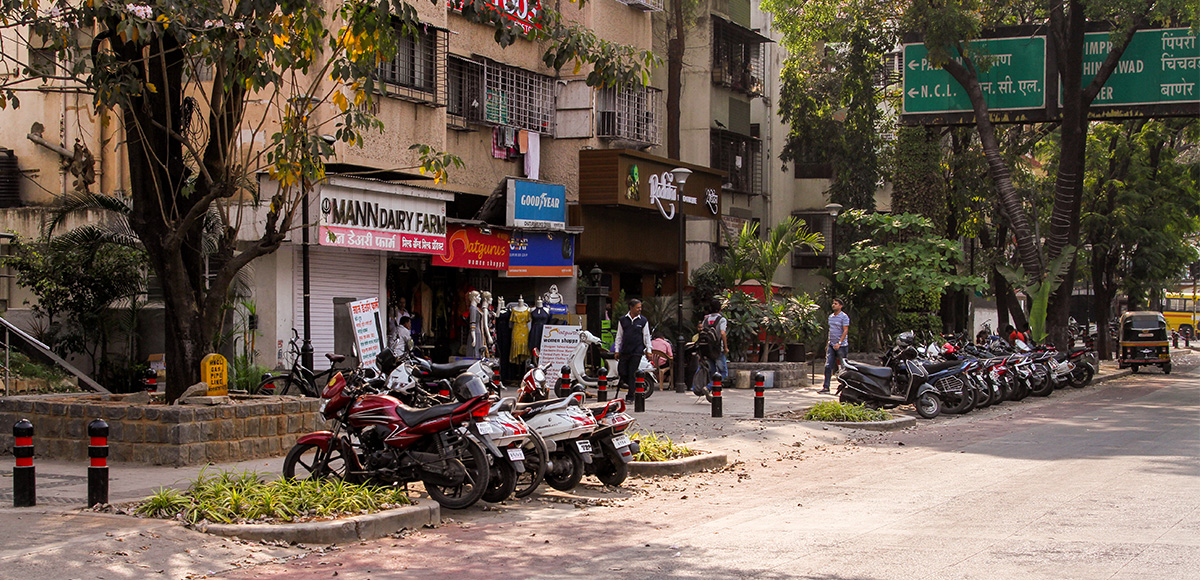
DP Road, Aundh is an example of street design that includes clear parking spots

DP Road, Aundh is an example of street design that includes clear parking spots

It’s widely known that private vehicles are voracious consumers of space because they require a parking spot at each leg of a journey- at home, at the market, and at the office. Streets are crowded with parked vehicles that block traffic and turn walkways into obstacle courses for pedestrians. A parking policy is needed to ensure that the frustration and hassle of parking is addressed sustainably and efficiently.

The policy proposes to regulate on-street parking by clearly demarcating legal and restricted parking spaces, in accordance to Pune’s Urban Street Design Guidelines. The street design guide, which was adopted by the city in 2016, sets standards for designing street elements and provides a collection of street design templates catering to the needs of all road users.  

The policy proposes clearly demarcating legal and restricted parking spaces

The policy proposes clearly demarcating legal and restricted parking spaces

According to the policy, parking rates will be determined across the city for both on-street and off-street parking, depending on location, time and type of vehicles. Pune’s parking policy has determined parking fees based on vehicle dimensions, parking demand at particular locations, time (peak or off-peak hours), and occupancy to enable a fair fee structure. Revenue from parking fees can help fund further improvement in public transport and parking management.

The Policy aims to be proactive in ensuring that parking information is available to commuters through various means (such as real time digital displays, smartphone apps etc.) to reduce redundant trips for hunting parking spaces. In a move to promote cycling as an affordable and sustainable mode of transport, the policy exempts bicycle parking from any charge. Exemptions are also extended to daytime ambulances, special-aid vehicles and paratransit parked in designated lots.

Once implemented, the policy promises efficiency to travel demand management in the city. As a significant step towards holistic and sustainable urban transport planning, parking management can help Pune become a ‘world-class’ city!

Filed Under: Parking Management, Pune Tagged With: Parking, parking management, policy, Pune, traffic demand management

  • « Previous Page
  • 1
  • 2
  • Who We Are
    • Our Team
    • Contact Us
    • Opportunities
    • Our Approach
  • What We Do
    • Complete Streets and Parking Management
    • Public Transport
    • Transit Oriented Development
    • Inclusive Mobility
  • Where We Work
    • Agra
    • Ahmedabad
    • MAHARASHTRA
    • Pune – Pimpri-Chinchwad
    • Nashik
    • TAMIL NADU
    • Chennai
    • Coimbatore
    • JHARKHAND
    • Ranchi
    • NATIONAL
  • News
  • Resources
  • Get Involved
    • Donate

Copyright © 2025 · ITDP Responsive on Genesis Framework · WordPress · Log in


Loading Comments...