ITDP India

Promoting sustainable and equitable transportation worldwide

  • Contact
  • ITDP India’s 2025
  • Who We Are
    • Our Approach
    • Contact Us
    • Career Opportunities
  • What We Do
    • Healthy Streets
    • Public Transport
    • Electric Mobility
    • Transit Oriented Development
    • Low Emission Zones
    • Inclusive Mobility
    • Traffic Reduction
  • Where We Work
    • NATIONAL
    • MAHARASHTRA
      • Pune
      • Pimpri Chinchwad
      • Nashik
    • TAMIL NADU
      • Chennai
      • Coimbatore
    • JHARKHAND
      • Ranchi
    • Agra
    • Ahmedabad
  • Blogs
  • Resources
    • Press
  • National Challenges
    • India Cycles4Change Challenge
    • Streets for People Challenge
    • Transport4All Challenge
  • Urbanlogue
    • Urbanlogue Webinars – Series One
    • Urbanlogue Webinars – Series Two
    • Urbanlogue Webinars – Series Three
    • Urbanlogue Webinars – Series Four

A year of radical planning, 2017 passes by…

30th December 2017 by admin

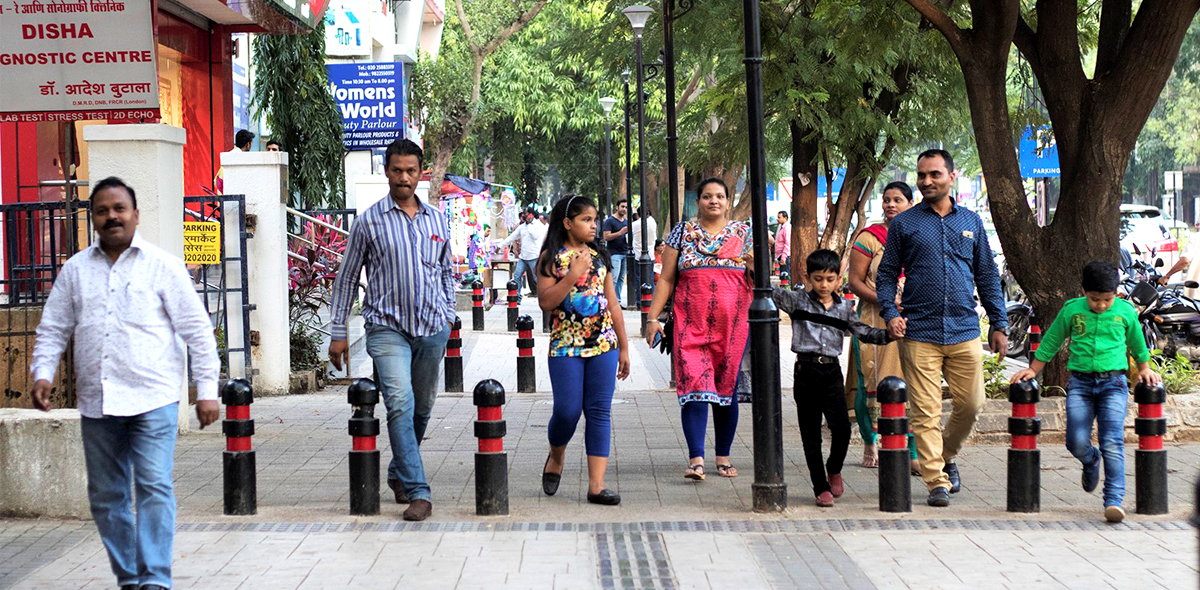
“I used to take my two-wheeler to travel the 3 kilometers between my house and the railway station. I’m now able to walk the stretch, thanks to the continuous footpath. Best part – I’ve lost 5 kilos and my diabetes!” Mr. Manimaran, a resident of Egmore in Chennai, is thrilled at the tremendous change that a safer and better footpath has brought about in his life.

The year 2017 witnessed many such impactful changes in the field of sustainable transportation all around the country, including cities which ITDP India Programme has been closely working with. Thanking all our supporters, we take a look at the year that passed by.

Pune broke ground on its ambitious Complete Streets networks – a 100km-network with its own financial resources and 45km through support from the National Smart Cities Mission. The first phase of these street design projects on JM Road and DP Road has already been lauded by the country, owing to the vibrancy of these redesigned streets. Pune’s Bicycle Plan, recently approved by the General Body, paves way for the creation of a 300km bicycle-track network in the city.

Having accomplished over 40km of Complete Streets, Chennai initiated the next phase of street design by inviting tenders in late October to redesign 22km of streets. The city tested out the design of 5 key intersections through a tactical urbanism approach – quick, temporary, on-ground interventions. Chennai also conducted another trial run of the proposed pedestrian plaza in Pondy Bazaar, the success of which fetched the project a sanction of of Rs 55 crores (~US $9 million) under the Smart Cities Mission.

Smaller cities have also made remarkable progress this year in their Complete Streets programmes – Nashik appointed nationally-acclaimed urban designers to redesign its proposed street network of 50 kilometers, with 10 kilometers tendered out; and Coimbatore commenced construction of its Model Roads and hosted an interactive exhibition to inform the people of the design of the roads while collecting feedback. Coimbatore also started developing detailed implementation plans for its Greenways and Lake Restoration Project, which includes a 30km network of greenways (exclusive walking and cycling infrastructure) that crisscross the city and connect 8 water bodies.

Becoming one of the pioneering cities in parking management in the country, Ranchi implemented a progressive on-street parking management system on its busiest thoroughfare, Mahatma Gandhi Marg, with a twelve-fold increase in revenue. Inspired by the success of the pilot, the city has proposed to refine and expand the system to cover all key locations. The state of Jharkhand has also proposed to adopt a state-level parking policy.

Chennai recently invited tenders to select an operator for its proposed on-street parking management system covering 12000 equivalent car spaces on Bus Route Roads across the city. Since Pune is also working towards parking management, ITDP, in collaboration with  GIZ-SUTP,  facilitated and managed a two-day workshop on the topic, with international parking expert, Dr Paul Barter in the city. Participants included municipal officials, traffic police, public officials from other agencies as well as various local stakeholders.

An increase in demand for better public transport has provided the fillip to cities across the country to increase and improve their transit services. Chennai made considerable advancement in its BRT planning, with the interim report for Phase I approved by the state and a series of public consultation programmes organised to explain the significance of BRT to people and get their feedback on the various corridors.

In Pune, around 130 crore rupees was sanctioned to construct 13 new bus terminals to facilitate better integration of bus services with the proposed Metro Rail network. The city also commenced work on expanding the existing 38km Rainbow BRT by an additional 15km. Pune Mahanagar Parivahan Mahamandal Limited (PMPML) initiated the process of adding 200 feeder buses to its fleet, to improve connectivity between the city and the surrounding towns.

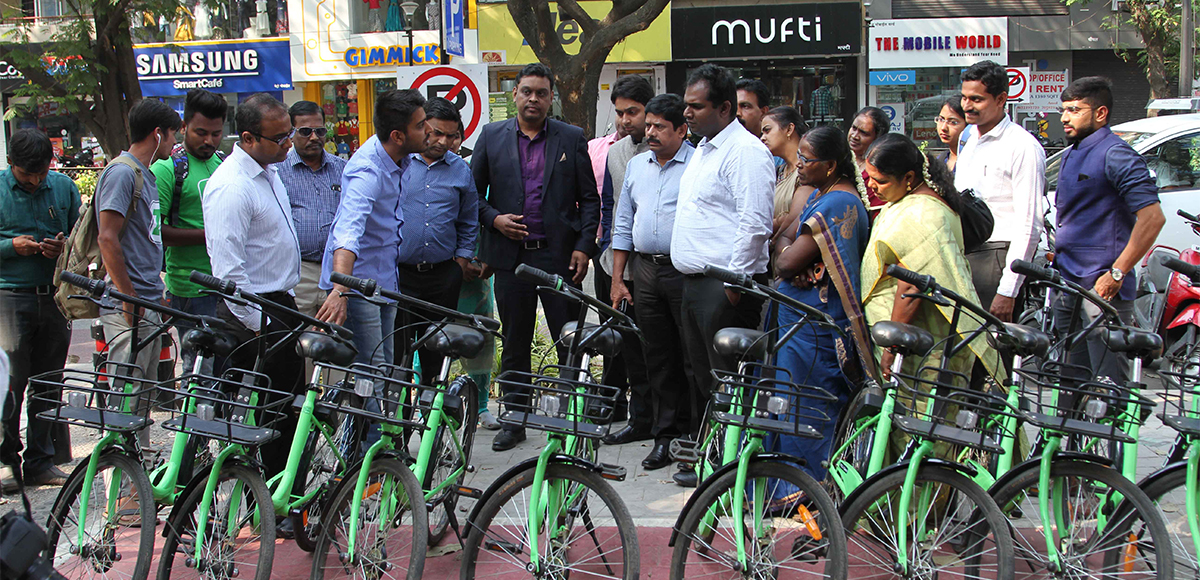
Public bicycle sharing (PBS) is emerging as a popular mode of public transit across the country. Pune piloted a dockless PBS system with 275 bicycles and signed an MoU with 4 vendors dealing with dockless systems. Two other cities are preparing for the installation of a PBS system – Ranchi and Chennai invited operators to submit proposals for setting up 1264 bicycles in 122 stations (Phase 1) and 5000 bicycles in 378 designated parking areas, respectively.

Successful and sustained on-ground changes invariably require the backing of well-framed guidelines, policies and financial plans – 2017 was marked by many of these. Two sets of guidelines – the Bus Rapid Transit (BRT) planning and design guidelines, and the Guidelines on Control and Regulation of Mixed Traffic in Urban Areas – prepared by ITDP, were approved by the apex committee of the Indian Roads Congress. These guidelines will apply for all cities across India and guide them towards low-carbon mobility.

The Government of Jharkhand adopted an inclusive TOD policy that focuses on equitable development of cities in the state, so that a majority of the population lives and works in areas with safe and accessible walking and cycling facilities integrated with reliable and high-quality public transport.

The Government of Maharashtra published a draft of the State Urban Transport Policy, which promotes low-carbon & equitable mobility and urban development by prioritising public transport (PT) and non-motorised transport (NMT). Furthermore, over half of Pune’s total transportation budget of 1100 crore rupees was allocated towards sustainable transport development for the financial year 2017-18. In the South, Coimbatore adopted a Street Design and Management Policy that focuses on creating equitable and sustainable mobility options and expanding their use.

The realisation that sustainable urban development will remain elusive without integrating women’s safety and comfort in urban transport, has generated momentum to include gender as a key factor in transport planning. Bringing this subject to the fore and as a first of its kind, a paper on Women and Transport in Indian Cities was created by ITDP and Safetipin, and released at a national workshop on gender and transit conducted by the two organisations. This paper identifies indicators, service level benchmarks and processes for integrating a gender perspective in urban transport projects, policies and programs along with good practice case studies.   


2017 was a year of radical planning indeed, with many grand plans conceived, developed and initiated for sustainable transportation. With all these plans set to materialize in the coming months, 2018 will be a year of implementation and tangible transformation. Looking forward to a great year ahead: Happy New Year!

Filed Under: Featured News #1, Uncategorised Tagged With: 2017, BRT, Bus Rapid Transit, Chennai, Coimbatore, Cycle sharing, Delhi, Footpath, Gender, Nashik, Parking, Public Transport, Pune, Ranchi, Smart city, Sustainable Transport, Sustainable Transport Policy, TOD, Walking and Cycling

#WomenOnTheMove: Women and Transport in Indian Cities

15th December 2017 by admin

“Ultimately, transportation is the fulcrum that allows women to participate in the workforce; a societal shift to transform the entire world economy.” – Sonal Shah, Senior Manager, ITDP India Programme 

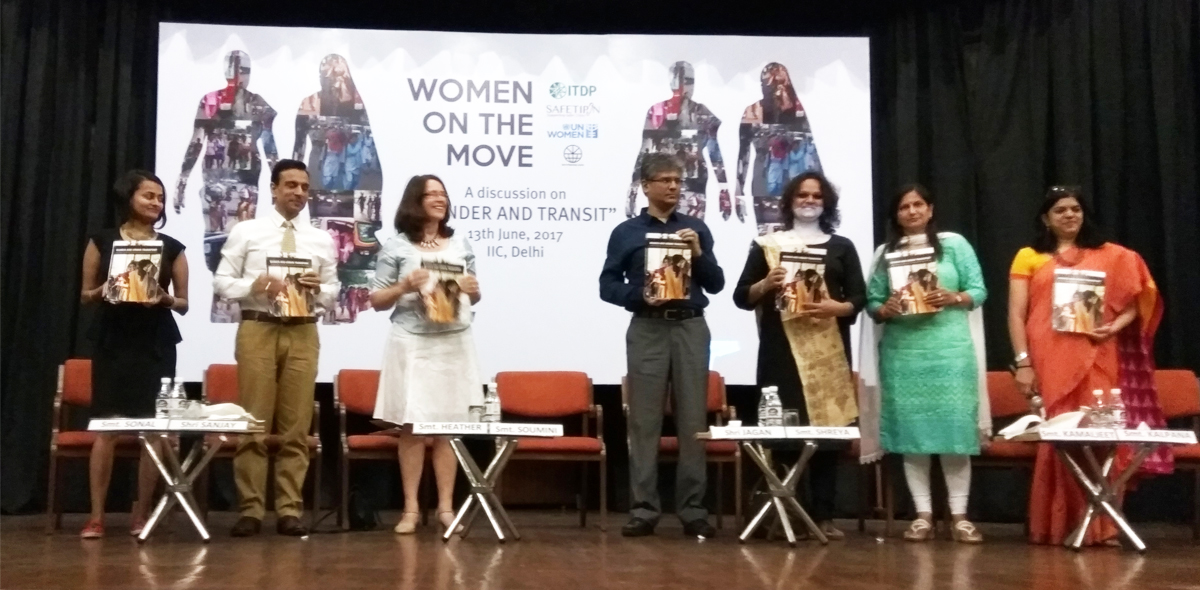
Centred around this idea, ITDP and Safetipin have released a policy brief on Women and Transport in Indian Cities. The draft was released on 13 June 2017 at a roundtable discussion on Gender and Transit, organized by ITDP, Safetipin and UN Women with participation from 30 women’s groups, international organizations, professionals and academic institutions.[1]

A roundtable discussion on Gender and Transit was organized by ITDP, Safetipin and UN Women with participation from 30 women’s groups, international organizations, professionals and academic institutions

The coming decade will be a defining moment for India as its urban areas are estimated to constitute around 40 per cent or 600 million of its total population by 2030. According to the High Powered Executive Committee (HPEC), around INR 23 lakh crores is required over 2015–2030 for India’s urban transport infrastructure. The national government has initiated missions and schemes to invest in urban transport and infrastructure; and created indicators and service level benchmarks to establish a city’s baseline and goal for improvement. The recently announced Green Urban Mobility Scheme (GUMS) expects to invest around INR 70,000 crores over 2018–2023 on sustainable transport.

“The defining characteristic of violence against women is its normalization and ordinary and continuous nature.” – Kalpana Viswanath, Co-founder & CEO, Safetipin

While there is momentum by different levels of government in addressing women’s safety in public transport, urban transport investments are largely gender blind with a limited understanding of the interrelationships between gender and transport. Sustainable urban development will remain elusive without integrating women and girls in urban transport.

Women and girls are close to 50 per cent of our urban population. They comprise only 19 per cent of “other workers”, 84 per cent of their trips are by public, intermediate public and non-motorized modes of transport (Census 2011)[2]. While 73 per cent of trips by “other workers” in urban areas are by sustainable modes of transport, women and girls’ share is only 14 per cent. Ultimately transportation will help women access economic and social opportunities. In the next few years, cities will need to make a concerted effort to improve women and girls’ experience of sustainable modes of transport to achieve a target of 40 per cent of all trips. The policy brief fills this gap by providing a framework to integrate technical and social, quantitative and qualitative approaches for enabling this transition.

In Section 1, the brief underscores the need for a policy brief focusing on women and transport in Indian cities. Section 2 describes the scope of the brief. The gendered dimensions of urban transport are covered in Section 3, with a focus on trip chaining and purpose, modal shares, trip distances, time poverty, sexual harassment and employment in the transport sector.  Section 4 proposes urban transport indicators and service level benchmarks for comprehensive mobility plans. Recommendations to improve women’s modal shares and experiences of walking, cycling, public and intermediate public transport, and engendering public transport authorities, are highlighted in Section 5.  Since urban transport is not the responsibility of one ministry or department, gender inclusion will require interventions at multiple scales and coordination with a number of ministries and departments. Section 6 identifies such ministries and departments and their potential role in mainstreaming gender.

Women’s access and use of urban transportation will play a key role in achieving India’s sustainable development goals (SDGs) and ensure women’s right to the city and its public spaces. To quote Shreya Gadepalli, who leads the ITDP India Programme, “When we create cities – their public spaces and transport systems – that are responsive to the needs of women, children and the elderly, they become great cities for all!” 


Download the policy brief here.


  1. List of organisations that participated in the roundtable: Akshara Centre, Asian Development Bank, Azad Foundation, Breakthrough, Centre for Urban Equity (CUE), Confederate of Indian Industry (CII), Columbia Global Centre, Cornell University, CORO, Centre for Policy Research (CPR), Centre for Road Research Institute in India (CRRI), Centre for Women and Development Studies (CWDS), Delhi University, DIMTS, Hindustan Times, iTrans, Jagori, Janki Devi Memorial College (JDMC), KfW, Manas Foundation, Oak foundation, Oasis Design, Observer Research Foundation (ORF), Plan India, Sushant School of Art and Architecture, Ansal University, Tata Institute for Social Sciences (TISS), Toji Communication Consultancy, TRIPP-IIT Delhi, UBER, UITP, UNDP, UNICEF, World Bank, World Resources Institute (WRI)
  2. This data is likely to under represent women and girls’ mobility as their care trips are not measured.

Filed Under: Featured News #1 Tagged With: Gender, Gender and Sustainable Transport, National, Public Transport, Sustainable Transport, Sustainable Transport Policy, Walking and Cycling, Women

  • « Previous Page
  • 1
  • …
  • 4
  • 5
  • 6
  • Who We Are
    • Our Team
    • Contact Us
    • Opportunities
    • Our Approach
  • What We Do
    • Complete Streets and Parking Management
    • Public Transport
    • Transit Oriented Development
    • Inclusive Mobility
  • Where We Work
    • Agra
    • Ahmedabad
    • MAHARASHTRA
    • Pune – Pimpri-Chinchwad
    • Nashik
    • TAMIL NADU
    • Chennai
    • Coimbatore
    • JHARKHAND
    • Ranchi
    • NATIONAL
  • News
  • Resources
  • Get Involved
    • Donate

Copyright © 2026 · ITDP Responsive on Genesis Framework · WordPress · Log in


Loading Comments...