ITDP India

Promoting sustainable and equitable transportation worldwide

  • Contact
  • ITDP India’s 2025
  • Who We Are
    • Our Approach
    • Contact Us
    • Career Opportunities
  • What We Do
    • Healthy Streets
    • Public Transport
    • Electric Mobility
    • Transit Oriented Development
    • Low Emission Zones
    • Inclusive Mobility
    • Traffic Reduction
  • Where We Work
    • NATIONAL
    • MAHARASHTRA
      • Pune
      • Pimpri Chinchwad
      • Nashik
    • TAMIL NADU
      • Chennai
      • Coimbatore
    • JHARKHAND
      • Ranchi
    • Agra
    • Ahmedabad
  • Blogs
  • Resources
    • Press
  • National Challenges
    • India Cycles4Change Challenge
    • Streets for People Challenge
    • Transport4All Challenge
  • Urbanlogue
    • Urbanlogue Webinars – Series One
    • Urbanlogue Webinars – Series Two
    • Urbanlogue Webinars – Series Three
    • Urbanlogue Webinars – Series Four

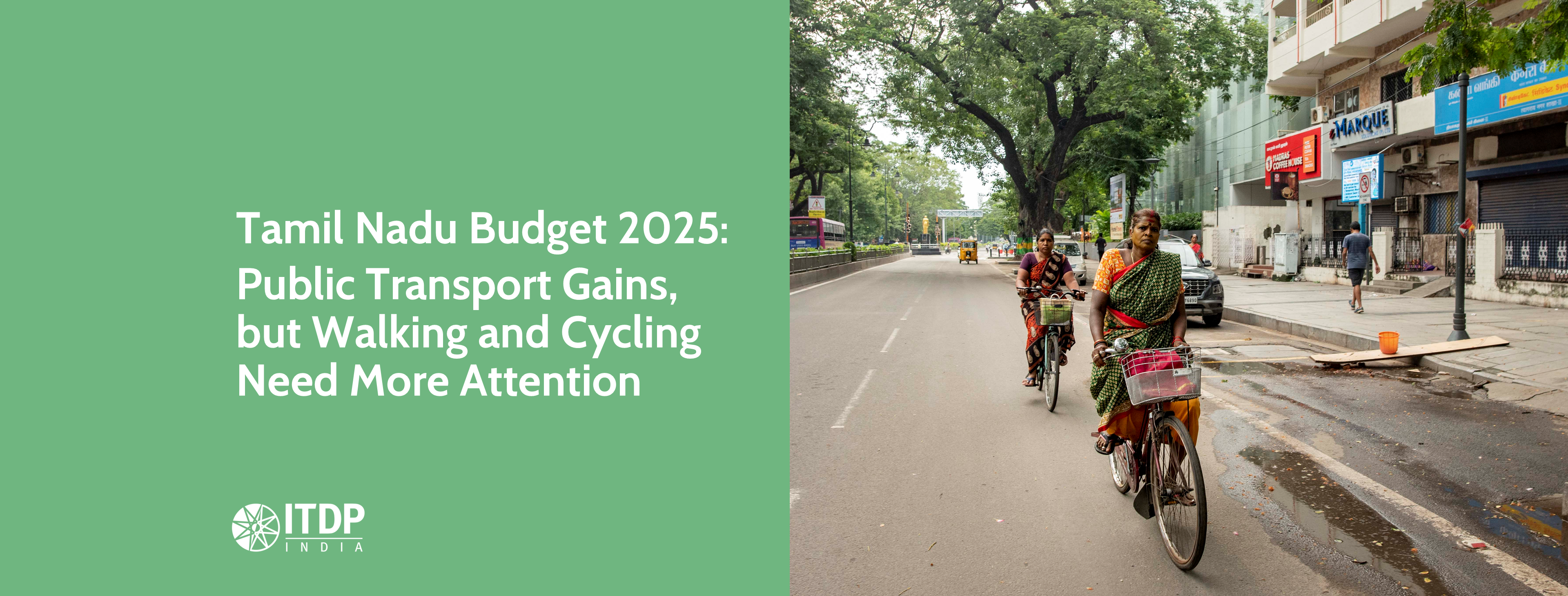
Tamil Nadu Budget 2025: Public Transport Gains, but Walking and Cycling Need More Attention

20th March 2025 by admin


On March 14, the Tamil Nadu (TN) government announced the much-awaited budget outlay for the financial year 2025-26. At the state assembly the Honourable Finance Minister Thangam Thennarasu announced the state budget to have an outlay of Rs.57,231 crore. This is nearly 20% more than the 2024-25 budget when Rs.47,681 crore was the total capital expenditure outlay.  

We at ITDP India analysed the budget outlay across sectors to understand how much allocations was given for sustainable urban transport and urban development this year. This is a critical exercise to see whether the budgets are in line with the state’s overall commitment to Sustainable Development Goals and its other forward-looking policies like Tamil Nadu EV Policy, city level Non-Motorised Transport Policy and Comprehensive Mobility Plans  

Here are some of the key highlights of the allocations, along with our insights and recommendations: 

1. Improving Public Transport- Rs.170 crores

The 2025-26 budget provides dedicated allocation for the enhancement of public transport service, operations, and ridership. 

  1. The budget features two Multimodal Transport Terminals to integrate rail, metro and bus transport, at Guindy and Washermanpet , at a cost of Rs.100 crore, featuring “state of the art” passenger amenities. This project shows its commitment to ensuring seamless connectivity across transit modes.  
  2. There is a focus on creating clean and green buses, where the State Transport Corporations will be converting 700 diesel buses to CNG buses at Rs.70 crore and 1125 e-buses will be deployed across Chennai (950), Coimbatore (75), and Madurai (100) for public use starting in 2025-26.  
  3. The Mini-bus scheme is being expanded with revised rules and regulations in around 2,000 routes. 

Why we are glad!
With 28.2% of Chennai’s citizens relying on buses, metro, and rail— covering first- and last-mile distances on foot—the investment in two multimodal hubs is a timely and welcome move. These hubs will expand public transport coverage, improve accessibility, reduce travel distances, and times. They will also ensure seamless transfers, integrate information across modes, and provide standardised wayfinding facilities.

Tamil Nadu converting 700 diesel buses to CNG, is a good move as compared to diesel, CNG reduces particulate emissions by up to 70%, improving public health in areas where air quality often exceeds safe limits. Additionally, it aligns with the state’s climate goals, cutting greenhouse gas emissions by 20-25% per bus. This initiative lays the groundwork for scaling up cleaner public transport.

Electric buses further support sustainability efforts. The addition of 1,125 electric buses will save diesel fuel costs and cut down carbon emissions.

However, Tamil Nadu still faces a significant shortfall. Based on MoHUA’s benchmark of 60 buses per lakh population, the state’s eight major cities require 12,900 more buses. Despite this gap, Tamil Nadu is leading the way in electric bus adoption, demonstrating how strategic infrastructure planning can support sustainable transit.

The Mini-bus scheme expansion addresses last-mile connectivity issues in suburban and rural areas, where residents often depend on private vehicles or informal transport. By extending the scheme to 2,000 routes with updated regulations, Tamil Nadu aims to improve service quality and coverage. These regulatory changes are expected to resolve operational challenges, enhancing feeder bus services and creating a more efficient system.


2. Providing Assistance to Transport Undertakings – Rs9,682 crore

The Tamil Nadu State Transport corporations are allocated budget for various kinds of subsidies and funds this year. 

  1. Rs.3,600 crore for Magalir Vidiyal Payanam, for free bus rides for women. 
  2. Rs.1,782 crore for free student bus pass scheme. 
  3. Rs.1,157 crore for diesel subsidy. 
  4. Rs.2,000 crore performance-based incentive fund will also be provided to Transport Corporations in Tami Nadu. 
  5. Over and above these subsidies, Rs.646 crore has also been allocated for MTC Chennai as a viability gap fund. 

Why we are glad 
This comprehensive allocation addresses multiple challenges facing Tamil Nadu’s public transport system. The free bus passes for women have already shown remarkable success, with women ridership increasing from 40% to 61% since implementation. The economic impact is substantial, with women saving roughly Rs800 monthly through this scheme. The diesel subsidy component helps mitigate fuel price volatility, ensuring transport corporations can maintain service levels. 
Viability Gap Funding is crucial for developing new infrastructure projects that might otherwise lack financial sustainability. This holistic approach to transport financing , sets a national precedent for how states can support public transportation through multiple financial mechanisms while addressing social equity and operational sustainability.
 

Pic: Students await their bus in Chennai


3.Pushing for Electrification – Rs.4 crores

The TN state budget also includes allocation to nudge the adoption of EV by the private sector. 

  1. The Tamil Nadu Platform-Based Gig Workers Welfare Board has been established to promote the welfare of workers. A new scheme has been initiated to support the livelihood of workers registered with the welfare board by providing a subsidy of Rs.20,000 each to 2,000 internet-based service workers for purchasing a new electric vehicle (e-scooter). 
  2. Roadside facilities at 10 selected locations on state highways, including power supply facilities for Electric Vehicles, food stalls, accommodation, rest rooms, first-aid and basic medical facilities, along with shopping malls have been proposed.   

Why we are glad:
Tamil Nadu government supports the growing gig economy by addressing transportation challenges for platform-based workers. High upfront costs have been a barrier to e-scooter adoption, but this subsidy shortens the payback period, making EVs more viable. Research indicates that a 1% increase in purchase subsidies can boost EV sales by 1.36%. While this allocation covers 2,000 workers, it lays the groundwork for scaling incentives, reducing the carbon footprint of last-mile deliveries and personal transport.
Additionally, new roadside facilities fill critical infrastructure gaps for long-distance travelers and commercial drivers. By integrating EV charging stations, Tamil Nadu is tackling range anxiety, a key barrier to EV adoption. This initiative aligns with the state’s EV goals, combining amenities with economic opportunities to create a sustainable highway service model. As Tamil Nadu expands its EV network, these facilities set a precedent for boosting electric mobility while enhancing highway infrastructure.


4. Allocating for Climate Resilient and Healthier Public Spaces – Rs.582 crores

The Tamil Nadu government has shown commitment to invest on climate resilient spaces by announcing multiple projects. These include: 

  1. Creation of Climate Resilient Sponge Parks in seven places in Chennai Metropolitan area with allocation of Rs.88 crore. 
  2. A Riverside Development Works project which includes creation of sewage treatment plants, footpaths, streetlights etc. has been announced for Trichy, Madurai, Erode, Coimbatore, and Tirunelveli Corporations. An allocation of Rs.400 crore has been made for the same.  
  3. Blue Flag Certification for six beaches has been announced with allocation of Rs.24 crore. 
  4. Eco Park to be created in the heart Udhagamandalam in Nilgiris district. It will cover an extent of 52 acres and will be established in the Racecourse area. Allocation of Rs.70 crore has been made for the project. 

        Why we are glad: 
        Tamil Nadu’s continued focus on flood resilience, climate adaptation, and public health is a step in the right direction! Investments like these also create opportunities to transform public spaces, boost local economies, and create safer, healthier, and more vibrant neighborhoods. When designed well, these spaces can encourage walking, cycling, and community engagement, making cities more livable and sustainable. 
        Additionally, integrating walking and cycling infrastructure, universal street design, and traffic calming measures as a standard in road improvement projects as per our earlier recommendation, will ensure equitable accessibility for such public spaces, promote modal shift to sustainable transport and help minimise carbon emissions. 


        5. Investing more in Urban Highways – Rs.4193 crore

        The TN State Budget continues to support the expansion of its highway network and industrial corridors. Notably among them are,  

        1. The Tamil Nadu State Highways Authority (TANSHA) has been allocated Rs.2,100 crore for a 14.2 km long four-lane elevated road from Thiruvanmiyur to Uthandi along the East Coast Road.  
        2. Rs.380 crore have been allocated for flyovers in Chennai under the Kalaignar Nagarpura Membattu Thittam. 
        3. Rs.1713 crore of allocation for the construction of 14 bypasses across cities in Tamil Nadu including Coimbatore and Tirunelveli. 

        What we recommend: 
        Data shows that widening of roads does not reduce traffic congestion, rather increases it. Wide roads attract more vehicles and high speeds-the biggest reason for road crash deaths in Tamil Nadu. Beyond road engineering solutions, this is an opportunity to prioritise road equity by ensuring a balanced Right of Way for all users—pedestrians, cyclists, and public transport commuters alike.  
        The funding should therefore support the implementation of traffic calming elements in these corridors with well-designed footpaths and cycle lanes, safer crossings with refuge islands and other facilities for universal access. This is necessary to ensure that the urban highways, flyovers and bypasses are safe and comfortable for everyone to use. 
        As the State continues to expand its road infrastructure, the focus should shift from merely adding more lanes for private vehicles to building an efficient and reliable public transport system. Dedicated bus lanes have been proven to significantly cut travel times by 20-30% during peak hours, ensuring that buses can move efficiently even in high-traffic corridors. This not only makes public transport more attractive, also boosts ridership and revenue. A great example is Bengaluru’s NIMBUS project, where the introduction of dedicated bus lanes led to a 64% increase in ticketing revenue—a clear indicator of how prioritising buses can transform urban mobility.  


        6. Making Investments for Road Infrastructure Upgrades – Rs.13,952 crore

        In 2025-26 budget as well, TN government continued to invest in multiple road development and road expansion projects. Notably among them were:

        1. Under the Kalaignar Nagarpura Membattu Thittam scheme a total outlay of Rs2000 crore was seen for various development work. Of this, road works worth Rs.816 crore have been allocated for infrastructure upgrades. These will be taken up across Chennai, Coimbatore and Madurai. 
        2. Road upgradation work got a focus, additionally, under the Nagarpura Salai Membattu Thittam, at a cost of Rs.550 crore.
        3. The budget also provides a substantial allocation of Rs.9,476 crore under the Comprehensive Road Infrastructure Development Programme to improve roads and bridges, state-wide.
        4. The city of Chennai is set to receive another allocation of Rs.2,910 crore towards the development of the Peripheral Ring Road Project, a stretch of 132.87km connecting Ennore Port in the north to Poonjeri in the south.
        5. The budget also provides allocations to the tune of Rs.200 crore for Urban Highways, to implement suitable improvements in high-risk and accident-prone areas, including narrow curves and road junctions.

        What we recommend: 
        Continued investment in road infrastructure upgrades is a positive step towards improving urban mobility.  
        To make our streets truly inclusive and efficient, it is essential that the government invests not just in carriageway improvements, but beyond. As mentioned above, integrating walking and cycling infrastructure and following universal design practices should be non-negotiable in all road development work initiated by the state. 
        Including features such as raised crossings, refuge islands, and designated parking can help ensure safer access for all users. We recommend that these critical design elements are integrated into all new road projects. 


        Other Highlights


        It is worth mentioning that there are recurring investments in key areas of urban mobility as well as creation of new projects to enhance urban sustainability and safety:. 

        1. Chennai Metro Rail Project – Phase II gets continued allocation of Rs.4,807 crore.
        2.  Singara Chennai 2.0 – Continued allocation for urban development projects for Chennai city under this scheme with an outlay of Rs.850 crore.
        3. Global City in Chennai- A new city will be developed near Chennai spread over an extent of 2,000 acres. TIDCO will soon commence the works for the first phase of the ‘Global City’ project, which will offer world-class facilities.
        4. Safety for Women- The budget has shown a continued commitment towards women safety with this year’s budget earmarking Rs.75 crore for the same in Chennai and four other cities across Tamil Nadu.

        By Varsha Vasuhe (Associate Urban Development), Sanchana Sathyanarayan (Associate Healthy Street)
        With Inputs from Sooraj EM, Deputy Manager & Venugopal AV, Programme Manager

        Edited by Donita Jose and Aangi Shah (Communications)
        Filed Under: news Tagged With: Chennai, Climate Resilliance, E-BUS, Electric bus, electric mobility, India, non-motorised transport, Public Transport, Sustainable Transport, Sustainable Transport Policy, Tamil Nadu, Vehicular Pollution, Walking and Cycling

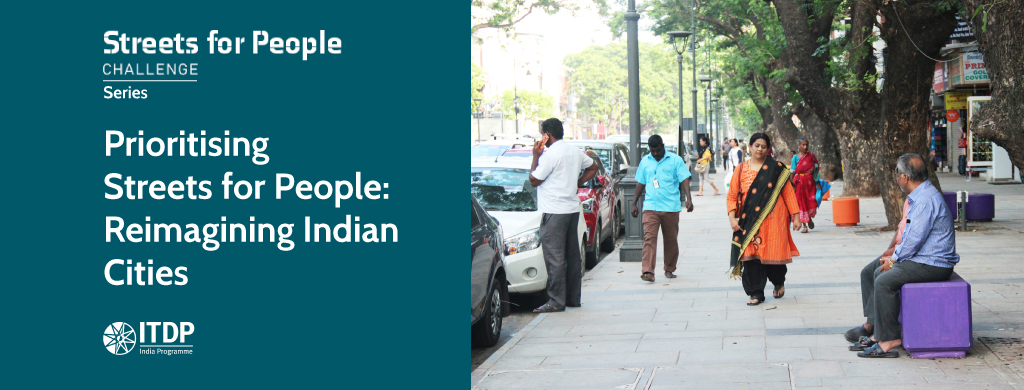
        Prioritising Streets for People: Reimagining Indian Cities

        3rd November 2020 by admin

        The Smart Cities Mission launched another national green recovery initiative—the Streets for People Challenge—with an aim to make Indian cities pedestrian-friendly, lively, and safe. The Challenge was launched by Shri Hardeep Singh Puri, Minister of State, Ministry of Housing and Urban Affairs (MoHUA) in a virtual event conducted on 11 September, 2020, and attended by key city officials, partner agencies, civil society organisations, and other stakeholders. 113 cities across the country have registered to transform their streets.

        What is the Streets for People Challenge?

        Across the world, COVID-19 has changed the way streets are used, highlighting the importance of streets for inclusive mobility, but also as public spaces for recreation, mental health, and to enhance the liveability of a city. The Streets for People Challenge follows on the heels of the India Cycles4Change Challenge to bridge this crucial gap in the way cities are envisioned and create streets that are safe, healthy, and happy, through quick, innovative, low-cost measures. The Challenge is an initiative of the Smart Cities Mission, Ministry of Housing and Urban Affairs (MoHUA), in partnership with the ITDP India Programme and supported by the Fit India Movement and Swachh Bharat Mission. It is open to all cities under the Smart Cities Mission, capital cities of States/Union Territories, and cities with a population of over 5 lakh population.

        Launch of the Streets for People Challenge

        Stages of the Challenge

        The Streets for People Challenge will be conducted in two stages. Stage One of the Challenge requires cities to test at least one pilot intervention, comprising a flagship public space project and a liveable neighbourhood, along with the development of a conceptual city-wide scale-up strategy. 11 cities will be selected for Stage Two to further scale-up their transformation. Drawing cues from locations like the Pedestrian Plaza in Chennai and the Golden Temple Heritage Street in Amritsar, the flagship projects are imagined around markets, retail areas, transit hubs, and other prominent places in the city. Cities should also choose neighbourhoods, which can range from mixed-income areas, resettlement colonies, low-income neighbourhoods, and others. In these areas, cities can create pedestrian-friendly or pedestrian-only streets, convert parking spaces to pop-up parks, revitalise dead spaces, and create walking links between large urban blocks. 

        Timeline of the Challenge

        To ensure well-designed pilot interventions, cities will roll out a design competition for students and professionals across the country. The competition will be launched with a design brief and entries will be evaluated by local officials, citizens, experts, and other stakeholders. To place the community at the heart of the Challenge, the design competition will include a multi-step process, where citizens can take part in discussions and vote for the best entry through a community jury. Cities will also focus on citizen participation through activities such as events and campaigns. 

        Cities will participate in a virtual Streets for People Festival in February 2021. Following this, 11 cities will be selected for Stage Two. In this stage, cities will commence implementation of their scale-up plan and work towards a long-term strategy to prioritise walkable and liveable streetscapes. Throughout the Challenge, the ITDP India Programme will provide remote assistance by sharing knowledge resources, conducting online training workshops, and facilitating peer-to-peer interactions between cities.

        Taking the first step

        The 113 registered cities have already kickstarted the process through the Online Workshop 1, which was conducted on 1 October, 2020, by the ITDP India Programme. Key officials from Amritsar, Chennai, Delhi, and Udaipur presented the learnings from the development of various pedestrian-friendly spaces in their cities. As the officials spoke about the transformation of spaces in these cities, they emphasised key factors such as community feedback sessions and tactical measures to ensure successful interventions. The session was led forward by the ITDP India Programme through a presentation that focussed on a detailed look at the Challenge process for the cities — expanding on their next steps to engage with their communities and begin the design process. 

        To facilitate this collaborative transformation, cities are now calling upon passionate individuals to support their city in coordinating, volunteering, documenting, and sponsoring various elements of the Challenge. The city will closely work with these diverse group of individuals to efficiently manage the Challenge in multiple aspects, such as data collection, media coverage, and inclusive participation.

        Streets for People, By People

        Cities are now in the process of identifying their pilot sites, building support from the community, and gathering momentum through the ‘Open Streets’ Campaign. The campaign aims to showcase a glimpse into the Challenge, by opening streets to pedestrians, cyclists, and other non-motorised transport users. By asking citizens to nominate streets for the campaign and then organising events to bring them together, Bhopal, Jabalpur, Kakinada, and many others are truly embracing this cause. The ITDP India Programme is proud to support the Smart Cities Mission in this national initiative and guide Indian cities to reimagine a future around the needs of people, not cars. 

        Written by Aditi Subramanian

        Edited by Avishek Jha

        To support your city for the Streets for People Challenge, register here – https://smartnet.niua.org/indiastreetchallenge/support-your-city-2/

        This article is part of a series of articles on the Streets for People Challenge.

        Filed Under: Uncategorised Tagged With: non-motorised transport, Pedestrian Plaza, pedestrians, safe cities, Walking and Cycling

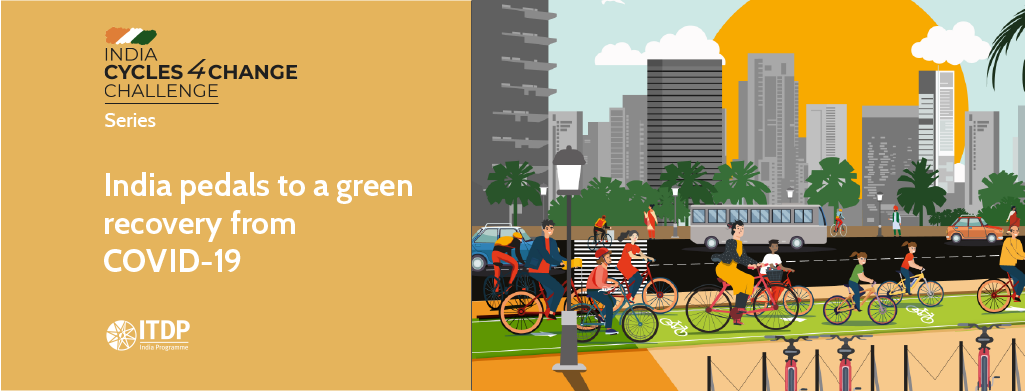
        India pedals to a green recovery from COVID-19

        6th August 2020 by admin

        Launch of the India Cycles4Change Challenge 

        The Smart Cities Mission, Ministry of Housing and Urban Affairs (MoHUA), Government of India, in partnership with the ITDP India programme hosts the India Cycles4Change Challenge aiming for a green recovery from COVID-19. Shri Hardeep Singh Puri, the Minister of State, MoHUA, launched the Challenge on 25th June 2020 at the 5th Anniversary Celebration of the Smart Cities Mission. The Challenge aims to inspire a nation-wide transformation, with an ambitious vision of creating over 10,000 kilometres of attractive cycling infrastructure and adding 100 million new cycles to our cities to make cycles accessible to every citizen. 107 cities—including all 100 Smart Cities— from across the country have registered for the Challenge and are set to create a cycling revolution.

        What is the India Cycles4Change Challenge? 

        The India Cycles4Change Challenge is a one-of-its-kind nationwide challenge to inspire Indian cities to embrace a cycling transformation. The Challenge is an initiative by the Smart Cities Mission, MoHUA in partnership with the ITDP India Programme and is supported by the Fit India Movement and the Swachh Bharat Mission. The Challenge encourages cities to implement quick cycling-friendly interventions in the wake of COVID-19, with support from experts and citizens. The Challenge is open for all cities under the Smart Cities Mission, capital cities of States/UTs, and all cities with a population of more than 5 lakh people. 

        On July 10th 2020, the Smart Cities Mission, MoHUA launched the online Challenge portal and opened registrations for all eligible cities to apply. Over 450 participants attended the launch event, including CEOs of Smart Cities, Commissioners, city officials, civil society organizations, experts, and citizens.

        Launching the Challenge portal, Kunal Kumar- IAS, Joint Secretary, Smart Cities Mission, spoke about the vision for the India Cycles4Change Challenge, “The COVID-19 pandemic is an opportunity for cities to reinvent themselves. Cycling offers us a healthy, affordable, and COVID-safe solution for a green recovery. Through this Challenge, the Smart Cities Mission offers cities an opportunity to transform themselves into cycling-friendly cities for everyone.” 

        Stages of the Challenge 

        Presenting the Challenge brief, Shreya Gadepalli- South Asia Programme Lead, ITDP, highlighted the importance of a TEST-LEARN-SCALE approach, “In a collaborative process, Indian cities should TEST through pilots, LEARN together with citizens and experts, and SCALE-up interventions. The Challenge is a unique opportunity to explore a wide range of physical interventions, policy reforms, and schemes towards making our cities cycling-friendly.” 

        Spanning across a year, the Challenge will happen in two stages. Stage One will run until October 2020, and cities will pilot quick interventions to promote cycling, as well as develop a scale-up strategy. The pilot interventions should focus on making cycling safe and fun by creating pop-up cycle lanes, dedicated parking, and traffic-calmed slow zones. In addition, cities could launch programmes such as a public bicycle-sharing system, community-led cycle rental schemes, and cycle repair clinics. 

        Stages of the Challenge

        At the end of Stage One, cities will be assessed and 11 shortlisted cities will receive funding of Rs. 1 Crore each. In Stage Two, to be held until May 2021, the selected cities will receive guidance from national and international experts to scale-up the initiatives. The process will repeat multiple times to encourage cities to embrace a cycling transformation.

        Throughout the Challenge, the ITDP India Programme will guide cities with online workshops, technical resources, discussions with experts, and peer-to-peer learning sessions with the other registered cities.

        Transforming Indian cities, one step at a time

        107 cities across the country have registered for the India Cycles4Change Challenge

        In response to the pandemic, Indian cities have been actively promoting cycling as a safe means of commuting and exercising. Even before the launch of the Challenge, Kolkata has proposed a dedicated cycle corridor by reclaiming parking spaces. The city will conduct a preliminary road survey over the next four months, and aims to implement the project by early 2021.  In cities like Jaipur, Pune, Pimpri Chinchwad, and Guwahati, Civil Society Organisations and local champions have started conducting surveys for citizens to vote for the best routes for bicycle lanes in the city. The Cycles4Change Challenge has transcended this spirit at the nation-level. 107 cities—including all 100 Smart Cities—from across the country have registered to be part of this cycling revolution. Cities like Bhopal, Chandigarh, Kohima, Kolkata, Prayagraj, Surat, and many more have launched extensive campaigns with the support of cyclist groups and interested citizens, spreading the word through social media and newspapers.

        The ITDP India Programme is proud to partner with the Smart Cities Mission to inspire Indian cities to create streets for cycles and people, not just for cars. With a strong vision and platform to learn, share, and experiment, Indian cities are all set to make the COVID-19 crisis an exhilarating opportunity to reimagine urban mobility. It’s time to pedal our way to a green recovery and a resilient future. 


        If you are a civil society organisation, consultant, corporate or concerned citizen eager to support your city in the India Cycles4Change Challenge, register here – https://bit.ly/30L0vnd

        This article is part of a series of articles on the India Cycles4Change Challenge.

        Read Part 2 in the series on 10 ways you can make India a cycling nation

        Written by Balanagendran
        Edited by Keshav Suryanarayanan
        Graphic Design by Sujai Chandran and Aishwarya Son
        i

        Filed Under: Uncategorised Tagged With: cycling, non-motorised transport, Tactical Urbanism, Urban development

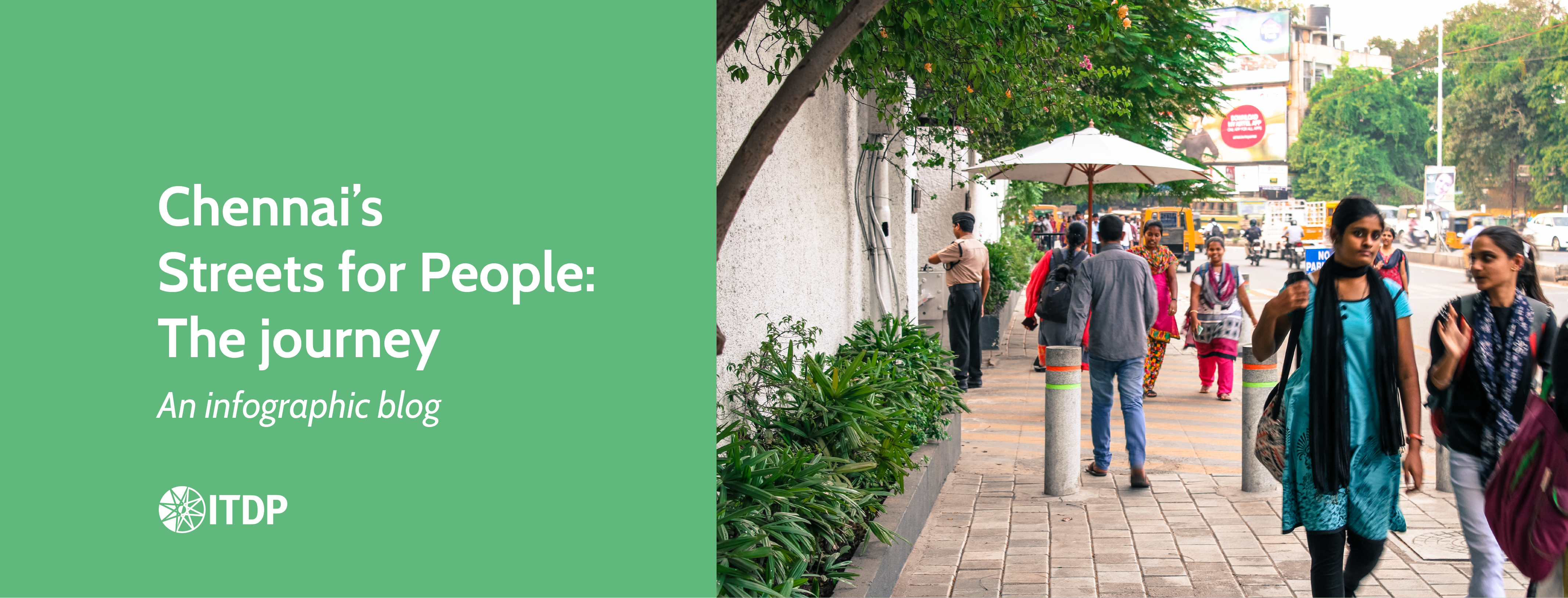
        Chennai’s Streets for People: The journey

        29th February 2020 by admin

        Infographic Blog

        In an era of vanishing footpaths and widening carriageways, the Greater Chennai Corporation (GCC) has been introducing a host of initiatives prioritising pedestrians, cyclists and public transport users — giving these social heroes their due. From adopting a progressive policy that makes walking and cycling its priority in 2014, to rigorously implementing the policy through its Chennai Street Design Project and the Smart City Mission over the last five years, the city has been transforming itself from a car-centric to a people-friendly city.

        Scaling up the street transformation work in Chennai, the Greater Chennai Corporation launched the Chennai Mega Streets Programme to create a city wide network of streets with a lifespan of at least 30 years – prioritising Liveability, Mobility and Utility. The success of the street transformation works and the Mega Streets launch was reflected in the Tamil Nadu Budget announcement in February 2020, with the allocation of funds for the preparation of DPRs and commencement of work.

        With the Mega Streets Programme now set in motion, Chennai is now gearing up to become the “Walking Capital of the Country”. Learn more about the city’s journey of making Streets for People in the infographic below.

        Conceptualized by: Aswathy Dilip, A V Venugopal, Santhosh Loganaathan

        Filed Under: Uncategorised Tagged With: Chennai, Network planning, non-motorised transport, Tamil Nadu, Urban development, Urbanism, Walking and Cycling

        • « Previous Page
        • 1
        • 2
        • Who We Are
          • Our Team
          • Contact Us
          • Opportunities
          • Our Approach
        • What We Do
          • Complete Streets and Parking Management
          • Public Transport
          • Transit Oriented Development
          • Inclusive Mobility
        • Where We Work
          • Agra
          • Ahmedabad
          • MAHARASHTRA
          • Pune – Pimpri-Chinchwad
          • Nashik
          • TAMIL NADU
          • Chennai
          • Coimbatore
          • JHARKHAND
          • Ranchi
          • NATIONAL
        • News
        • Resources
        • Get Involved
          • Donate

        Copyright © 2026 · ITDP Responsive on Genesis Framework · WordPress · Log in


        Loading Comments...