ITDP India

Promoting sustainable and equitable transportation worldwide

  • Contact
  • ITDP India’s 2025
  • Who We Are
    • Our Approach
    • Contact Us
    • Career Opportunities
  • What We Do
    • Healthy Streets
    • Public Transport
    • Electric Mobility
    • Transit Oriented Development
    • Low Emission Zones
    • Inclusive Mobility
    • Traffic Reduction
  • Where We Work
    • NATIONAL
    • MAHARASHTRA
      • Pune
      • Pimpri Chinchwad
      • Nashik
    • TAMIL NADU
      • Chennai
      • Coimbatore
    • JHARKHAND
      • Ranchi
    • Agra
    • Ahmedabad
  • Blogs
  • Resources
    • Press
  • National Challenges
    • India Cycles4Change Challenge
    • Streets for People Challenge
    • Transport4All Challenge
  • Urbanlogue
    • Urbanlogue Webinars – Series One
    • Urbanlogue Webinars – Series Two
    • Urbanlogue Webinars – Series Three
    • Urbanlogue Webinars – Series Four

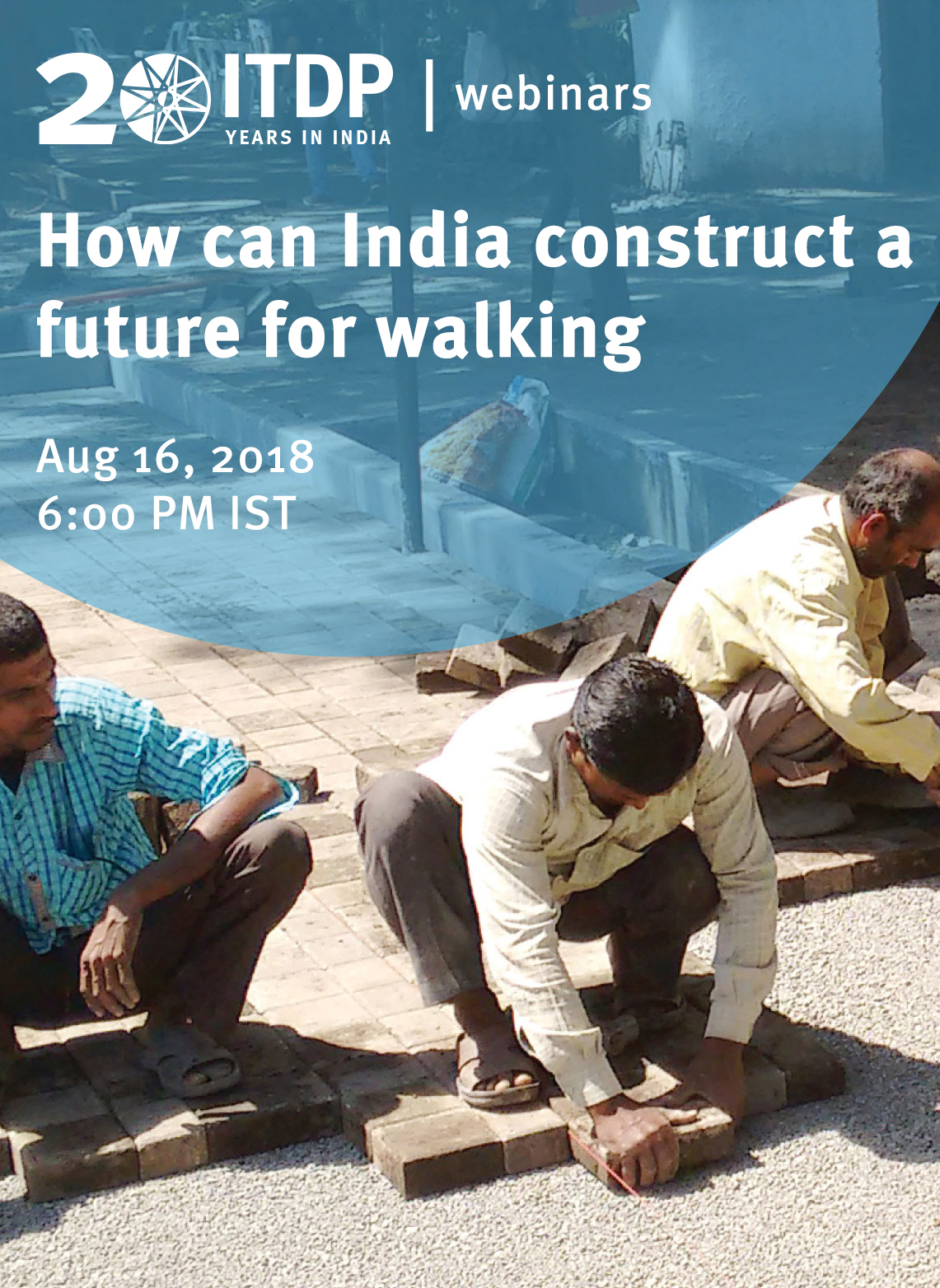
[Webinar] How Can Indian Cities Construct a Future for Walking

21st August 2018 by Leave a Comment

Description: In this webinar, the speakers discussed on how Indian cities can construct safe and attractive footpaths that are accessible by all. This webinar gives a brief introduction to our publication – Footpath Fix – that provides guidance on footpath construction details, especially that of different utilities.

Many Indian cities have begun to acknowledge the fundamental role of walking in everyday life but are stuck at getting the details right. This short guide is more of a cheat-sheet for urban designers, municipal engineers, and contractors on how to implement footpaths in complex urban environments. Everyone who has seen it is raving about it.


About the speakers:

Nashwa Naushad is a Research Associate – Urban Development with ITDP India and works out of the Chennai office.
Pranjal Kulkarni is a Research Associate – Urban Development with ITDP India and he works out of the Pune office.


The webinar recording can be found here.

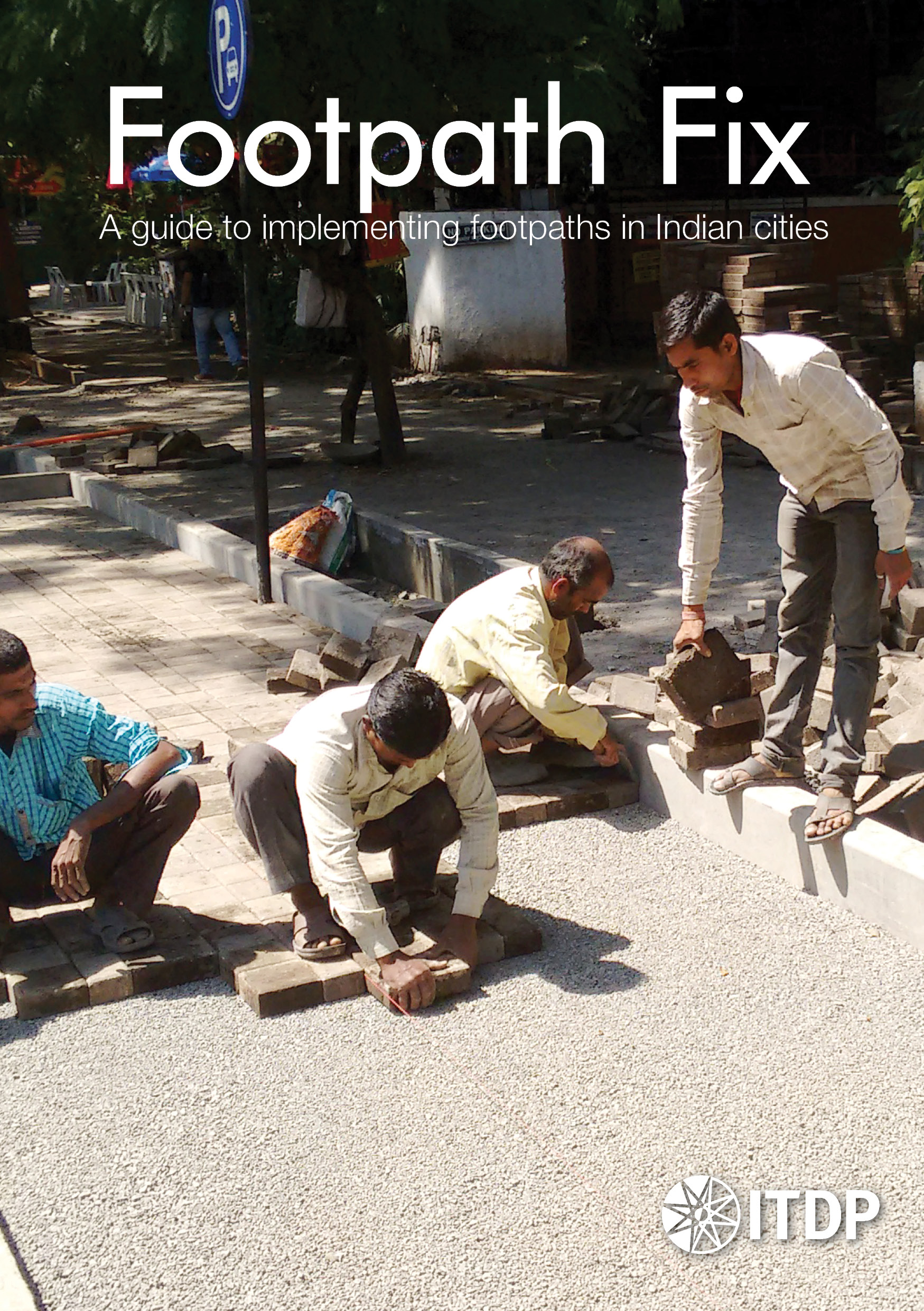
Footpath Fix

27th July 2018 by Leave a Comment

The Footpath Fix is a step-by-step guide on footpath construction detailing for urban designers, municipal engineers, and contractors. Cities across India now acknowledge that walking plays a fundamental role in everyday life. Thereupon, good quality footpaths must be provided to make walking safe and attractive.

Basic footpath design standards such as the optimal height, adequate width, continuous and obstacle-free surface are detailed in the first volume of the Footpath Series – Footpath Design.

Attention to construction details, especially that of different utilities is articulated in this second volume – Footpath Fix. Several footpath projects have failed due to improper construction and execution; thus, this guide aims to highlight the steps, in a chronological order, from pre-excavation to above-ground construction.  It also features necessary precautions, drawing from experience on-ground, that must be taken into consideration at each stage of construction.

Related Resources

  • Footpath Design: A guide to creating footpaths

  • Better streets, better cities: A guide to street design in Urban India

More Resources >

[Webinar] IRC Guidelines on Urban Road Network Planning

31st May 2018 by Leave a Comment

ITDP India Programme is part of the H8 Committee on Urban Roads and Streets, that was constituted in the year 2015 to prepare street design guidelines for urban roads.

Watch the ITDP team talk about:

  1. Planning and Development of Urban Roads and Streets (Sonal Shah, Senior Programme Manager, ITDP)
  2. IRC BRT Guidelines (Pranjali Deshpande-Agashe, Programme Manager, ITDP)
  3. IRC 70: Guidelines for Regulation and Control of Mixed Traffic (Parin Visariya, Research Associate – Urban Development, ITDP)
The webinar provides information on road hierarchy and network planning, pedestrian and cycling facilities, on-street parking management, and BRT guidelines.

The webinar recording can be found here.

Five Ways to Win at Dockless Bikeshare

22nd May 2018 by Leave a Comment

Dockless bikeshare, a mode of transportation that emerged in China only four years ago, needs to be regulated and integrated into urban mass transit systems rather than exist as a separate private entity to reach its potential, according to a new policy brief from the Institute for Transportation and Development Policy (ITDP).

ITDP has outlined five key elements for a successful dockless bikeshare system, and has found that a number of cities have already embraced these best practices.

The policy brief and accompanying publicity materials identify five key components of any system: Five Ways to Win at Dockless Bikeshare. A growing number of cities have prospered by implementing these elements, while other cities have experienced more disruption than smooth travels due to minimal oversight of dockless bikeshare. For example, without clearly communicated guidelines on how best to park the bicycles, dockless bikes have raised ire for blocking rights of way and other public spaces.

[Webinar] Municipal Finance: Financing Sustainable Transport

Municipal finance financing sustainable transport

15th May 2018 by Leave a Comment

About the speaker: Dr Ravikant Joshi – Team Leader -Technical Support Unit  to the National Urban Livelihoods Mission – Ministry of Housing and Urban Affairs  

​Dr. Ravikant Joshi presently works for the Ministry of Housing and Urban Affairs as a Team Leader in the Technical Support Group to National Urban Livelihood Mission. He is the former Chief Accounts Officer of Vadodara Municipal Corporation with more than 35 years of experience. He has been responsible for the conceptualisation, design and implementation of Municipal Financial, Budgetary and Accounting System Reforms at the Corporation.

He is a sought-after guest lecturer at various Institution and Universities for topics ranging from urban-municipal finance, urban finance, urban governance, strategic urban management, to urban development studies. Dr Joshi has written over 30 research papers on urban governance that have been publish   in various journals and seminars.

Description: The webinar explores alternate methods of financing sustainable transport initiatives in Indian cities – such as municipal bonds, urban transport funds, land value capture through public-private partnerships etc. It highlights the present scenario of revenue tools, identifies gaps in the current set-up, and provides an analysis of various alternative methods of financing, available for our cities. 

The webinar recording can be found here.


[Webinar] #WomenOnTheMove: Women and Transport in Indian Cities

6th April 2018 by Leave a Comment

The Institute for Transportation and Development Policy and Safetipin released a first-of-its-kind policy brief on Women and Transport in Indian Cities in 2017. ITDP hosted a webinar on March 20, 2018 to introduce the policy brief and discuss the gendered dimensions of transport and employment in the transport sector in Indian cities. The emphasis was on proposed urban transport indicators and service level benchmarks (SLBs) for comprehensive mobility plans, recommendations to improve women’s modal shares and experiences of walking, cycling, public and intermediate public transport, and engendering public transport authorities. In addition to SLBs and recommendations, the role of ministries and departments in mainstreaming gender was also discussed.

The webinar recording can be found here.  Download the presentation here.

Related News

  • #WomenOnTheMove: Women and Transport in Indian Cities

    December 15, 2017

  • PT InFocus: Women in Public Transport

    September 25, 2017

  • #PressforProgress: Cities must measure sexual harassment in streets and public transport

    March 8, 2018

More News >

Related Resources

  • Women and Transport in Indian Cities

More Resources >

Women and Transport in Indian Cities

4th January 2018 by Leave a Comment

The performance of urban transport services places different burdens on women and men, with the costs of poor public transport often being borne by women. Safe, comfortable, convenient and affordable transport can play an important role in not only helping meet women’s practical needs such as access to schools and markets, but also in contributing to their strategic empowerment by facilitating access to social and economic opportunities.

While there is momentum by different levels of government in addressing women’s safety in public transport, urban transport investments are largely gender blind with a limited understanding of the interrelationships between gender and transport inequities. Sustainable urban development will remain elusive without integrating women and girls’ safety, comfort, convenience and affordability in urban transport. Addressing this, and as a first of its kind, a paper on Women and Transport in Indian Cities was created by ITDP India Programme and Safetipin.

This paper outlines the broad issues faced by women and girls when using or accessing urban transport, and recommends key measures to enable equitable access. The brief recommends gender responsive indicators, service level benchmarks and guidelines for comprehensive/green mobility plans as well as walking, cycling, public and intermediate public transport.

Download the paper here.

Related News

  • #WomenOnTheMove: Women and Transport in Indian Cities

    December 15, 2017

More News >

Coimbatore Street Design & Management Policy

4th January 2018 by Leave a Comment

Too often, transport planning has concentrated on infrastructure, traffic, costs, and benefits, with environmental factors limited to engineering consideration. However, mobility planning now focuses on the movement of “people, not vehicles’, a goal clearly expressed in the 2006 National Urban Transport Policy (NUTP).

In keeping with this approach, the Coimbatore City Municipal Corporation (CCMC) aims to create a policy environment that supports increased accessibility by prioritizing the use of walking, cycling, and public transport.  CCMC has thus adopted a Street Design & Management Policy to ensure the implementation of high quality transport systems.

The Policy seeks to achieve a more equitable allocation of road space by incorporating a focus on non-motorised transport (NMT) and public transport (PT) in the planning, design, managing, and budgeting stages.

Download the policy here.


Related News

  • Coimbatore Smart Streets Exhibition marks the beginning of the city's street transformation

    March 1, 2017

  • Coimbatore’s sustrans initiatives lauded by international experts

    March 28, 2017

  • Coimbatore’s car-free Sundays spark demand for better pedestrian facilities

    December 23, 2015

More News >

Pedestrianisation in India and Across the Globe

4th January 2018 by Leave a Comment

Cities across the globe are acknowledging the importance of the pedestrian. The activity of walking, either as part of one’s transit, fitness regime or for leisure, is being increasingly associated with a city’s social life. The measures a city takes for the safety of its pedestrians is now becoming a deciding factor in its popularity. Some cities have gone on to completely cut off access to vehicles from some of their streets, converting them to pedestrianised areas.

Although the idea of creating pedestrian-only streets seems modern, it has been tested and tried out in various cities several times in the past and continues to work well. Despite initial resistances, many of these projects have proven to be great successes.

Pedestrianisation in India and Across the Globe aims to learn from the best practices in pedestrianisation across the world.

Download the report here.

Related News

  • InFocus: Reclaiming streets for people

    April 17, 2015

  • People's day out: Shoppers welcome T. Nagar Pedestrian Plaza

    March 3, 2017

  • Reclaiming streets: Pedestrian-only test run marks new beginning in Pune!

    October 11, 2016

More News >

The BRT Standard

23rd June 2016 by Leave a Comment

The BRT Standard is the centerpiece of a global effort by leaders in bus transportation design to establish a common definition of bus rapid transit (BRT) and ensure that BRT systems more uniformly deliver world-class passenger experiences, significant economic benefits, and positive environmental impacts.

BRT plays an important role in the global effort to reduce transport sector emissions. As emissions from private motor vehicle use grow, shifting these trips onto public transit by improving the quality and reach of BRT becomes critical. Establishing a quality standard for BRT not only ensures that better projects are built, but that transport sector emissions are reduced.

The BRT Standard scoring system was created as a way of protecting the BRT brand and offering recognition to high quality BRT systems around the world. Certifying a BRT corridor as gold, silver, bronze, or basic sets an internationally recognized standard for the current best practice for BRT.

Download Standard

Related Resources

  • BRT in Chennai - Towards a new paradigm in urban mobility

  • Institutional and Regulatory Options for Delhi’s High Capacity Bus System: Lessons from international practice

  • RFP to operate city buses

More Resources >
  • « Previous Page
  • 1
  • 2
  • 3
  • 4
  • 5
  • …
  • 8
  • Next Page »
  • Who We Are
    • Our Team
    • Contact Us
    • Opportunities
    • Our Approach
  • What We Do
    • Complete Streets and Parking Management
    • Public Transport
    • Transit Oriented Development
    • Inclusive Mobility
  • Where We Work
    • Agra
    • Ahmedabad
    • MAHARASHTRA
    • Pune – Pimpri-Chinchwad
    • Nashik
    • TAMIL NADU
    • Chennai
    • Coimbatore
    • JHARKHAND
    • Ranchi
    • NATIONAL
  • News
  • Resources
  • Get Involved
    • Donate

Copyright © 2026 · ITDP Responsive on Genesis Framework · WordPress · Log in


Loading Comments...