ITDP India

Promoting sustainable and equitable transportation worldwide

  • Contact
  • ITDP India’s 2025
  • Who We Are
    • Our Approach
    • Contact Us
    • Career Opportunities
  • What We Do
    • Healthy Streets
    • Public Transport
    • Electric Mobility
    • Transit Oriented Development
    • Low Emission Zones
    • Inclusive Mobility
    • Traffic Reduction
  • Where We Work
    • NATIONAL
    • MAHARASHTRA
      • Pune
      • Pimpri Chinchwad
      • Nashik
    • TAMIL NADU
      • Chennai
      • Coimbatore
    • JHARKHAND
      • Ranchi
    • Agra
    • Ahmedabad
  • Blogs
  • Resources
    • Press
  • National Challenges
    • India Cycles4Change Challenge
    • Streets for People Challenge
    • Transport4All Challenge
  • Urbanlogue
    • Urbanlogue Webinars – Series One
    • Urbanlogue Webinars – Series Two
    • Urbanlogue Webinars – Series Three
    • Urbanlogue Webinars – Series Four

ITDP India – Our Journey from a Dream to Reality

team ITDP

11th May 2018 by admin

It was back in 1998 that ITDP began its engagements in India, inspired by Mahatma Gandhi’s words, “Be the change that you wish to see in the world.” What started as one woman’s journey to change the dystopian path our cities were drifting towards has transformed into a formidable force of young, passionate visionaries who strive to bring back life in a place we call home. Today, ITDP celebrates two decades of action on the ground, catalysing tangible transformation at scale in over a third of urban India.

Transportation is the focus of many pressing issues facing the world today—decisions about whether to build highways or bus corridors have a great impact on our health and our planet. For this reason, ITDP has worked with over 18 Indian cities to reduce the human impact of transport choices: ensuring cities put people before cars, all citizens can walk and cycle safety, and jobs and services are a bus ride away. Through the dedicated efforts of our team and a strategic approach towards sustainable transport, ITDP India programme has impacted the lives of millions for the past 20 years.

ITDP in India

The journey in India began in Agra. The vision to develop a modern cycle rickshaw to counter the growing threats of motor vehicular pollution, gave way to the India Cycle Rickshaw Improvement Project. What started off as five prototypes has become sustainably embedded as the standard design in cities across North India. Today, around half a million of these modern cycle rickshaws serve  4-5 million zero-carbon trips daily and offer dignified livelihood to over a million people, transforming the lives of their families as well.

Cycle rickshaws

ITDP realised the need to transform the quality and availability of public transport in Indian cities. Since 2003, the India Programme evangelised the idea of the Bus Rapid Transit (popularly known as BRT) to transform mediocre bus services into high-quality mass transit.

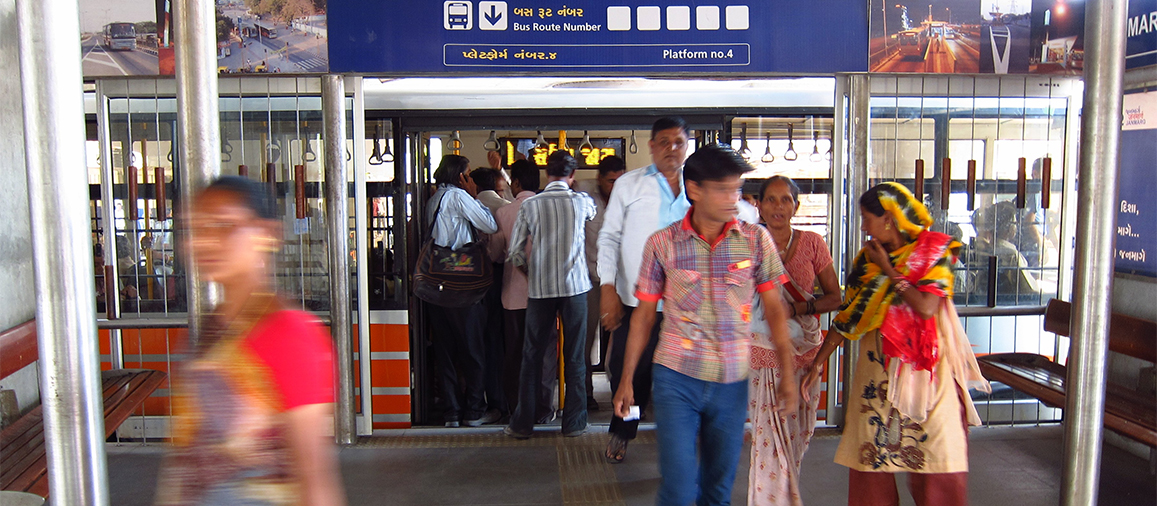
Ahmedabad, Gujarat’s largest city, welcomed ITDP to reimagine bus transit in 2005. Our partnership with Environment Planning Collaborative, and thereafter with CEPT University and the Ahmedabad Municipal Corporation resulted in the launch of Janmarg (in 2009)—India’s first high quality BRT system that expands to a network of 87 km. Janmarg has inspired many cities in India, and with guidance from ITDP, five cities have created 200 km of high-quality BRT to date.

janmarg

In 2009, the India Programme revolutionised the way people perceived streets in India. Safe, child-friendly streets are not just a mirage of the past, but can be a beautiful reality even today. Ahmedabad was the first city in India to host Car-Free Sundays in collaboration with ITDP, Riverside School and other partners.  The initiative allowed citizens to experience the freedom of walking and cycling on safer car-free streets.  The success enabled expansion to Tamil Nadu and Maharashtra to raise awareness and transform their streets into places we all dream of everyday.

ITDP India Programme initiated collaboration with Chennai City Connect in 2009 to improve cycling and walking conditions across the city. Change isn’t easy in cities where the car is a symbol for status. But within five years of ITDP’s engagement with the city, Chennai took the bold move of adopting the Non Motorised Transport (NMT) Policy—first in India.

The policy mandates that a minimum of 60 percent of of transport funding to create and maintain walking and cycling infrastructure in the city. Having retrofitted over 50 km of walkable streets over the years, Chennai has initiated the next phase of redesigning an additional 50 km of street network. Chennai’s policy has inspired many national and international cities—from Chandigarh to Nairobi—to adopt similar policies. The comprehensive approach undertaken by Chennai, was awarded the Sustainia Award in 2015.


chennai complete streets

Since 2013, the India Programme has worked with the smaller cities of Tamil Nadu – Coimbatore, Trichy, Tirupur, Salem, and Madurai.  In Coimbatore, the Namma Kovai Namakke (Our Coimbatore Ourselves) campaign, initiated by ITDP, sparked citizen demand for better pedestrian facilities. Coimbatore was the first city in Tamil Nadu to host Car-Free Sundays, that inspired Chennai and Madurai to do the same. The city also adopted The Coimbatore Street Design and Management Policy that aims to increase walking, cycling and public transport use. In light of Coimbatore’s vision to improve people-mobility, the city has planned a 30 km-network of walking and cycling paths to connect the city’s major lakes, in line with the guiding Policy.  

The India programme began its engagements in Maharashtra in 2009, first with the Municipal Corporations of Pune and Pimpri-Chinchwad, and thereafter in Nashik and Aurangabad. Today, Pune is the epitome of a smart Indian city. Pune launched 40 kms of the Rainbow BRT in 2015, with an additional 45 km in the pipeline. The city adopted the Urban Street Design Guidelines and plans to redesign 100 km of streets based on the world-class standards set by the transformation of  JM Road and DP Road pilot project.

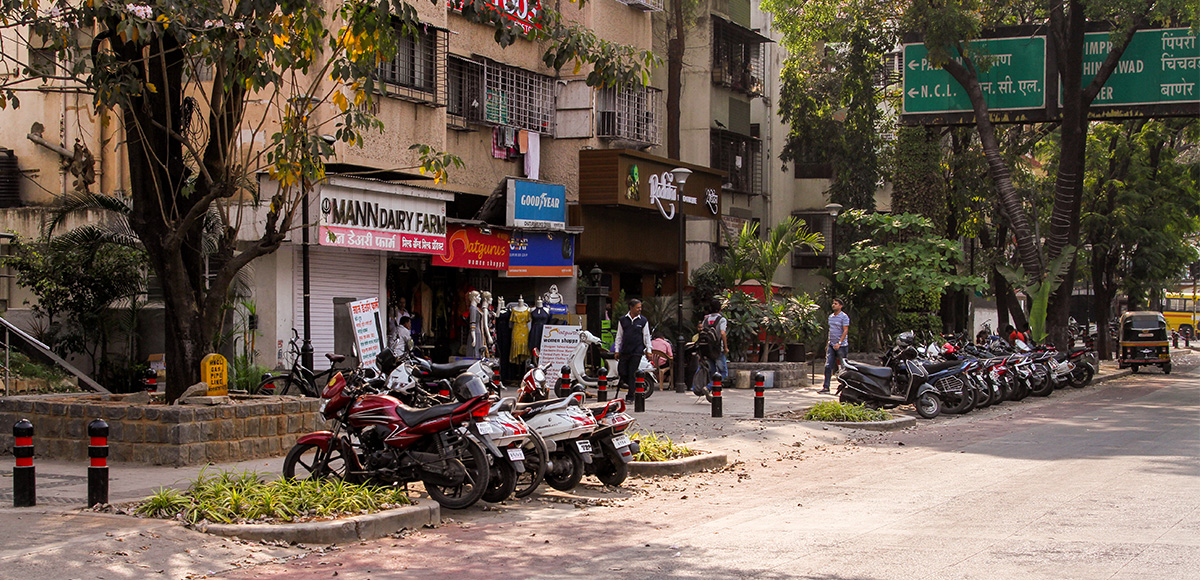
While Pune has taken the first steps towards developing a people-centric city, the next challenge is to address the encroachment onto footpaths by parked vehicles. As a result, Pune adopted the Public Parking Policy to regulate parking, in 2018. The Policy aims to manage on-street parking through an efficient paid parking system but exempts bicycle parking from any charges. Pune realises that encouraging cycling reduces CO2, improves commuters’ health and increases retail visibility. As a result, the city plans to implement a dockless Public Bicycle Sharing system of 13,100 cycle, under the city’s Bicycle Plan.  Yes, the city has worked wonders. Pune, Chennai, and Coimbatore – all cities ITDP assisted, were selected in the first round of the national government’s Smart City Mission.  

Pune complete streets

In 2013, the India programme also expanded to Ranchi, the capital of the state of Jharkhand. Local conditions were unfavourable to support sustainable transport; thus, ITDP initiated collaboration with local civil society groups, educational institutions and trade associations that formed the Ranchi Mobility Partnership. Ranchi’s Mobility for All action plan prepared by ITDP, with input from the partners, provided a detailed roadmap of transport solutions for local conditions.

The action plan inspired the city to take responsibility of overseeing operations of 100 new buses, and an additional 300 buses in the due course—an applaudable move for a city that had fewer than 30 buses. The plan also identified a cycle network to improve access to public transport; as a result, the city is in the midst of constructing the state’s first Bicycle Sharing system comprising of 1200 cycles.

Onward and upward, Ranchi’s Parking Policy has inspired other cities in the state, like Jamshedpur, to manage on-street parking. The State too realised the chaos caused by unregulated parking and thereafter adopted the  Jharkhand Parking Regulations—first in India. Jharkhand is also the first state to endorse the Transit Oriented Development Policy that was prepared in consultation with ITDP India.

On account of leveraging the sustainable transport agenda at the national level, the India expanded to the country’s capital, Delhi, in 2016. This gave rise to the policy brief on Women and Transport in collaboration with Safetipin and UN Women. Women represent the largest share of public transport users, yet they face many barriers that limit their mobility such as safety, comfort, convenience and affordability. Empowering women in transport enables them to participate in workforce, thereby creating a societal shift to transform the entire world economy.

The India Programme’s capacity development work, through training workshops and study tours, has been imperative to the success of its projects and policy. The India Programme has trained over 1000 government officials and other stakeholders. Over the years, our knowledge products have not only been used for best practise references, but also endorsed by the government – for example, the National Guidelines for Public Bicycle-sharing for the Ministry of Urban Development, and Street Design and BRT Guidelines for the Indian Roads Congress (IRC).

capacity development

Since 1998, ITDPs’ agenda of improving the quality of life of citizens through equitable and sustainable transport has only magnified in momentum over time. Times have evolved, but our dream remains the same. Take a moment and imagine a 2050: will we design a future where we continue to get trapped in endless traffic while pollution destroys the city, and infrastructure fails to deliver? Or, will we live in ‘smart cities’ where people can zip around town, connected with walking and cycling boulevards and world-class rapid transit. The choice is yours; we chose the latter.

P.S. Dear Mahatma Gandhiji, we are being the change we wish to see in the world today. And, we have been doing it successfully for the past 20 years in India!  
Filed Under: news Tagged With: Ahmedabad, Bus Rapid Transit, Chennai, Coimbatore, Complete Streets, Cycle sharing, Delhi, Footpath, Gender, Nashik, NMT, Parking, Public Transport, Public-Private Partnership, Pune-Pimpri Chinchwad, traffic demand management, Traffic reduction, Transit Oriented Development, Walking and Cycling, Women

Pune Parks it Right!
Pune parks it right!

30th April 2018 by admin

“Congratulations to Pune on taking this important step! If the going gets tough, always remember WHY the streets need parking management. The fees, the enforcement and the well-designed parking spaces are needed to make sure that parking happens in an orderly way, only in the right places and that it is almost never too full (so newcomers can find a space to park).” Dr. Paul Barter, Urban transport researcher, policy advisor and trainer.

The renowned parking policy expert’s words ring true: making streets inclusive and people-friendly is one of the biggest challenges cities face today, and a key part of the puzzle lies in a system we mistakenly take for granted: parking. In a laudable move, Pune Metropolitan Corporation (also known as PMC) has approved a public parking policy that aims to manage on-street parking through an efficient paid parking system. Ultimately, it will shift people from private vehicles toward sustainable modes such as walking, cycling and using public transport.

PMC heralds a new era of travel demand management by regulating on-street parking. ITDP provided technical expertise to draft the Policy. The Policy introduces an efficient paid parking system, an intelligent transportation system that facilitates payment, and the creation of a management cell that oversees implementation. The outcome – a demand-based parking system that smoothens traffic movement – is avant-garde in India.

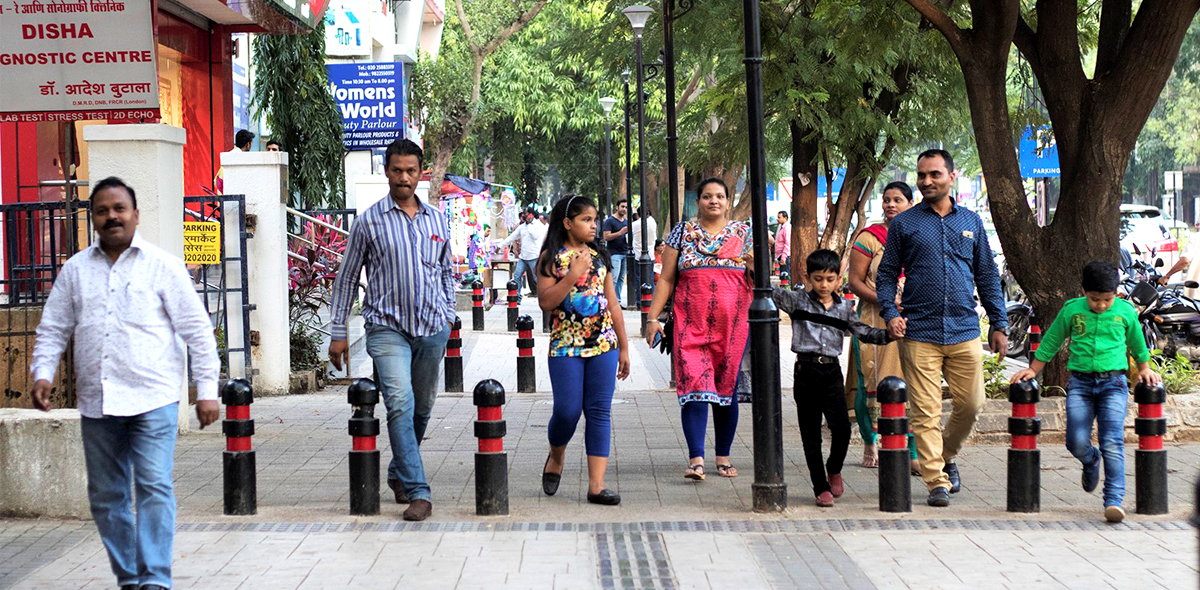
DP Road, Aundh is an example of street design that includes clear parking spots

DP Road, Aundh is an example of street design that includes clear parking spots

It’s widely known that private vehicles are voracious consumers of space because they require a parking spot at each leg of a journey- at home, at the market, and at the office. Streets are crowded with parked vehicles that block traffic and turn walkways into obstacle courses for pedestrians. A parking policy is needed to ensure that the frustration and hassle of parking is addressed sustainably and efficiently.

The policy proposes to regulate on-street parking by clearly demarcating legal and restricted parking spaces, in accordance to Pune’s Urban Street Design Guidelines. The street design guide, which was adopted by the city in 2016, sets standards for designing street elements and provides a collection of street design templates catering to the needs of all road users.  

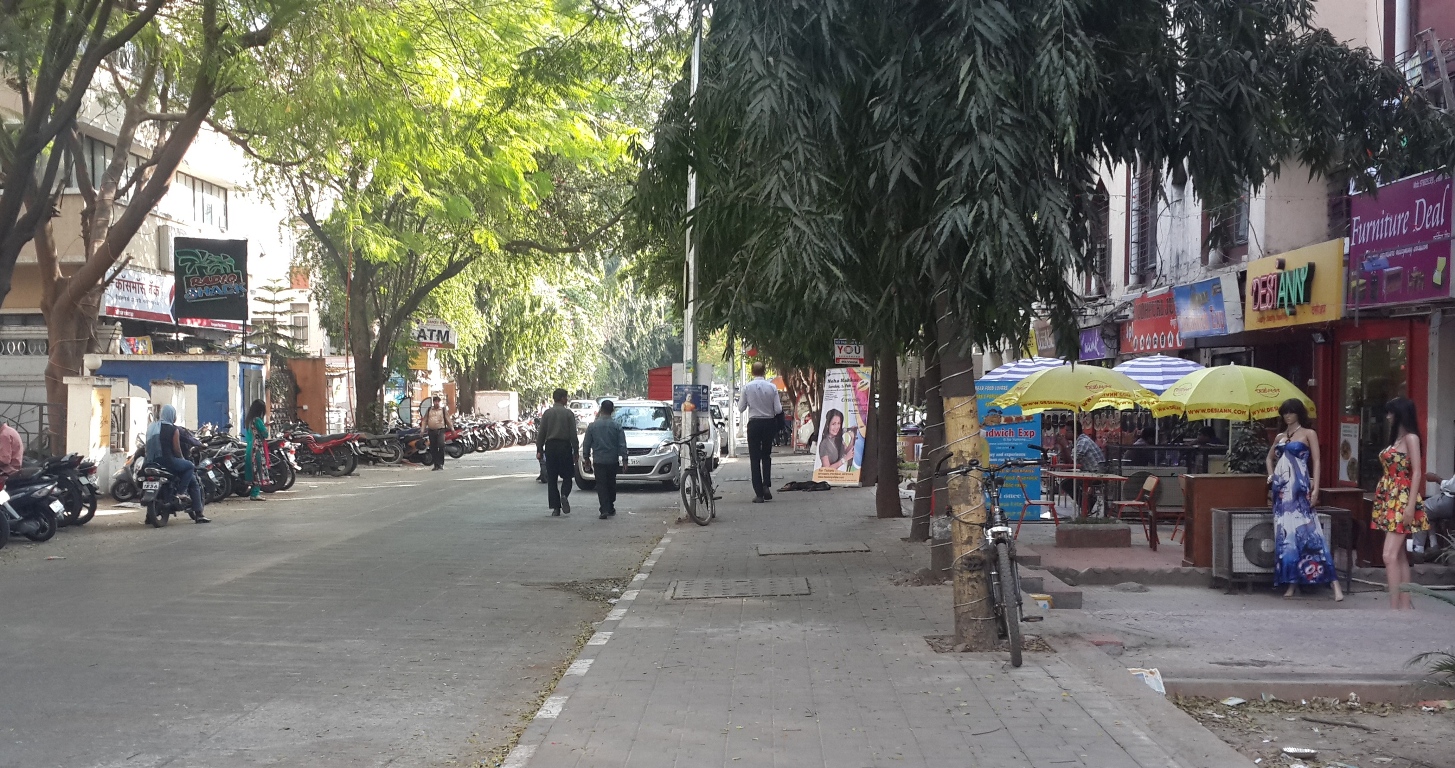
The policy proposes clearly demarcating legal and restricted parking spaces

The policy proposes clearly demarcating legal and restricted parking spaces

According to the policy, parking rates will be determined across the city for both on-street and off-street parking, depending on location, time and type of vehicles. Pune’s parking policy has determined parking fees based on vehicle dimensions, parking demand at particular locations, time (peak or off-peak hours), and occupancy to enable a fair fee structure. Revenue from parking fees can help fund further improvement in public transport and parking management.

The Policy aims to be proactive in ensuring that parking information is available to commuters through various means (such as real time digital displays, smartphone apps etc.) to reduce redundant trips for hunting parking spaces. In a move to promote cycling as an affordable and sustainable mode of transport, the policy exempts bicycle parking from any charge. Exemptions are also extended to daytime ambulances, special-aid vehicles and paratransit parked in designated lots.

Once implemented, the policy promises efficiency to travel demand management in the city. As a significant step towards holistic and sustainable urban transport planning, parking management can help Pune become a ‘world-class’ city!

Filed Under: Parking Management, Pune Tagged With: Parking, parking management, policy, Pune, traffic demand management

A year of radical planning, 2017 passes by…

30th December 2017 by admin

“I used to take my two-wheeler to travel the 3 kilometers between my house and the railway station. I’m now able to walk the stretch, thanks to the continuous footpath. Best part – I’ve lost 5 kilos and my diabetes!” Mr. Manimaran, a resident of Egmore in Chennai, is thrilled at the tremendous change that a safer and better footpath has brought about in his life.

The year 2017 witnessed many such impactful changes in the field of sustainable transportation all around the country, including cities which ITDP India Programme has been closely working with. Thanking all our supporters, we take a look at the year that passed by.

Pune broke ground on its ambitious Complete Streets networks – a 100km-network with its own financial resources and 45km through support from the National Smart Cities Mission. The first phase of these street design projects on JM Road and DP Road has already been lauded by the country, owing to the vibrancy of these redesigned streets. Pune’s Bicycle Plan, recently approved by the General Body, paves way for the creation of a 300km bicycle-track network in the city.

Having accomplished over 40km of Complete Streets, Chennai initiated the next phase of street design by inviting tenders in late October to redesign 22km of streets. The city tested out the design of 5 key intersections through a tactical urbanism approach – quick, temporary, on-ground interventions. Chennai also conducted another trial run of the proposed pedestrian plaza in Pondy Bazaar, the success of which fetched the project a sanction of of Rs 55 crores (~US $9 million) under the Smart Cities Mission.

Smaller cities have also made remarkable progress this year in their Complete Streets programmes – Nashik appointed nationally-acclaimed urban designers to redesign its proposed street network of 50 kilometers, with 10 kilometers tendered out; and Coimbatore commenced construction of its Model Roads and hosted an interactive exhibition to inform the people of the design of the roads while collecting feedback. Coimbatore also started developing detailed implementation plans for its Greenways and Lake Restoration Project, which includes a 30km network of greenways (exclusive walking and cycling infrastructure) that crisscross the city and connect 8 water bodies.

Becoming one of the pioneering cities in parking management in the country, Ranchi implemented a progressive on-street parking management system on its busiest thoroughfare, Mahatma Gandhi Marg, with a twelve-fold increase in revenue. Inspired by the success of the pilot, the city has proposed to refine and expand the system to cover all key locations. The state of Jharkhand has also proposed to adopt a state-level parking policy.

Chennai recently invited tenders to select an operator for its proposed on-street parking management system covering 12000 equivalent car spaces on Bus Route Roads across the city. Since Pune is also working towards parking management, ITDP, in collaboration with  GIZ-SUTP,  facilitated and managed a two-day workshop on the topic, with international parking expert, Dr Paul Barter in the city. Participants included municipal officials, traffic police, public officials from other agencies as well as various local stakeholders.

An increase in demand for better public transport has provided the fillip to cities across the country to increase and improve their transit services. Chennai made considerable advancement in its BRT planning, with the interim report for Phase I approved by the state and a series of public consultation programmes organised to explain the significance of BRT to people and get their feedback on the various corridors.

In Pune, around 130 crore rupees was sanctioned to construct 13 new bus terminals to facilitate better integration of bus services with the proposed Metro Rail network. The city also commenced work on expanding the existing 38km Rainbow BRT by an additional 15km. Pune Mahanagar Parivahan Mahamandal Limited (PMPML) initiated the process of adding 200 feeder buses to its fleet, to improve connectivity between the city and the surrounding towns.

Public bicycle sharing (PBS) is emerging as a popular mode of public transit across the country. Pune piloted a dockless PBS system with 275 bicycles and signed an MoU with 4 vendors dealing with dockless systems. Two other cities are preparing for the installation of a PBS system – Ranchi and Chennai invited operators to submit proposals for setting up 1264 bicycles in 122 stations (Phase 1) and 5000 bicycles in 378 designated parking areas, respectively.

Successful and sustained on-ground changes invariably require the backing of well-framed guidelines, policies and financial plans – 2017 was marked by many of these. Two sets of guidelines – the Bus Rapid Transit (BRT) planning and design guidelines, and the Guidelines on Control and Regulation of Mixed Traffic in Urban Areas – prepared by ITDP, were approved by the apex committee of the Indian Roads Congress. These guidelines will apply for all cities across India and guide them towards low-carbon mobility.

The Government of Jharkhand adopted an inclusive TOD policy that focuses on equitable development of cities in the state, so that a majority of the population lives and works in areas with safe and accessible walking and cycling facilities integrated with reliable and high-quality public transport.

The Government of Maharashtra published a draft of the State Urban Transport Policy, which promotes low-carbon & equitable mobility and urban development by prioritising public transport (PT) and non-motorised transport (NMT). Furthermore, over half of Pune’s total transportation budget of 1100 crore rupees was allocated towards sustainable transport development for the financial year 2017-18. In the South, Coimbatore adopted a Street Design and Management Policy that focuses on creating equitable and sustainable mobility options and expanding their use.

The realisation that sustainable urban development will remain elusive without integrating women’s safety and comfort in urban transport, has generated momentum to include gender as a key factor in transport planning. Bringing this subject to the fore and as a first of its kind, a paper on Women and Transport in Indian Cities was created by ITDP and Safetipin, and released at a national workshop on gender and transit conducted by the two organisations. This paper identifies indicators, service level benchmarks and processes for integrating a gender perspective in urban transport projects, policies and programs along with good practice case studies.   


2017 was a year of radical planning indeed, with many grand plans conceived, developed and initiated for sustainable transportation. With all these plans set to materialize in the coming months, 2018 will be a year of implementation and tangible transformation. Looking forward to a great year ahead: Happy New Year!

Filed Under: Featured News #1, Uncategorised Tagged With: 2017, BRT, Bus Rapid Transit, Chennai, Coimbatore, Cycle sharing, Delhi, Footpath, Gender, Nashik, Parking, Public Transport, Pune, Ranchi, Smart city, Sustainable Transport, Sustainable Transport Policy, TOD, Walking and Cycling

Park It Right – Parking Management workshop in Pune with Dr. Paul Barter

27th June 2017 by admin

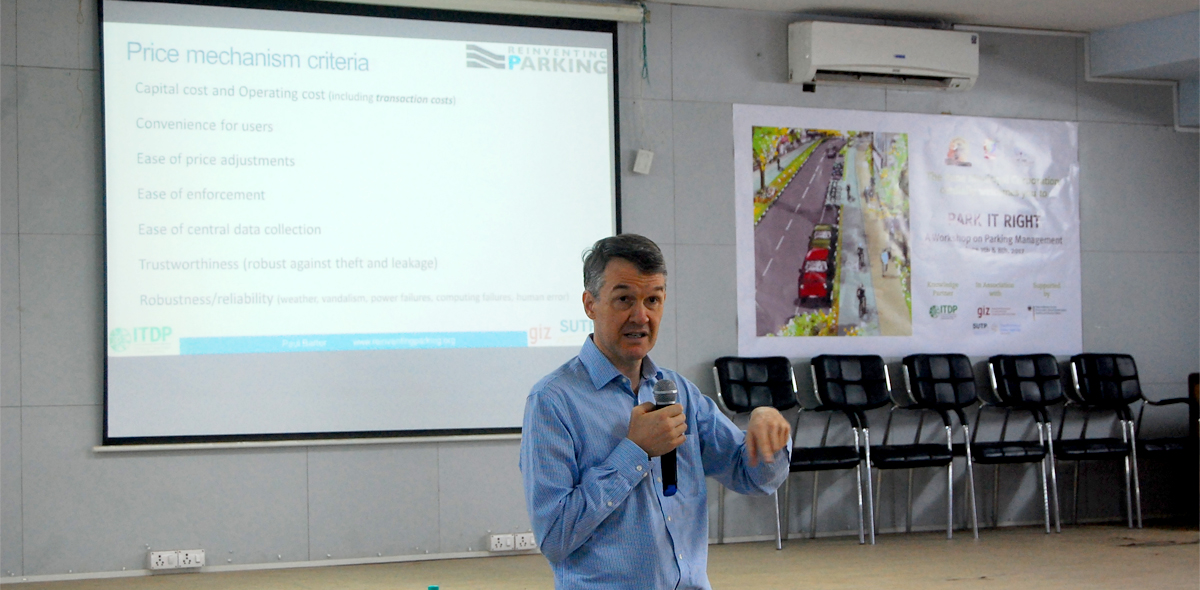
“Let us seize the chance for parking success without excess!”, world-renowned parking management expert Dr.Paul Barter concluded. The occasion was Park It Right – a 2-day parking management workshop conducted by the Pune Municipal Corporation, with ITDP as knowledge partner; in association with GIZ, SUTP and TUMI*. The event was a part of the International Climate Initiative (IKI), supported by the German Federal Ministry for the Environment, Nature Conservation, Building & Nuclear Safety (BMUB). Participants included PMC engineers, officials from RTO & Traffic Police and representatives from various NGOs.

With the adoption of Pune’s parking policy in the offing and the city’s plans to implement better parking management, the workshop aimed at drawing lessons and inspiration from global best practices. Local government’s responsibilities regarding on-street parking management, regulation of parking supply under real-estate/urban planning powers, choices over city-owned off-street parking, and the relationship between the city government and private sector parking businesses were also discussed.

The workshop kicked off with Mr. Kunal Kumar, the Commissioner of Pune Municipal Corporation, speaking of the city’s firm course towards sustainable transportation, with great joy and pride. Various initiatives to encourage walking, cycling and the use of public transport has ensured that Pune has stayed on track. Speaking of dissuading the use of personal motor vehicles, the Commissioner said, “managing parking is an integral and essential part of our sustainable transport planning.”

The tone of the discussion thus set, Dr. Paul Barter took over to explain the basics of parking management. While most cities perceive a supposed lack of parking availability on the streets, there is generally excess supply off-street. The solution is thus not supplying more parking; it is, rather, better parking management.

To understand this concept better, the audience was asked to participate in a hands-on exercise to simulate parking in a commercial area between 8 am to 12.30 pm. Two scenarios were considered: one with minimal parking fee and management, and another with higher parking charges determined by supply and demand.  

At the end of Scenario 1, the participants observed that with poor parking management, high-demand spots in the commercial area were occupied by shopkeepers and office-goers for better proximity, leaving the shoppers and other customers without a convenient spot. With an appropriate increase in parking fee as per demand, long-duration parking moved to the outer fringes where the fee was lower. This freed up many easily accessible parking slots within the commercial area for shoppers and restaurant-goers.

Another key takeaway was that the city does not have to wait for visible improvements in walking, cycling and public transport infrastructure changes to implement parking management. Basic parking reforms can help significantly reduce the parking chaos on the street. For instance, in Saudi Arabia, where on-street parking pricing was introduced not as a means towards sustainability but to tackle congestion in many stretches, the parking situation has improved considerably.

The simulation exercise thus helped the participants understand that parking management starting with simple steps should be the approach to the “parking crisis”, instead of increasing supply. Presenting examples from Taipei in Taiwan and Seoul in South Korea, Dr. Barter reinforced this fact and helped the audience decide good parking management goals.

Results of hands-on exercise to simulate parking in a commercial area

Best global practices highlight that the location and quantity of parking supply play a crucial role in the success of parking management. Dr. Barter stressed that parking, both on-street and off-street, must always be provided in tightly controlled amounts, and charged based on demand.

Applying these lessons to well-known localities in Pune, it came to light that the existing parking spaces could be managed easily without increasing the capacity. “Our cities should aim to eventually shift towards sustainable transport solutions. But even for a car-centric city, parking management is an essential step in solving congestion on the street and for better use of road space. Let us start now Pune!”, said Shreya Gadepalli, Director – South Asia, ITDP.

With the parking policy expected to come into effect soon, and the city taking measures to start on-street parking management, along with various NMT-PT friendly initiatives, Pune is indeed firm on its sustrans course!


*GIZ – Deutsche Gesellschaft für Internationale Zusammenarbeit (GIZ) GmbH (English: German Corporation for International Cooperation GmbH); SUTP – Sustainable Urban Transport Project; TUMI – Transformative Urban Mobility Initiative

Filed Under: Parking Management, Pune Tagged With: Parking, Pune, Traffic reduction

On-Street Parking Management: Pune and Chennai to join the bandwagon

3rd June 2017 by admin

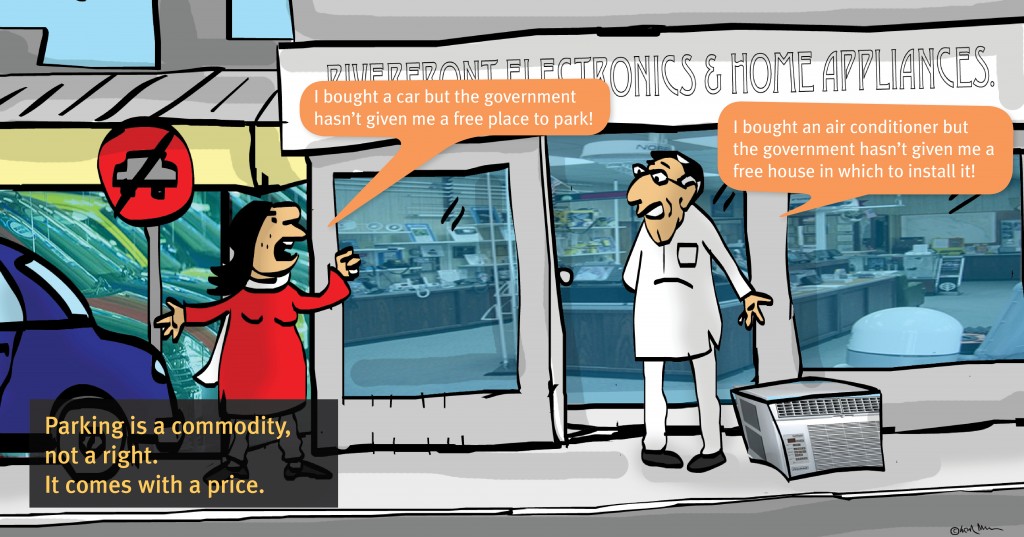
“I bought an AC, now the government has to give me a free house to install it in!” If this is an absurd demand, so is free parking – “I bought a car, now the government has to give me a free place to park it!” Cities across the world including India, are gradually beginning to realise that parking is not a right; it is a commodity and should come at a price. In keeping with this revelation, Indian cities such as Ranchi have started implementing on-street parking management, with a parking fee.

Pune and Chennai are the latest cities striving to join the bandwagon. Pune will soon adopt a parking policy to guide parking management in the city. Pune and Chennai both aim to put a smart parking management system in place. There is now an urgent need to learn more about global best practices, especially challenges faced during implementation and solutions. In order to initiate this learning process, Pune and Chennai will host discussions and workshops internally and for the public in the following weeks, led by internationally acclaimed parking expert Dr.Paul Barter.

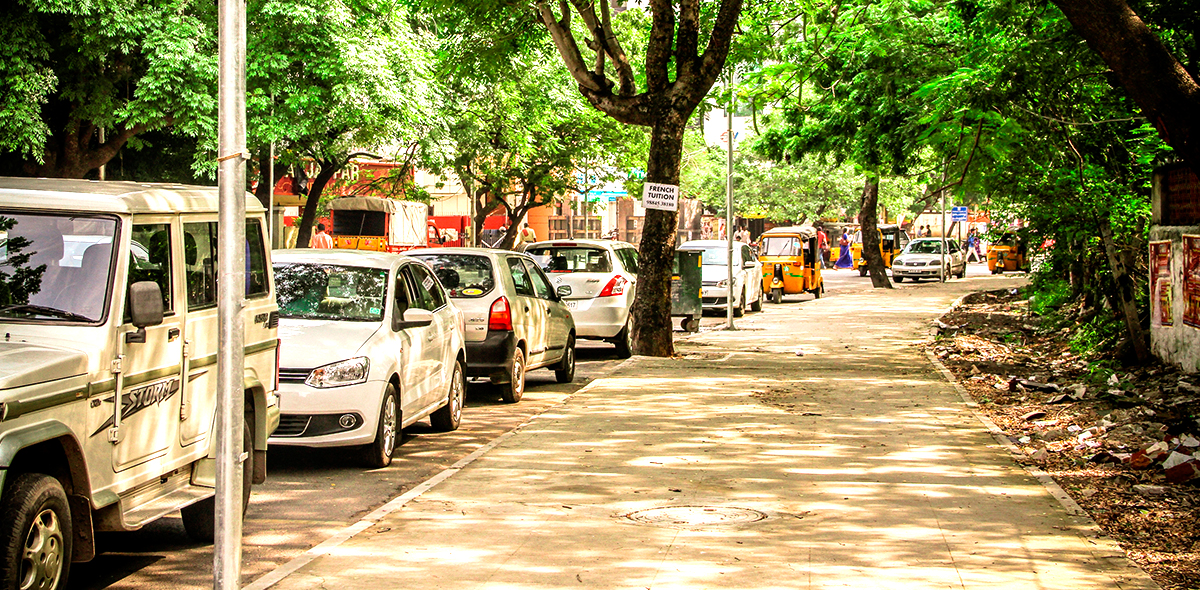
Today, unorganised on-street parking and invasion of pedestrian footpaths by parked cars is common of most Indian cities. On-street parking is mostly free, and even when charged, the rates are too low and fee collection is carried out by private operators with little monitoring or oversight by the government.

In Pune, open spaces have been converted into parking lots – including a mechanised structure – to meet the ‘demand’. However, prior to providing off-street solutions, on-street parking has to be addressed as it comes free of cost and is more easily accessible, hence is more sought after.

Realising this, Pune has tried to employ certain strategies to ensure that rampant parking doesn’t hinder movement of vehicles as well as people. The age-old “P1/P2” scheme has been incorporated in several streets where parking is allowed only on one side of the road depending on odd/even dates. Traffic cops have tried to ban parking on mobility corridors during peak hours.

A manually-operated “Pay and Park” system in Pune charges 4-wheelers Rs.5-10 for 2-4 hours

Pune has also implemented a manually-operated “Pay and Park” system on some streets with parking charges of the order Rs 5-10 for four-wheelers for 2-4 hours. While this is the on-street scenario, many private establishments like hospitals and cinema halls charge upto Rs 50 for 4 hours of car-parking. All these measures have had mixed successes.

In Chennai on the other hand, parking rules and fees are administered on an ad-hoc basis, leading to a lack of clarity for users, inconsistent enforcement, and significant revenue leakage. The city experiences localised shortages despite overall availability of parking space.

The two cities are thus trying to solve the parking problem by better on-street parking management. The Pune Municipal Corporation has proposed a policy to manage parking in the city. The policy suggests slabs of parking charges, using the fundamental economic principle of supply and demand to determine the cost. It prioritises road space for other users – especially pedestrians, by dissuading the usage of any available public space (both off- and on-street) for parking.

The revenue from parking management only on bus-route roads in Chennai could itself be over half a crore rupees per year.

Chennai has initiated the process of implementing a smart parking management system. Key features of the proposed system are parking guidance for users and real-time information of parking slot availability on mobile platform, an online digital payment portal to improve revenue collection and enhance transparency and an electronic enforcement system, among other things.

For parking charges, a zone-based system will be followed wherein streets are categorised into paid parking (medium to high demand), free parking (low demand) and no parking (since parking restricts movement) zones. Parking fee and fine will be determined by the Greater Chennai Corporation and Chennai Smart City Ltd. It is estimated that the revenue from the system only from bus-route roads could itself be well over half a crore rupees per year.*

Dr. Paul Barter at a parking management workshop in Kathmandu. Image Courtesy: Clean Energy Nepal

In order to assist the two cities’ commendable efforts to deal with parking, Dr.Paul Barter will be visiting and leading discussions in both Pune and Chennai. Dr. Barter has offered his expertise along with necessary training in several parking-management projects across the world including Beijing, Kathmandu, Jakarta, Singapore, Mumbai, etc. He has published an on-street parking management toolkit as a guide for government staff in low-income and middle-income countries. His expert opinion and knowledge will add greatly to the parking management plan of the two cities.

Through their actions to tackle parking, Pune and Chennai are surely setting a great example for other cities that intend to create an urban environment focused on people rather than vehicles!

*This estimate is based on a parking fee rate of Rs. 40 per ECS per hour for bus-route roads.


Read the draft of Pune’s parking policy here: Suruvath: Public Parking Policy 2016.

Discover the basics of parking management and regulation in ITDP’s publication, Parking Basics.

Filed Under: Chennai, Parking Management, Pune Tagged With: Chennai, Parking, Pune, Pune-Pimpri Chinchwad, Traffic reduction

Pune’s progressive parking policy shows the way forward for Indian cities

26th April 2016 by admin

Like many Indian cities, Pune is witnessing a spurt in urban growth that is also accompanied by growth in private vehicle ownership. The Regional Transport Office in Pune registers almost 500 new vehicles every day. With such explosive growth in the number of automobiles, the demand for parking escalates, resulting in footpaths and available open spaces being swallowed by formal or informal parking lots.

To address these concerns, Pune has proposed a parking policy that focuses on the need to shift people away from cars, towards public transport modes. It acknowledges that creating excessive, cheap parking to keep up rising demand doesn’t solve parking problems. Instead, the policy discourages free parking, and calls for differential parking rates pegged to demand. By stressing that users pay directly for parking, the policy discourages direct and indirect public subsidies for private vehicle use and ensures that personal motor vehicle users bear the full cost of driving.

A zone-based approach to parking management

Demand for parking spaces is affected by a host of factors such as location, surrounding land-use, economic activity and traffic volumes. City centres and business districts often see high demand for parking as compared to other areas. In the zone-based approach proposed in this policy, Pune will be divided into 4 parking zones, each with their own parking rules and rates.

Zone A includes the central areas of Pune. As intense development is expected around transit corridors in the future, transit influence zones are also demarcated for better parking management. Areas close to rapid transit, located within 100 metres around of mobility corridors are designated as Zone B while Zone C includes areas located from 100 to 500 metres of transit corridors. Others areas are designated as Zone D.

Proposed parking zones in Pune

Pricing parking to manage demand

To manage demand for parking, encourage efficient use of parking facilities, address specific parking problems and ensure that the parking is available for intended users, the policy proposes various pricing strategies. As cars occupy more road space compared to motorcycles, base parking rates for cars are proposed to be 4 times that of two-wheelers.

As parking demand varies by time of day as well as day of the week, the policy calls for rates to be determined considering these factors as well. By stating that parking must be charged proportional to the amount of time parked, the policy discourages discounts for longer-term parking.

Parking rates also vary based on the zones in which the vehicle is parked in. Zones with high parking demand are proposed to have higher parking rates. Lower parking rates are proposed in Zone D that includes residential and other areas not served by transit. For instance, parking a car on-street in Zone A would cost Rs 71 per hour whereas parking it in Zone D would cost Rs 30 per hour. To encourage people to use off-street parking facilities where available, off-street parking rates are proposed to be lower than on-street parking rates in the same zone.

Parking rates vary by vehicle type and location of parking spot. (Left) Areas of high parking demand have higher on-street parking rates. (Right) Off-street parking rates are lower than on-street parking rates in the corresponding zone.

The policy uses pricing strategies as a tool to encourage walking, cycling and public transport. Cycles are exempt from parking charges at all locations in the city. As auto rickshaws and taxis are important means of providing last mile connectivity to and from transit hubs, these vehicles too are exempt from parking charges, provided that they are parked in dedicated parking slots meant for them.

Framework to implement reforms

Successful implementation of customer-oriented, parking management systems require detailed planning and coordination between various agencies. In addition to day-to-day operations, communicating the benefits of parking management to the public is crucial. In this regard, the policy recommends creation of a Parking Management Cell, chaired by the Municipal Commissioner and supported by a team of competent professionals, who will be responsible for planning, implementation and overseeing parking operations in the city.

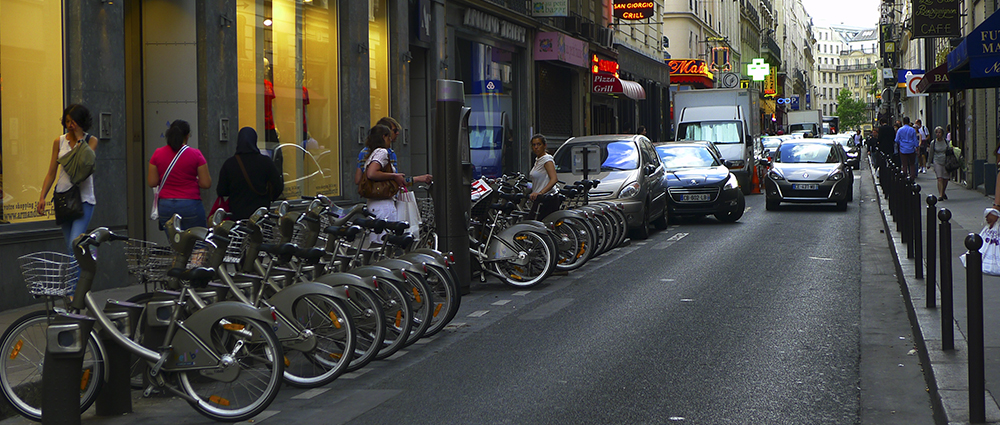
Many cities around the world have successfully used parking revenue to improve transit options. Barcelona used surplus revenue from on-street parking fees to fund its cycle sharing system. Several boroughs in London use revenue from parking to subsidize public transport passes for the disabled and the elderly. In keeping with these best practices, Pune’s draft parking policy also recommends channeling surplus revenue from parking to a dedicated public transport and non-motorised transport fund to create better facilities for walking, cycling and public transport.

With such provisions, Pune’s progressive policy not only addresses issues related to parking, but also strives to create a better urban environment centered around people, rather than vehicles.

Read the draft policy here: Suruvath: Public Parking Policy 2016.

Discover the basics of parking management and regulation in ITDP’s publication, Parking Basics.

Filed Under: Featured News #3, news Tagged With: Parking, Pune, Pune-Pimpri Chinchwad, Sustainable Transport Policy

Related News

  • A 'Rainbow' Future for Pune and Pimpri-Chinchwad

    September 2, 2015

  • InFocus: Revolutionary Parking Reforms

    February 23, 2015

  • Pune, Coimbatore and Chennai Selected as India’s ‘Smart Cities’

    February 16, 2016

More News >

InFocus: Building ‘smart,’ customer-oriented transit

25th August 2015 by admin

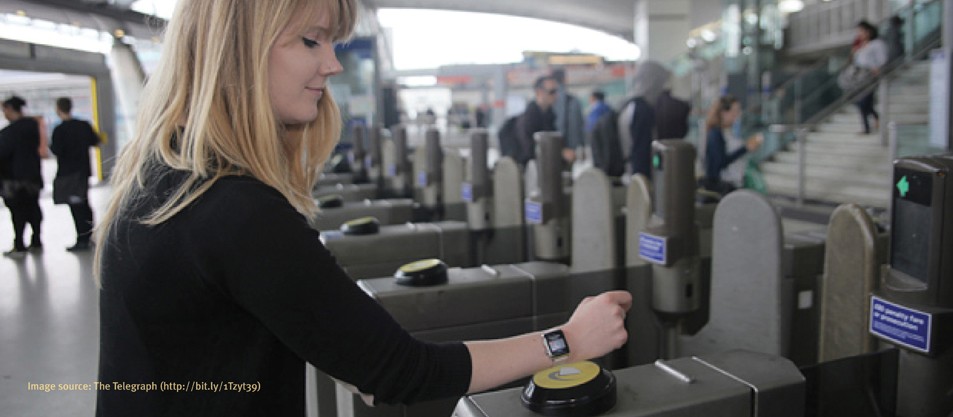
ITDP brings you a monthly digest of sustainable transport and urban development news from around the world. From Indian Railway’s new paperless ticketing system to Sydney’s electronic signs to improve parking management, this month’s InFocus looks at how technology has helped create customer-oriented transit systems.

Cities stagnate when their residents and visitors are stuck in traffic. To provide seamless connectivity and reduce traffic delays, cities need to focus on moving people, not vehicles. This calls for the creation of high-quality rapid transit along with effective parking management systems. The integration of modern payment and ticketing technologies can go a long way toward making urban transport systems more convenient—both for first-time users and regular commuters.  Here is a look at how technology can hasten the shift to sustainable transport.

[Read more…]

Filed Under: news Tagged With: In Focus, Parking, Public Transport, Traffic reduction

Related News

  • Growth of Bus Rapid Transit in India

    April 6, 2016

  • Indian smart cities need a tenfold increase of mass rapid transit

    June 10, 2015

  • InFocus: Building transit-oriented cities

    March 16, 2015

More News >

Indian smart cities need a tenfold increase of mass rapid transit

10th June 2015 by admin

India is urbanising at an unprecedented rate. A third of the country’s population—an estimated 400 million people—now lives in cities. As they cope with this growth, cities are realising that traditional transport solutions like wider roads and flyovers will not provide a lasting solution to their transport problems.

As the national capital has shown, these solutions are only causing high levels of air pollution and unsafe roads while mobility remains poor for the vast majority, including car users. Smart cities need to embrace a radically different approach to urban mobility: one that focuses on more efficient, sustainable forms of mobility like public transport, walking, and cycling.

At roughly 400 km, India has 1 km of high quality rapid transit per million urban residents—a thirtieth of France, the present world leader. To keep pace with its urban growth, India needs a ten-fold increase of its mass rapid transit supply. At the present rates of building mass transit in India, it would take two generations to build enough rapid transit!

Interestingly, developing countries like Brazil, Colombia, and Mexico have 4-5 times more rapid transit than India. These countries are also expanding their systems at significantly higher rates because they are creating surface systems like bus rapid transit (BRT) that are cheaper and quicker to implement. BRT systems feature dedicated median lanes for buses, allowing commuters to bypass congestion. They also provide features such as stepless boarding, off-board fare collection, and real-time passenger information to reduce delays and improve customer service.

Quick evolution of the Janmarg network

The Ahmedabad BRT system—known as Janmarg or “the People’s Way”—has revolutionised expectations about bus-based mass rapid transport in India. In a quick span of five years, Janmarg has expanded from a 12.5 km corridor to a network of 88 km of dedicated BRT corridors with 120 stations, providing connectivity across the entire city. Janmarg demonstrates that BRT can provide metro-quality service at a fraction of the cost.

Rapid transit, while important, is not enough. Many Indian cities have skeletal bus services or none at all. In their absence, people depend on intermediate public transport modes that are uncomfortable, unsafe, and highly polluting. The lack of reliable public transport is causing a shift to private two wheelers and cars. Hence, a formal bus-based public transport service is a necessity in all urban areas with a population of over two lakhs. In all, Indian cities will need over 4 lakh new city buses and minibuses by 2030.

In addition, streets must be redesigned to support walking and cycling—clean modes of transport that still play an important role in Indian cities. While more than a third of all the trips in most of our cities are made by foot or cycle, public transport trips too start and end on foot (or cycle)—making walking and cycling integral to India’s transport systems. Indian cities need to build 30,000 km of wide and accessible footpaths and 20,000 km of cycle tracks over the next decade.

Complete streets with wide footpaths, Chennai

In Chennai, the Corporation has proposed to create a safe and pleasant network of footpaths, cycle tracks and greenways through the entire city to arrest the current decline in walking and cycling. The first phase of the project has been implemented. Streets with wide carriageways and narrow footpaths have been replaced by wide, continuous and unhindered walking spaces, safe pedestrian crossings, protected cycle tracks, properly scaled carriageways, conveniently placed bus stops, and clearly designated on-street parking.

Investments promoting walking, cycling and public transport will not bear fruit unless Indian cities stop counterproductive car-centric investments like flyovers and elevated roads. No city in the world has solved its congestion problem by building more roads. Yet Indian cities are repeating the mistakes of developed countries. Rather, cities must control personal motor vehicle use through parking restrictions and market-based pricing.

Tackle congestion by limiting parking

Our cities should follow a simple mantra: build transit, add density, control parking. That is, cities should allow higher densities in areas where there is good connectivity to mass rapid transit while simultaneously limiting parking supply. Parking fees should be pegged to parking demand.

Ahmedabad’s Development Plan 2021 embraces this mantra. It encourages the use of public transport and promotes a compact city by allowing higher density commercial and residential activities along BRT corridors while removing minimum requirements for off-street parking in new buildings. All developments are allowed only two basements of free parking.

While these walking, cycling and public transport initiatives will require substantial funds, they will cost only a fifth as much as a car oriented future, with significantly better results for all. Sustainable transport will cut the outflow of foreign exchange for fossil fuel imports by 40 per cent, reduce air pollution by a third, and save tens of thousands of lives on our roads. Let’s invest in sustainable solutions that secure an equitable, liveable future for our cities.

This article was first published in BW Smart Cities.

Filed Under: news Tagged With: Ahmedabad, Bus Rapid Transit, Chennai, National, Parking, Walking and Cycling

Related News

  • Growth of Bus Rapid Transit in India

    April 6, 2016

  • Pune’s progressive parking policy shows the way forward for Indian cities

    April 26, 2016

  • Chennai Celebrates Walking at the Sustainia Award Ceremony

    February 4, 2016

More News >

Related Resources

  • Parking basics

  • Chennai Non-Motorised Transport Policy

  • The TOD Standard

More Resources >

Demystifying parking: Smart solutions to cities’ parking woes

10th March 2015 by admin

Cities across the world are embracing progressive and bold solutions to tackle traffic congestion and parking challenges. They follow a simple mantra—build transit, add density, control parking. Recognising that cheap and excessive parking—not density—creates traffic congestion, they have started to limit parking supply, charge demand pegged user fee, and use the revenue to strengthen walking, cycling and public transport infrastructure.

Ahmedabad recently overhauled its Development Plan with inputs from the Institute for Transportation and Development Policy (ITDP) and other experts. The new plan encourages high density development—ranging from 4.0 to 5.4 FSI—along its extensive bus rapid transit network and proposed metro rail lines. More significantly, in its local area plan for the central business district, the development authority has proposed to not only remove parking requirements altogether, but also cap parking supply in buildings to a maximum of two levels below ground. Any additional supply is deducted from the allowed FSI.

Parking regulation remains ineffective unless backed by a robust management system that clearly define parking zones, peg user fee to demand, and use an IT based mechanism for information, payment and enforcement. Parking fees goes up or down based on demand data. According to Donald Shoup, world’s foremost parking expert, the user fee should be high enough to keep at least 15% of the parking supply in each block vacant during peak demand periods. The availability of a few empty spots at each location drastically reduces the time people spend looking for a parking space, thereby reducing localised congestion.

Amsterdam has 8 parking zones with fees varying from €0.90 per hour in the low demand areas to €5.00 per hour in the historical city centre.

Mumbai recently categorized different parts of the city into three groups—low, medium and high demand—with parking fees ranging from 20 to 60 rupees per hour. A similar parking regime in Amsterdam helped decrease car traffic in inner city by 20%. It also led to a 20% decline in people searching for a space to park. A simple electronic payment system allows users to make payment easily, while eliminating parking revenue leakage. Scan cars with automatic license plate number recognition technology and parking wardens with IT enabled devices enforce the system.

Cities are also innovatively using parking revenue to encourage sustainable modes of transport. Bicing—the public cycle-sharing program in Barcelona—is financed by its parking revenue. London’s Freedom Pass, which allows elderly (60+) and disabled residents to use public transport for free, is funded by the parking fees collected in many boroughs. You can find more about these cases and other best practices in ITDP’s publication, Europe’s Parking U-Turn: From Accommodation to Regulation.

Parking reforms not only reduce congestion and pollution, but also provide resources to improve walking, cycling, and public transport infrastructure. Moreover, demand-based pricing ensures that vacant spaces are available in high-demand parking zones for short-term high-value car users while preventing overuse by all-day, low-value users. Removing minimum parking requirements for zones with good transit access help slash development costs, creating an opportunity for cities to develop affordable housing and other uses with its urban cores.

More resources from ITDP on parking reform:

InFocus: Revolutionary Parking Reforms

Park it right

Parking: Searching for the good life

Sizing Up Parking Space

U.S. Parking Policies: An Overview of Management Strategies

Filed Under: news Tagged With: Ahmedabad, Parking, Sustainable Transport Policy

Related News

  • Pune’s progressive parking policy shows the way forward for Indian cities

    April 26, 2016

  • InFocus: Revolutionary Parking Reforms

    February 23, 2015

  • In Chennai, Our Cities Ourselves Focused on People, Parking and Density

    December 17, 2013

More News >

InFocus: Revolutionary Parking Reforms

23rd February 2015 by admin

ITDP brings you a monthly digest of sustainable transport and urban development news from around the world. From Chicago’s parking-lite apartments to Mumbai’s new parking policy, this month’s InFocus is all about revolutionary parking reforms introduced by cities across the globe.

Parking is a mystery. Many governments push for more parking in buildings, but rather than alleviating the parking problem, it leads to massive traffic jams, severe air pollution, and more road deaths. Under the illusion that density creates congestion, governments also control building density. What they miss is that parking, not density, creates traffic congestion. An excessive supply of cheap parking induces people to use personal motor vehicles—even when good public transport is provided.

Many cities across the world are now realising their past mistakes. They now follow a simple mantra: build transit, add density, cut parking. Put another way, where there is good connectivity to mass rapid transit, building density is welcome but parking is not. Parking fees are pegged to parking demand. When demand increases, the fee also increases. Parking revenue is used to build better walking and cycling infrastructure and to expand public transport.

“Chicago’s new law requires only half as many parking spaces for housing and no parking spaces for shops or offices in buildings within walking distance of a rapid transit station.”

Chicago:New zoning ordinance cuts parking minimums in half

Many new parking-lite apartments are rising along the Chicago Transit Authority’s rail lines, thanks to a recent change to the city’s zoning ordinance that has made it easier to build buildings with significantly lower parking requirements near rapid transit. Streetsblog reports.

Mumbai introduces progressive parking policy

From demand-based charging of on-street parking to new regulations on off-street parking, Mumbai takes a bold move to manage parking in the city. Though the implementation of the new on-street parking system—which sought to encourage the use of public transport—set off a fierce debate , the details of the policy, as reported by Times of India, are definitely noteworthy. The city is also tackling off-street parking head-on by slashing parking minimums near rapid transit stations. Midday reports.

Parking spots to Parklets: SF’s secret to increasing foot-traffic

The phenomenon turning parking spaces into “parklets” in San Francisco has led to greater foot traffic and higher sales for the units establishing and running such parklets. The New York Times captures the details.

Filed Under: news Tagged With: In Focus, Parking

Related News

  • Demystifying parking: Smart solutions to cities’ parking woes

    March 10, 2015

  • In Chennai, Our Cities Ourselves Focused on People, Parking and Density

    December 17, 2013

  • InFocus: Revolutionary Parking Reforms

    February 23, 2015

More News >
  • « Previous Page
  • 1
  • 2
  • 3
  • 4
  • Next Page »
  • Who We Are
    • Our Team
    • Contact Us
    • Opportunities
    • Our Approach
  • What We Do
    • Complete Streets and Parking Management
    • Public Transport
    • Transit Oriented Development
    • Inclusive Mobility
  • Where We Work
    • Agra
    • Ahmedabad
    • MAHARASHTRA
    • Pune – Pimpri-Chinchwad
    • Nashik
    • TAMIL NADU
    • Chennai
    • Coimbatore
    • JHARKHAND
    • Ranchi
    • NATIONAL
  • News
  • Resources
  • Get Involved
    • Donate

Copyright © 2026 · ITDP Responsive on Genesis Framework · WordPress · Log in


Loading Comments...